Landscaping With a Point of View
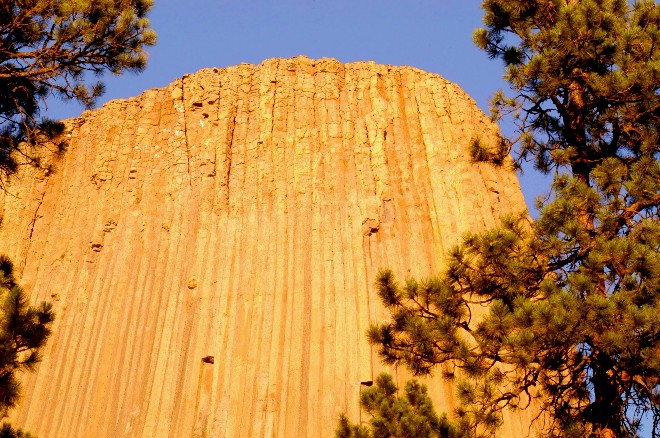
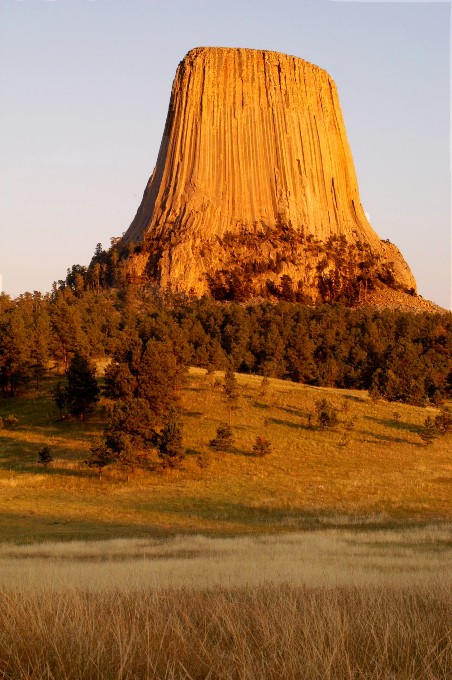
Gaining Perspective: The images below are of Devil’s Tower in Wyoming. This is an interesting rock formation, but making a composition that hasn’t been done, is challenging. The first two shots were created right from the parking lot. I would have loved for this to have been winter. The framing that I used with this blue sky and early morning warm colors on the rock and then adding some snow-covered branches would have been ……wow! The third shot was made from the other side of the tower after a good hike, late in the afternoon. The light was warm but muted. I have shown this image before and this version has more pop on the rock than the previous showings. I circled the rock (with Photoshop) and simply added some contrast. Finding new ways of looking at much photographed subjects is important. Out of all of the well-known rock formations in North America that I have photographed I would have loved to have had another chance with Devil’s Tower and Shiprock New Mexico.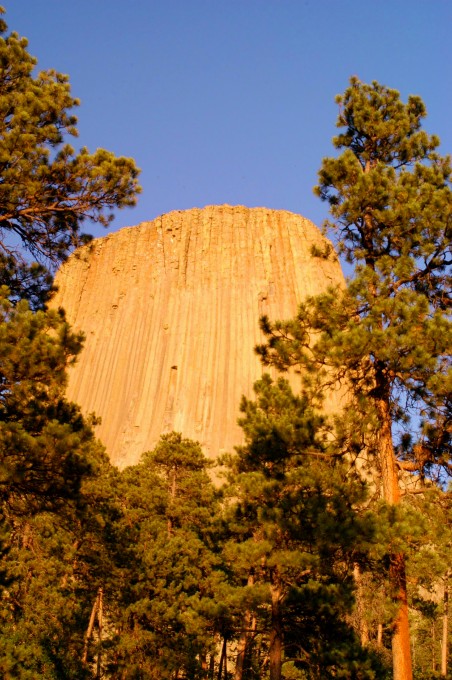
Aerial Perspective: When you photograph a scene that contains a series of objects like land forms, and they are at different distances, as they become farther away the atmosphere between you and your subjects will increase and they will appear lighter and lighter. Conversely, as those objects get closer they will appear darker and show more detail. There is continually less atmosphere to obscure detail. Despite that fact, often the closest object to you will be rendered black as you strive to achieve a proper exposure for the entire scene. That of course means that the closest object will then lack detail completely. This is an actual “mood” technique that photographers use with the intent of accentuating aerial perspective. This technique is of the most use with backlighting. Sunrises/sunsets with hills or mountains are a favorite as they also include some beautiful colors.
The image below is sunrise at Big Bend N.P., Texas.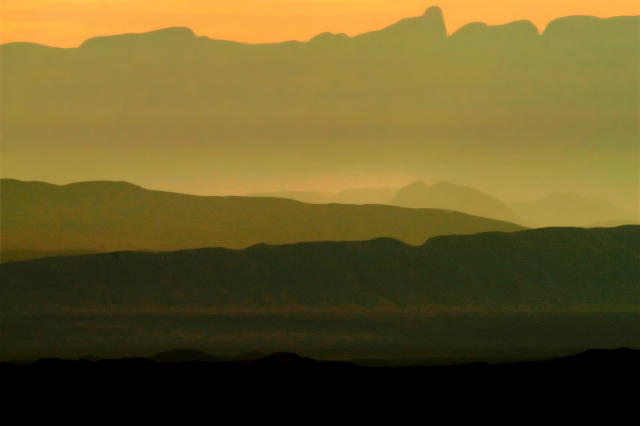
Aerial perspective can be displayed at times other than sunrise/sunset as well. This shot from White Sands New Mexico is one that I have never shown before. The aerial perspective phenomenon does show here as the background mountain lacks detail and the foreground sand does. Still this shot is counterintuitive when compared to the Big Bend image. The foreground sand has detail but it is lighter than the mountains because it is white in color. It also has the sun, despite that it is backlight, striking the sand. The shot actually has a black/featureless form in the middle. Despite the fact that the middle section is indeed “white” sand, it resides at a low enough perspective that it is deep in the shadows, and becomes featureless and black.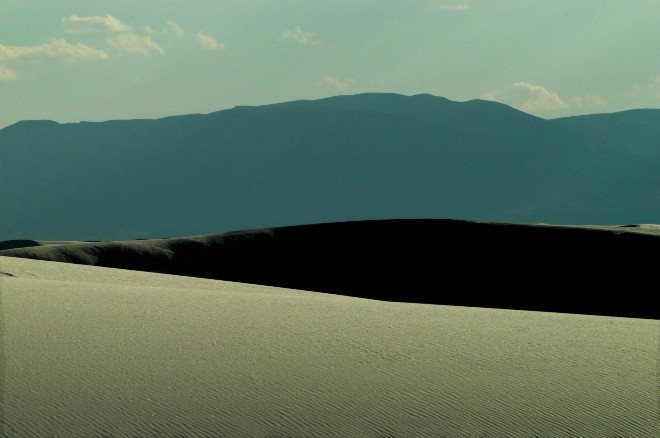
The next image is from Monument Valley and is also a virgin to the pages of Earth Images. There are backlit storms with rain, moving across the valley. The haze effect of the rains, the direction of the lighting and the distance between rock forms all add up to “aerial perspective”. Unlike the Big Bend picture where the aerial perspective is compressed, in this image it is stretched out over this vast valley.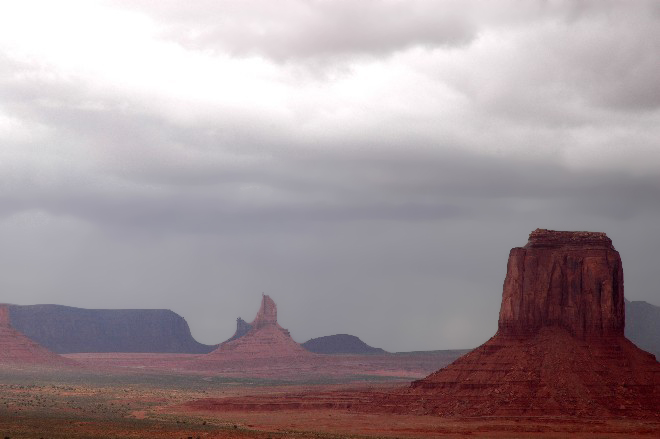
Physical Perspective: This is a fairly unique way to look at The Badlands of South Dakota. I have used perspective here to show that the Badlands is both a land of wonderful rock forms, and an open grassland prairie. Trying to get too much information in one shot can often make for a confusing image but the Badlands are the most versatile landscape destination that I know of and you can create images that tell the story dozens of different ways here. It is all a matter of perspective. Sometimes perspective is about literally putting yourself into the physical position to make the shot.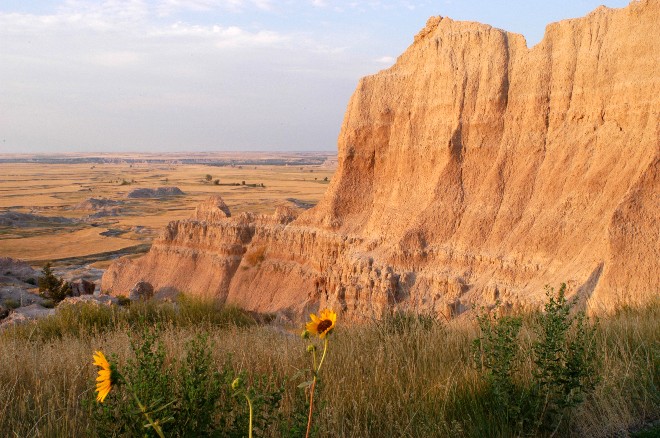
There are two El Capitan’s in the U.S. The most well-known is probably the one in Yosemite N.P. in California, but Guadalupe National Park’s (Texas) version is equally beautiful. I had made so many wide-angle images of this peak with Agave plants and rocks used to either frame the peak or lead you to the peak, that I finally decided to “let go” of my compositional ego and create shots that showed the imposing beauty of El Capitan. It wasn’t even a matter of hiking into the best position. I got the correct physical perspective the easy way, I simply zoomed my lens out until the peak was positioned in the picture frame just where I wanted it to be. When we are making pictures it is always about a powerful finished photo, not about the viewer exclaiming “what a compositional genius” we are. You will always receive credit for a beautiful picture, regardless of your compositional input.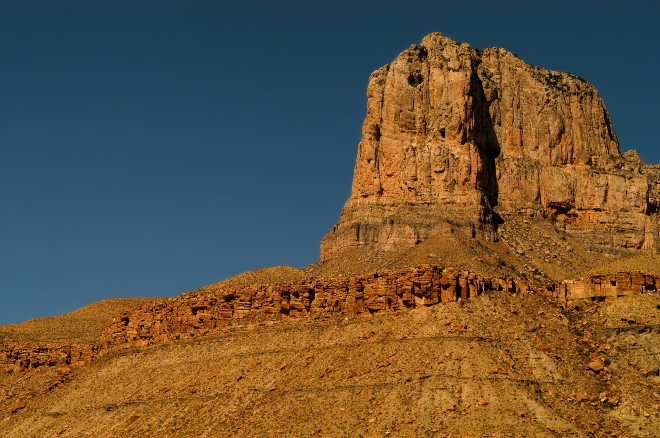
I drove on a remote southwest Texas road for miles alongside this beautiful desert/river canyon. I finally could not take it any longer and stopped to set up at the roadside to “be a photographer”. I wanted something that said desert, river and mountains all in one shot. While this image does contain all of that information, I am sure I could have done better. I had just left a motel after my first sleep (excuses, excuses) in nearly three days and frankly I was too lazy to hike down towards the river and to put myself in the best “physical position” to create the composition from a perspective that would exhibit an orderly view of this beautiful place. Just the same I have not seen this image since I first looked at it in February of 2006 and it does bring to me wonderful memories. Is the image worth sharing? It’s All a Matter of Perspective.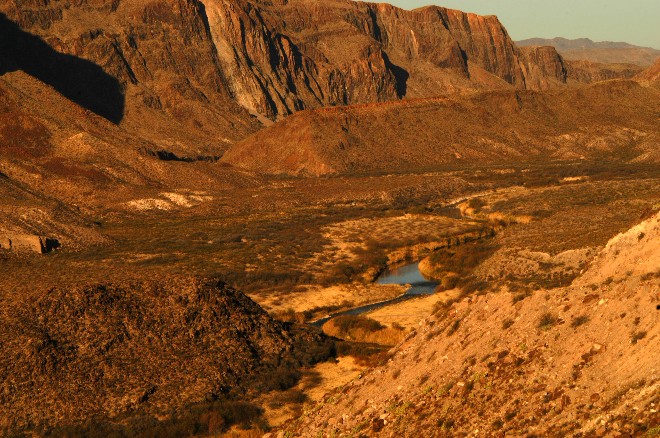
Thank you

