
Those of you who know me or have read much of what I have written, know that I am forever fascinated by why people do what they do, and why they like what they like. This fascination usually begins with of all things, nature photography. It goes on to everything from what foods we like to politics and religion, but let’s stick to the safer subject, nature photography.
The butterfly image below is just one of a series that I made that day. I have shown several from that series over the years. They are a group of pictures that definitely have a wide separation in so far as whether people like them or not. This is often true of unique and difficult light in pictures. Some people may think that this is a flash picture. It is definitely completely natural. Getting total backlight instead of sidelight was impossible and front light would have been ugly do to the bothersome background that would have been lit by the very bright sun. Still I do know that some (many) of you would have rather of seen that background, than the high contrast dramatic light that I took this picture in. There are without a doubt some who would prefer every picture was made in the same even contrast light. That lighting can indeed be great. My “thing” as a nature photographer has always been, a lot of different subjects, created in a lot of different light and surroundings.
This picture is the only of that group where I have spent time working on the light in Photoshop. I actually did reduce the contrast a little. The right wing (to our left) has been toned down by about one stop of light. The left (our right) side of the plant has also been dropped about one stop. The shadowed area (mostly the face) of the butterfly has been brought up about one stop while I left the background shadows as dark as they were originally. All of that left us with a still dramatic but more viewable image. This image is overall not a very popular one. I think most people don’t like it. Those that do like it are over the top in their enthusiasm.
We all view every picture on the internet with different monitors. Buy a newer and better monitor and you will soon realize the differences. You will come to understand that every picture you post for public consumption will look different on most computer monitors. They will be dark on some, light on others. They will have vivid colors on some, flat on others. I think the best you can do is make sure the image is viewable and is how you personally want it to appear on your own monitor, and then let the chips fall where they may.
The picture below has been put out in many forums. They are the kinds of places that allow for comments. Now most people who are going to comment are not going to say negative things about your pictures. You have to look at the positives and deduce how sincere they are. You will have to look at those who always comment and ask yourself are they just commenting because that is what they always do. Then there are those who always comment who will take a pass this time. In the end you will have to ask some people what they really think. One friend that is generally straight with his compliments and his criticism, told me straight up the shadowed side of the butterfly is black with no detail. It has enough detail when I view it, so we came to the agreement that his monitor needs some adjustment. Once you drag a critique out of someone they will then tend to open up. One person asked ” why do you periodically insert these pictures with uneven lighting?” Another said that she “likes to actually be able to see the subject in the picture” As an aside, woman are harder to evoke a negative comment from than men. One described the image as “ghastly” in comparison to my usual work. Still another suggested that I “over saturated” the colors. I did not add any saturation. The positive comments were taken from two different forums. I accept them because these are from people who either usually don’t comment or are very conservative in their flattery. “Very detailed and delicate”, “Great detail and the exposure seems spot on”, ” Beautiful colors, love the light and framing” and “Gorgeous”. All of this about the same picture.
When I view images of others my major criticisms are when pictures are badly composed or are flat and lifeless. Now composition is an opinion and I am speaking really only of those photographers who always want to make every image symmetrical. By flat and lifeless I do not mean subjects that are truly flat and are photographed in low contrast light. They can be real and beautiful in their own way.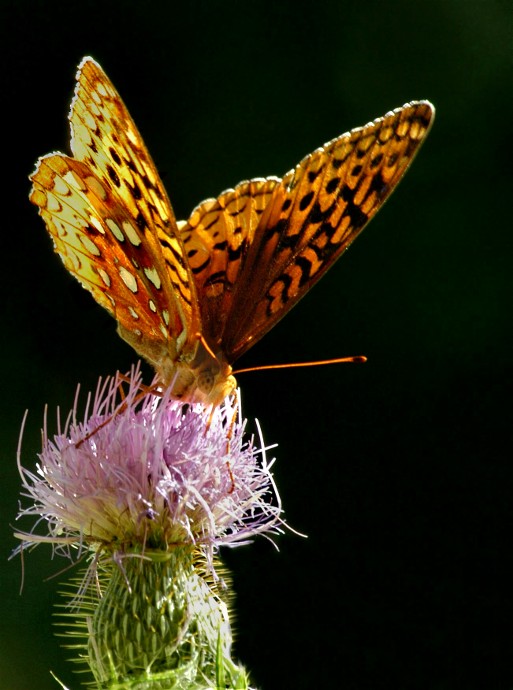
Now let’s take it to an extreme. The picture below has been titled “Kissing The Sand….the last ray of light” I had a Photo Buyer friend of mine suggest that this should be in galleries. Now understand she buys photos for magazines and books not art galleries. Her only suggestion is that it needs noise removed from the dark areas of the sand. If you are viewing this image on a monitor that is dark, you may not even know there is sand in this picture. I like pictures that take you to the edge, but an image like this is understandably not for everyone.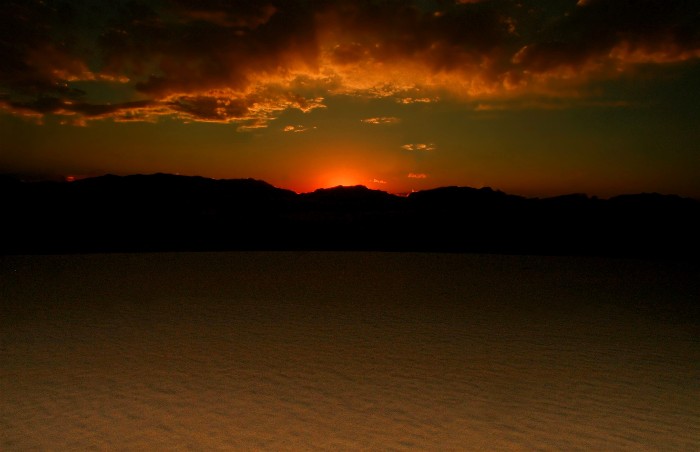
Autumn colors and flowers are two subjects that people disagree on. There are photographers who feel that the only way to do justice to these subjects is to photograph them in sunlight. I feel that usually this makes for a confusing and at times hideous scene. That is exactly how some people feel about the butterfly image in this post. Soft low contrast light actually helps you discriminate between the various colors and tones in a scene like the one below. It will also naturally saturate the colors by not washing them out. The photo actually has more “quality pop” because of the low contrast light. There has been no added saturation in this photo. The butterfly photo has more pop because the contrasty light plays the light tones against a consistently (mostly) dark background. In the end it is still a matter of opinion.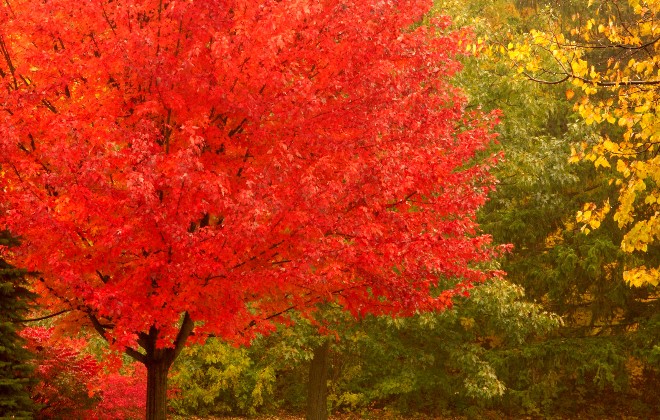
One if the differences that I have found in the way people view pictures is, some people are mostly interested in the subject, and others are mostly interested in the photography. The first will forgive (or not see) imperfections in the image if the central subject (animal, flower, etc.) is recognizable and good. The other will feel the picture is great if the photography (exposure, composition, etc.) is good and interesting. The central subject can be unrecognizable. I hopefully lean both ways but I am sure at times one option or the other may dominate my viewpoint.
The subject below is certainly an image that would create a division among viewers. Some would say, cool shot of a hawk bursting into flight. Another might say too bad you couldn’t get a good picture from the front. My feelings are that when this shot is shown in sequence with other images it is always okay. If it is a mature subject it will work by itself as well. By mature I mean a well-known or common subject, like a Red-tailed hawk. That’s what it is. If it were an immature or seldom seen subject like say a Harris Hawk, it would be better to show the whole bird.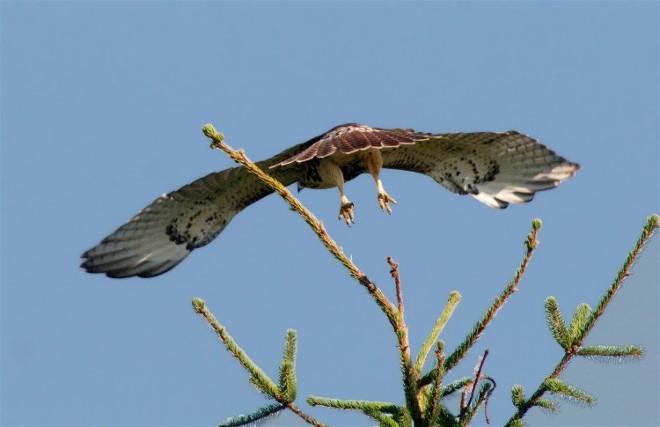
I think when it comes to having the most people like an image, sunrises and sunsets are the safest bet. It seems as though whether it is personal taste or computer monitors that a little darker or lighter will not destroy a sunrise shot. They are very subjective exposures to begin with and I think we all know that.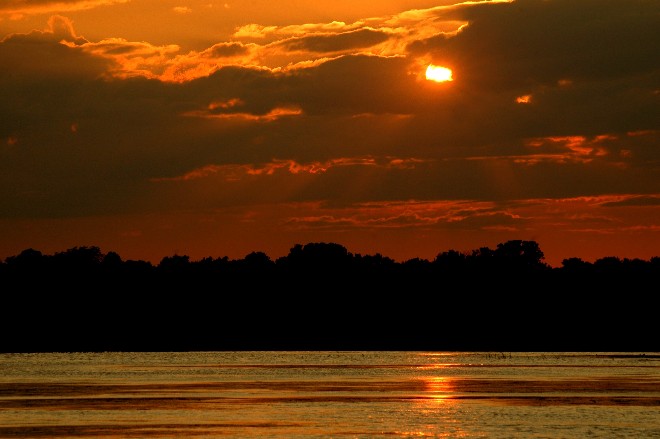
When I first view an image, whether it is mine or anybody elses, I do not pick it apart in my mind. I look at the whole image at once. I take it all in and I do so from a common sense distance. Not with my eye touching the screen. I get a sense of how I feel about the photo and then I may separate light, subject, composition, sharpness etc.
One thing is for sure, if we all agreed on everything life would be filled with monotony. We are each unique and that is what keeps us awake and thinking.
I have a tally sheet next to me that shows I attempted to correct a record 31 words with inverted letters or that were completely dyslexic words. I doubt I have missed any but if there are typos present please forgive.
“Financial and physical poverty are a terrible thing, yet they pale in comparison to spiritual poverty” Wayne Nelson

