There are three species of swans, and three species of Mergansers that are found in this part of the world. Today’s post is about those birds. This is not meant to be a scientific/natural history article. It is about my own observations as someone who has photographed all six species many times.
Originally I was going to include all five species of Grebes that I have photographed, and all three Teals. My only Red-necked Grebe photos are on film, and my Cinnamon Teal images are of dubious quality, so I left them out. As it is, what was meant to be a 12 picture article has turned into 26 photos.
Mute Swan: The Mute is the largest of the three swans that exist in the main portion of the U.S. and Canada. It was introduced from Europe many years ago and is often scorned by naturalists and ornithologists. They do take up natural resources that could be used by native swans and geese, and they are an aggressive bird, but my personal observations have convinced me to leave the scorn to the experts. They are a breathtakingly elegant photography subject. They are often found in city parks, cemeteries and other settings with ponds. Despite their “almost domestic” reputation I have witnessed rural and wilderness flocks of Mutes. Those birds can be quite fearful of humans.
The size differences between the swans can be difficult to discern unless you have them together on a pond. The easiest way to know you have a Mute Swan in your camera sites is by the large bulbous growth at the top of their bill and beginning of their forehead. You can see this clearly in first photo below. I am told that despite the name, these swans do make a noise. I have never heard that noise.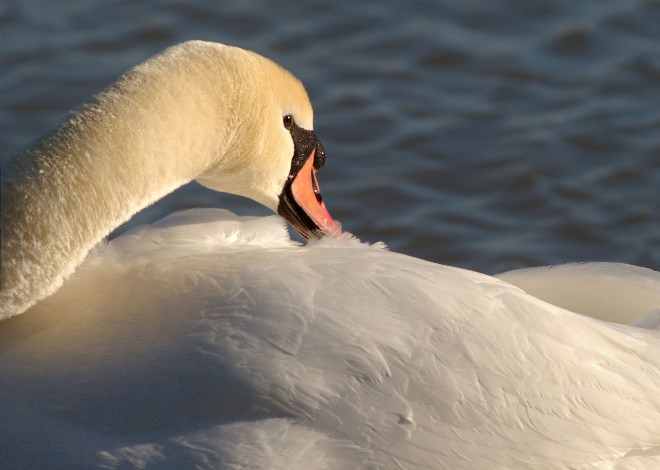
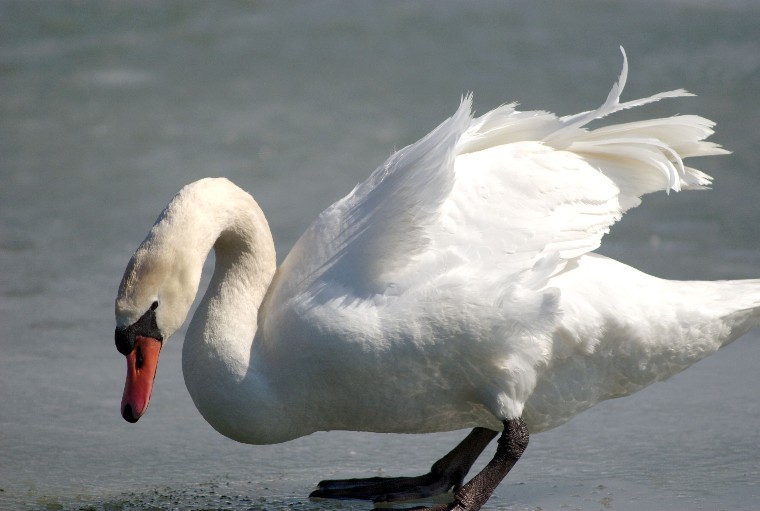

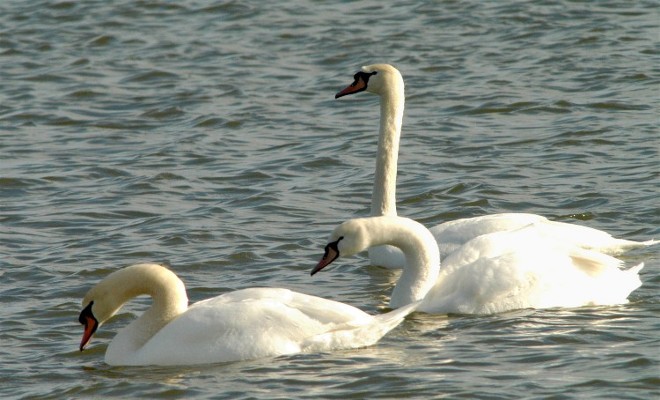
Trumpeter Swans: The next size down in American Swans is the Trumpeter. They would be easy to mistake for a Mute except they lack that protrusion on their forehead. They became extinct in my native Wisconsin many years ago but were reintroduced I believe in the early 1990s. It is not uncommon to find birds with neck bands for tracking purposes. I find the Trumpeter to be an even easier subject for close images than the Mute. I have also found them easy to photograph when they have cygnets but please do so from your car if at all possible.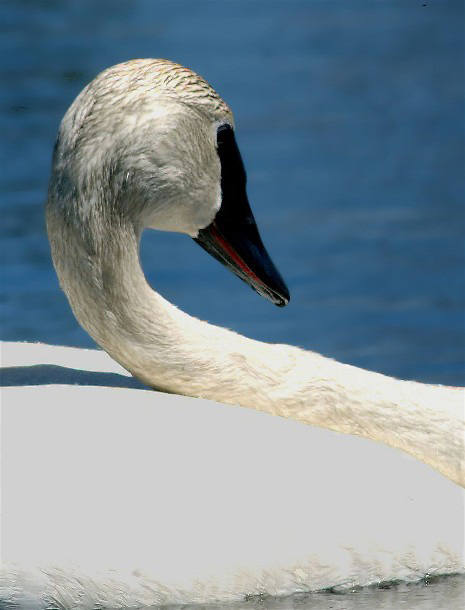

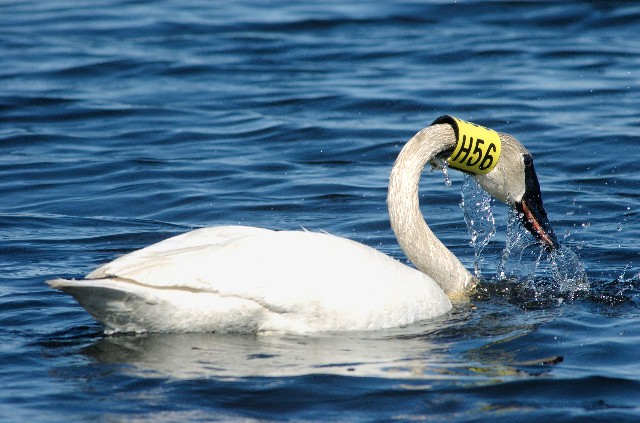

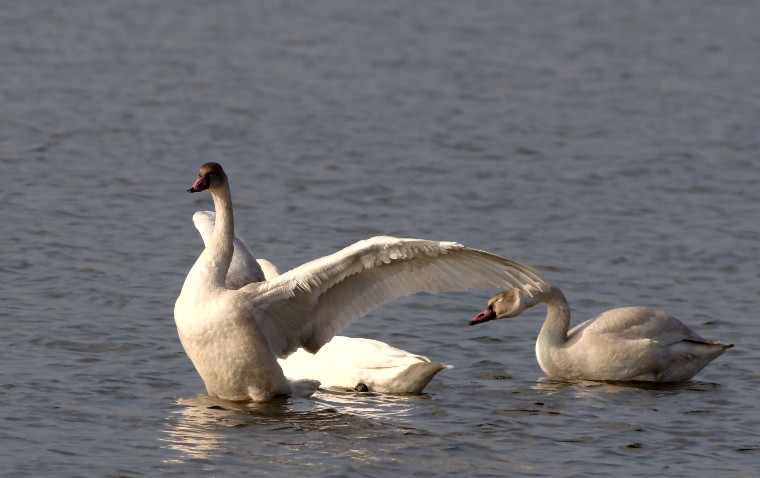
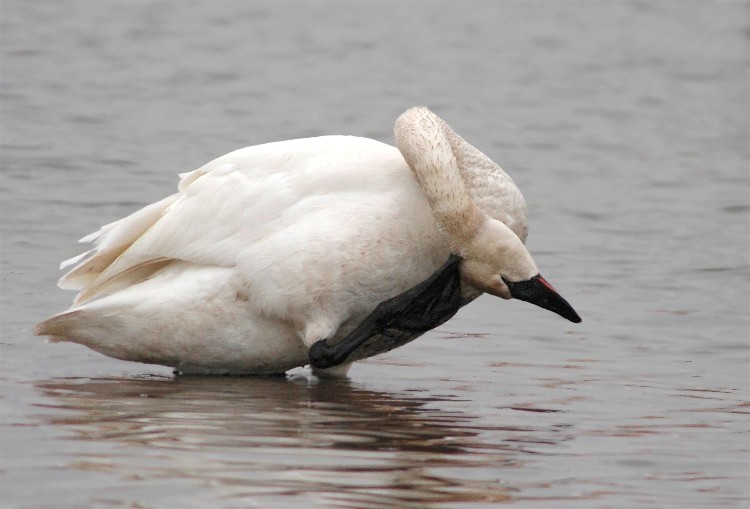
Tundra Swans: Here in Wisconsin we get Tundra Swans for a fairly brief period of time, during spring and fall migration. Most of the swans we see here are moving between their breeding grounds in the arctic tundra, and Chesapeake Bay on the Atlantic coast of the U.S. We find them here, often in large flocks. I personally have found them to be the most difficult of our swans to get close to. They are the smallest of the three swans and are also the noisiest. At times they sound like a cross between Canada Goose and a Sandhill Crane. Adult birds with summer feathers possess an identifying mark that is yellow, and resides just below the eyes on the bill.
You will see that ID mark on the closest bird in the picture below. Grayish birds in these pictures which were primarily taken in November, are immature and were born in early summer on the arctic tundra.


Common Mergansers: All of my first photographic experiences with Mergansers were with the Common. That goes back to my film days. I used to make yearly trips to the Wisconsin (and Mississippi) Rivers to photograph Bald Eagles. The waters below the hydro-electric dams stay open, allowing the eagles to fish. That also meant there was good fishing for Mergansers. The eagles would wait for the Mergansers to dive for fish, and then attempt to grab any fish that surfaced from fear. Every so often they would grab a Merganser instead. When the eagle activity would slow I would then concentrate on the Commons. Since my change to digital photography I have had only two quick opportunities with these birds.
The redheaded bird below is the female and they are very similar to the female Red-breasted.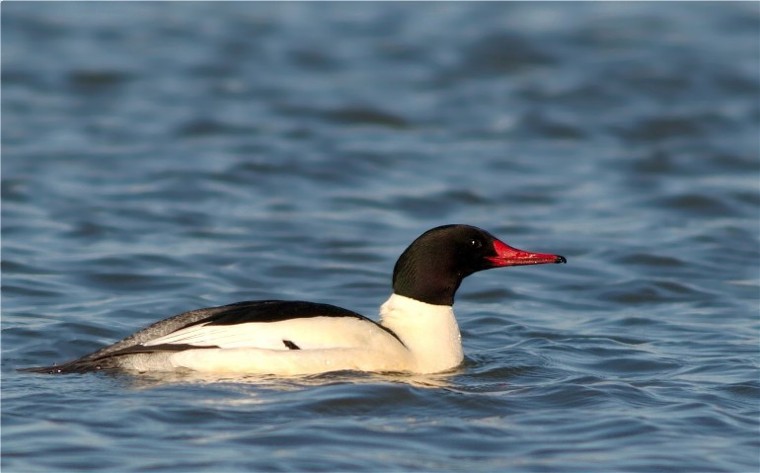

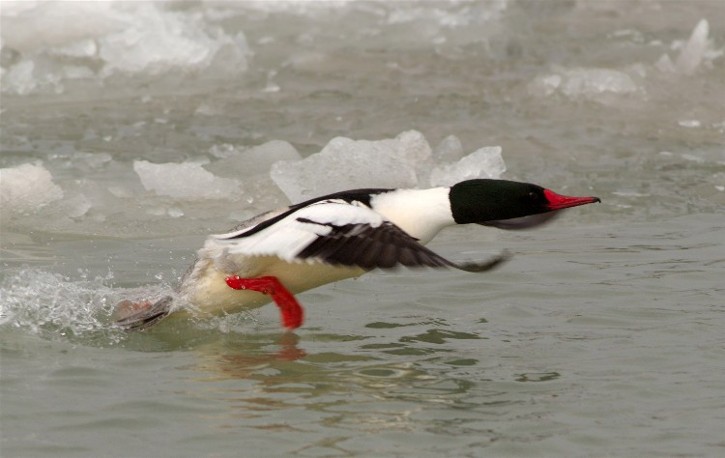
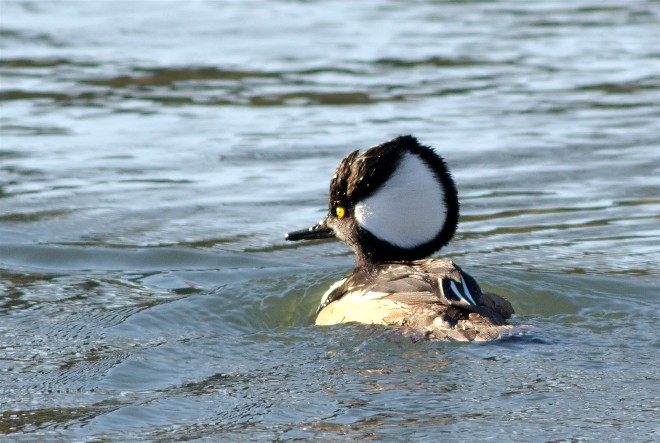
Hooded Mergansers: I have had fair success with the most interesting of the Mergansers, the Hooded. I do consider them to be the most timid of the three breeds. Both males and females have the ability to fan out that big head.
Experience has taught me that the Hooded is the most popular with photographers. I enjoy these active birds a lot but our final bird of the day has always been my favorite

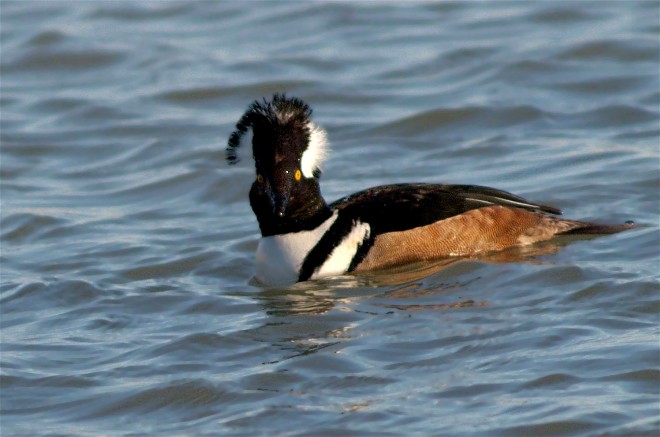
Red-breasted Mergansers: At one time I thought I was never going to get a photo of a Red-breasted Merganser. When I finally did, well they became the most numerous of the three, and the easiest to photograph. For me anyways. I love their “punk” style hairdo and much like the Hooded, they are active and interesting birds. I once counted (or guessed) about 100 birds in one place at one time.
Once again the redheads are the ladies.
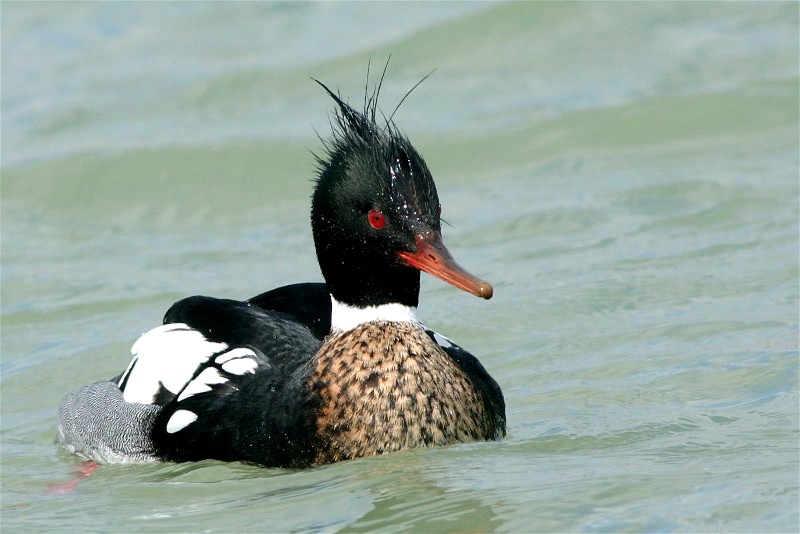
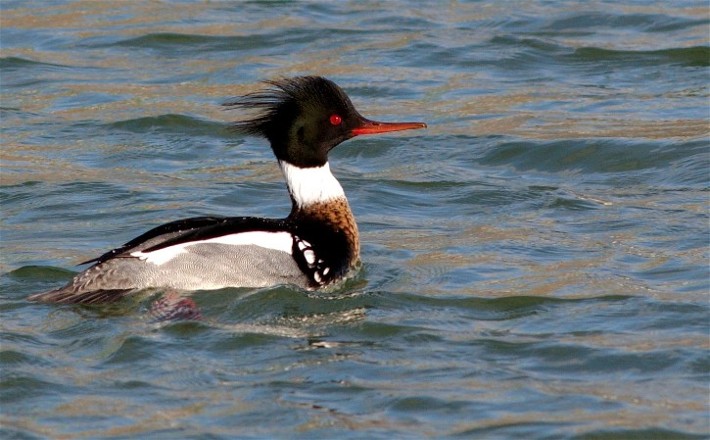

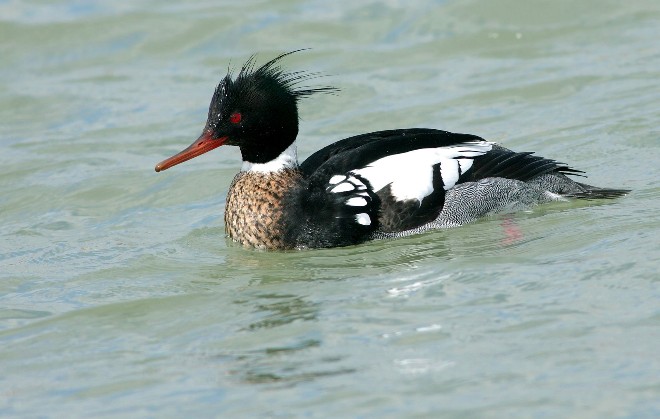

Waterbird photography is fun, multiplied by 1000. Trying to compose with subjects that are often on the move is a challenge that I have always loved. Of course many images of these bird are composed at home. The water is half of your picture. Tiny ripples, large waves, smooth as glass. Reflections of the bird, reflections of the colors of the sky, or a boat, or a building.
Whether we are talking swans and Mergansers, or gulls and Mallards, it doesn’t get any better than waterfowl as a subject.
As always, I continue to search out inspiring photographers so that you don’t have to. I happened on Kari Post and I think it is worth your time. Landscapes, wildlife, indigenous cultures, historic architecture and more. She conducts workshops and travel tours as well.
I appreciate you visiting with us at Earth Images, hope y’all come back, Wayne
 Earth Images Blog by Wayne Nelson
Been working on a close up of a Hooded Merganser for a while now. Maybe my next camera.
Those Hoodies can be a challenge Ron! Long lenses help!!