Before you know it, spring will have sprung and many of you will once again be crawling around on your hands and knees, photographing one of the most popular subjects in nature….flowers. From fields with hundreds of thousands of flowers, to the leading edge of one portion of a single petal, no subject is more versatile for a photographer. Whether a single blossom occupies your entire picture frame, or flowers are only a complimentary component for a larger landscape, they are a powerful subject.
Morning Glory
Wildflowers…Cache la Poudre Wilderness Colorado
Bergamot, Wisconsin
I love using one species of flower for different photographic purposes. Wild Geraniums are a favorite of mine and below we see them used in two different ways.

I make a lot of my flower shots with dew. I found out years ago that they sell better and I also enjoy them myself. That has made for a lot of early mornings but it has been worth it. I have started many days of photography with the sunrise, and soon after I would hunt for dewy flowers, insects and spider webs, and then a day of bird/wildlife photography.
Blue Trumpet Flowers with dew.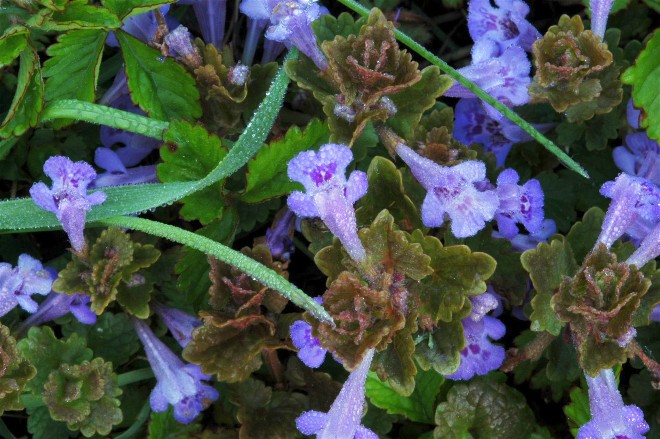
Dew and rain frequently have different characteristics to them. Rain is often clearer and is a little bit of a thinner forest….so to speak. Rainy days are great days for photography. I used either plastic food bags or garbage bags to protect my camera gear.
Spiderwort and rain.
Most flowers are indigenous to specific habitats or eco systems. The wild rose below was photographed in a local wet prairie zone where both swamp and prairie roses will grow. The Rugosa Rose is also possible. I am not sure which sort we are looking at.
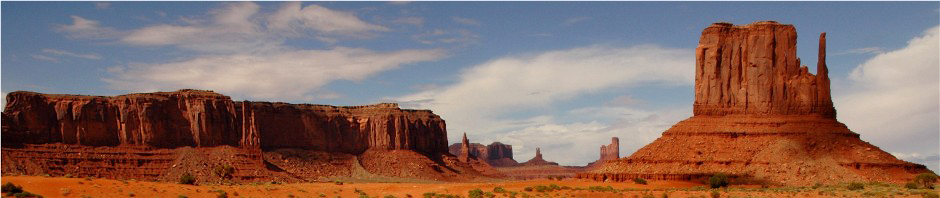
Our next flower was photographed in the desert of southern Utah. This is supposedly Desert Primrose and is a lover of dry climates and sandy soils. I use the term supposedly Desert Primrose because it is quite different from the yellow colored Evening Primrose I am familiar with. 
I am not sure how many different kinds of Phlox there are in the world but there are at least four varieties growing in this region of the north central U.S. These flowers are another favorite of mine because they can be photographed as entire fields, they make excellent single blossom images, and they are especially nice for small groups of blossoms. They also lend themselves well to both straightforward and abstract images. Phlox
Of course there are always those single flower stand alone images that are traditional and beautiful. Such is the case with this ? flower below. I am not only uneducated as far as the identity of this flower, but I am not at all sure whether it is a wildflower or one that has been cultivated. ?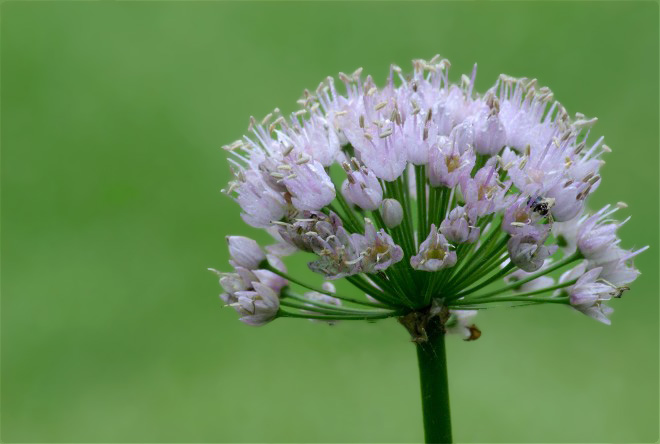
Then we have the Common Thistle. A complex flower that is simple.
The secret to strong images of single flowers is simple. That is to say it is simplicity. Clean and simple compositions, with backgrounds that don’t distract the viewer from the subject, guarantee success. It is important to truly look at your backgrounds from outside and inside your camera. How far is the background from the flower? At any chosen f stop, how much detail can be discerned? Use your depth of field preview lever/button on your camera. The other winning comp is to place other colorful flowers in the background, and then use shallow enough depth of field, or have those background flowers far enough away from your prime subject, that they become soft out of focus washes of color. If those washes of color compliment the flower, the image will work. If I had an example of this handy, I would show it but…..
I addition to the ? and thistle, the vertical shot of the Geranium from earlier in this post is a good example of this photographic philosophy of simplicity with clean backgrounds
I have been using the terms simple or simplicity to describe effective imagery for a long time. What about the pictures in this post that show dozens and even thousands of flowers? Simple may be….well….too simple. I think the goal for busy photos is to bring clarity to the scene. Make it clear what your intent was. Get rid (through selective composition) of all that extraneous stuff. A photographer that has a clear and crisp point of view, will always be more successful than one who sort of wanders aimlessly through their subject matter. This seems to be applicable to much of life.
Obviously an article like the one above is not exactly loaded with technical info. Posts like this are quick for me to write. My hopes are that among its readers at least one person will get an idea or two from its contents.
Make today a special one, Wayne
 Earth Images Blog by Wayne Nelson
Wayne, I have sent many of your works, but the one of the spiderwor has always been one of my favorites. It has rich colors, clean line and is artful.
The flower you could Not ID is a member of the alium family or wild onion. There are a lot of wild garlic in your area and it may be that.
Thank you my friend! Wild onion is in fact what most people around here call it. As soon as I read those words I recocnized it. Sometimes I can’t believe how many flowers I do know, never thought that would happen.
Thank you pal. I hope all is good with you
Spring will be here soon Wayne, as I look out the window at more snow!
And more and more and more! We’ll just have to go by history and believe that spring will happen Gary.