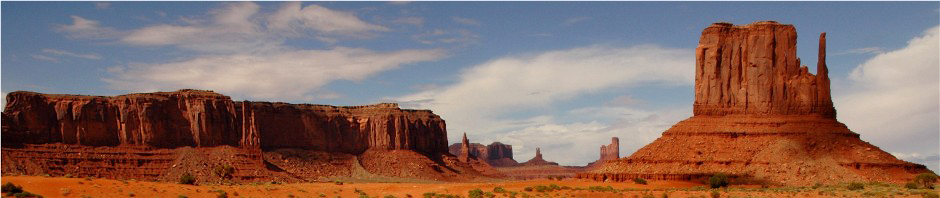
The Color of light: I think the one thing that nature photography has taught me, is the art of seeing the color of light. Photography is the capture of light. When I realized that my conventional schooling on colors would only half serve me in photography, more powerful images were to follow.
We are taught that this color is yellow, this one red and the next one blue. We learn that blue and yellow make green and so on. That satisfies most people. A Blue Jay is obviously blue and White Egret white. Right? If we agree that a W. Egret is white, and that the sunrise yesterday was red, then why can’t we agree that the egret being bathed in that morning light is a combination. In other words, pink. A white Trillium in a lush green forest will not look or photograph white. It will in fact be a pale green.
One of the reasons that I believe photography instructors, just like any teacher, have severe limits to what they can accomplish, is because they either teach everything is an X or an O…period, or they teach you how they see things.
We all learn from others and all of us were taught that yellow is yellow and orange is orange. If we take what we are taught too literally, we will miss much of the beauty in life, and we will fail to enjoy much of what we photograph. To me, the color of what I photograph is the color that I see. That egret is pink. The white Trillium is green. I have worked with photographers who are eternally disappointed because they were always taught a Goldfinch is gold. Even if the red light of sunset has turned him orange. When I make pictures I am always looking at the light, or at colorful reflections, and seeing what it does to my subject. I get very few surprises when I get home but I am usually happy with the color in my images. Sometimes the years pass by and I forget what caused white to be warm, or cool, or pink in a particular photo but I am satisfied that I caught a fleeting moment in nature that is worth saving.
When I was doing commercial photography I had a bag full of filters so I could balance the color of my subject properly. Or at least what my customer felt was correct. I understood that, but when I left that form of photography, I couldn’t wait to show all the beautiful nuances of color that nature painted my subjects. If you paint a yellow bird with a blue brush, is it not green? At least until you remove the paint. Please don’t paint any birds.
Just because a school teacher makes an absolute statement, doesn’t mean we are absolved of our obligation to continue to think and see for ourselves. The same is true of a photo instructor.
I have always loved the journey of discovering things for myself. That journey of discovery has often been a rocky road, but a worthwhile one. I have taught (face to face) some aspect of photography around 60 times in my life, but I personally have never taken a lesson. I used to frustrate my wife when we went shopping. No matter what we wanted to buy she would always ask the first store clerk she saw where we could find it. There was usually a giant sign with a massive display of the product we were searching for sitting right next to the person she was asking. She only needed to look for herself. When the search was left to me the store would close before I could find what we wanted. When I finally asked someone, the store lights were being turned off. We are all different and I suspect the best method lies between my ex-wife and myself, but I will say my style of relying on myself has served me well in photography.
Is Perception Reality?: Everything is a perception and seeing it is believing it. Or is it? Once we have been shown that something is true, we perceive that it will always be true. If I told you that your 24 mm lens and your 400mm lens have the same depth of field at any given aperture would you believe me? If you have taken a workshop or read a photography book, you have probably read how telephoto lenses have a shallow depth of field and wide angles have a lot. Did your book or instructor mention that telephotos greatly compress space and wide angles stretch out that same amount of space? F8 with your 24 mm or your 400 mm seem to be a whole different thing, but it is really your perception (or perspective) that differs. Until you discover different, that perception will remain your reality.
My somewhat oblique point is that we all have our own version of what is truth, and for most people it is what someone has taught them at some point in their life. Discover your own truths and you will use those facts to your advantage, in photography and in life.
Art or Science?: Or should I say the art of science? Science and art are a lot closer than most of us think. If you are schooled in science you will likely accept more things on faith than if you are schooled in art. What? Artful people show more doubt than people of science. I do think the analytical thinking used by a “real scientist” can be of great help in mastering the “science of your art”. Science multiplies. Someone does some work in the year 1200, and from 1500 to 2013, most of us just accept it. It has been multiplied by millions. No matter how far-fetched it is. A new scientist comes along and disproves it, and that becomes the new absolute for another 900 years. Have you ever really examined the “big bang theory?” Not the TV show. I was taught this theory through much of school. Neither my teacher nor my parents ever questioned it. Eventually I did. What had previously been my perception had also been my reality….until I thought about it.
Photography is a mix of art and science. My observations have led me to believe that the art of photography without the science is a rather meaningless expression of self-indulgence. My personal journey taught me that the science without the art will eventually lead to stagnation.
Perception is reality. If photography is a science to you, then both your images and those of others ( in your eyes) will only succeed through the mastery of that technology. If it is an art and only an art, you may satisfy yourself, but sooner or later the world will tire of it, and move on. Eventually it will only make sense to you.
How can you use that 24mm (or 400mm) lens to create your own personal vision…at 5.6…or f22? A different perception will create a different reality.
Seeing is Believing: If perception is reality, can you believe what someone else sees? What if their perception (or reality) differs from yours?
If someone tells me they saw a flying saucer from another planet last night, I will likely think that they saw a shooting star or an aircraft, or that they finally finished that bottle of wine. Will my belief remain the same, if I see the same thing the next night? I like to see things before I believe them. If I do see the same thing the next night will I really see same thing? Maybe my perception is different from my that of my friend?
We all bring something different to photography and the act of showing an image is the act of letting somebody see. In 2013, as the variety of possibilities of altered images goes up daily with every new software program, are we in danger of having the next generation of children that live in say….Brooklyn or the slums of L.A., see the personal visions of photographers, but not the real world? Is seeing still believing?
Personally I worry very little about a world of obvious altered realities (as I see it?). I worry more about images that are always scrubbed clean, and are shown as if nature is Disneyland rather than the real wild. I have scrubbed a few images myself but you will always see the “dirty truth” in other images.
Is room for both? To me, yes there is.
There is life outside of photography and if you want to prove the theory that perception is reality, just talk with all of your neighbors or co-workers about the politics of today. Limit your conversation to people you know and have always liked or respected. Keep it to those who are in your own socioeconomic class. You (and they) may well think we come from different planets. Even if you agree with them, keep going because it won’t take long before you find some (or many) who will be flabbergasted at what you believe and you them. Perception is reality and every politician in the world, every company with something to sell, every do good organization, and every news agency is attempting to create in you, a perception that you will see as a reality. That is what sound bites and political ads are for.
Can Reality Be Our Perception?: In the end photography, (and life) is about discovering reality and finding a way to be happy with the truth. We can only live the with perceptions planted by others for so long. We have to search for the truth and make our photography and our lives better for having found it. Reality needs to be our perception.
I thank you for reading Perceptions, Wayne
 Earth Images Blog by Wayne Nelson
Love it — thanks!
Marcia Getto
Thank you Marcia I appreciate it.
Great article!
A question……Wayne, that illustrates everything you were saying……..What color is a green Moray eel? Sounds easy right? However, the answer is not in the question. A green Moray is actually blue….and it has a yellow bacterial slime that lives on its body, thus making it appear green, just as the light transposes color. We see it green, but it is not in reality. Our perception is that it is green and every moray we see is green, and that makes it become a reality.
Seems like I am talking in circles.
You used photography and politics as an example. It can also be used in many other realms as well, philosphy and religion, and sports are 3 that come to mind instantly.
Polar Bears are not white either. But yet they are. When you look at a sky blue lake, it is indeed the sky that “looks” blue not the water. Yet that water is blue.
Perception is reality.
That concept fits into every aspect of our world. To me the point is to create your own reality, but do so with truth, not a truth that someone else wants me to see, but one that I feel with all of my intellect, to be true.
Pingback: Bent But Not Broken | Wayne Nelson's Earth Image's Blog
Pingback: Imagination is Where Reality Comes From | Wayne Nelson's Earth Images Blog