I meant to mention in yesterday’s Everything Old is New post that as far as I can remember, none of those images had ever been shown before. That is why I entitled it the way I did. The images were old, but they were still new. A few of today’s photos have also never been seen before.
A lot of what I write in the paragraphs below, are just things we already know, but often forget. It is easy to get consumed with your central subject…..in this case the bird. There’s more to every bird picture than just the bird.
I mentioned in a recent post that one of the things I love about photographing birds in the water, is the water itself. I mean obviously I love birds and they are the center of the image, but oh that water. Of course light is the foundation for all photography. Let’s face it everything that appears in the picture frame is a part of the image, be it a positive or a negative.
Water is “almost” as big a part of a bird in the water photograph, as is the bird. Is the water wavy, or calm? Are there tiny ripples? Is it reflecting the sun, or is there an overcast sky? What color or colors are showing in the water? Does it add or subtract to the scene?
I have not added any colors or saturated the water in any of the shots below.
What’s in the sky, or along the shorelines has a lot to do with how the water looks. Ma Nature provides most of it but sometimes man adds some color too.
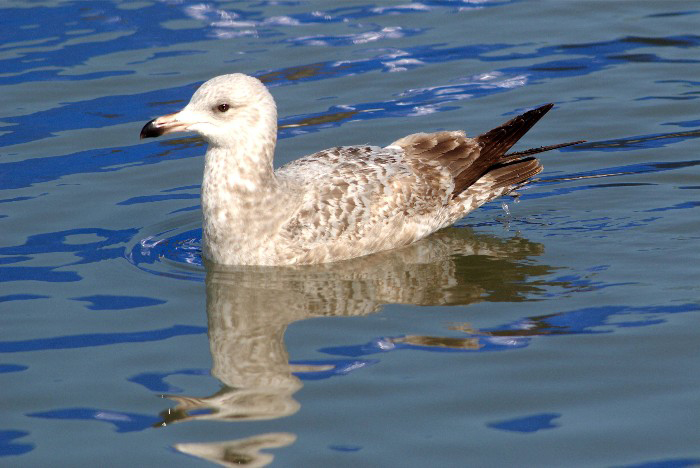
The blue reflections you see below come from a tarp covering a fishing boat. The birds would swim in and out of the blue reflections, and I just kept making images no matter where the birds swam. The male Greater Scaup and the gull in these pictures were oblivious to the colors, but I was not.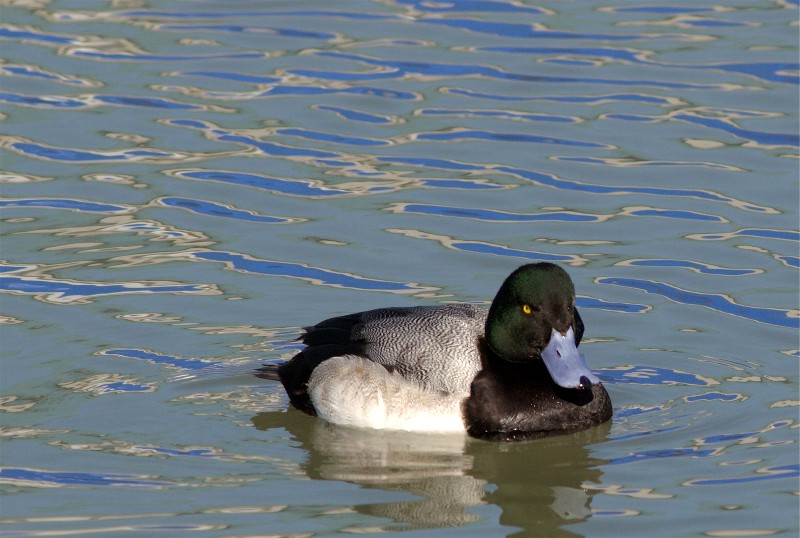
The brown and silvery patterns in this image make a simple swimming shot of a male Common Goldeneye a little more special.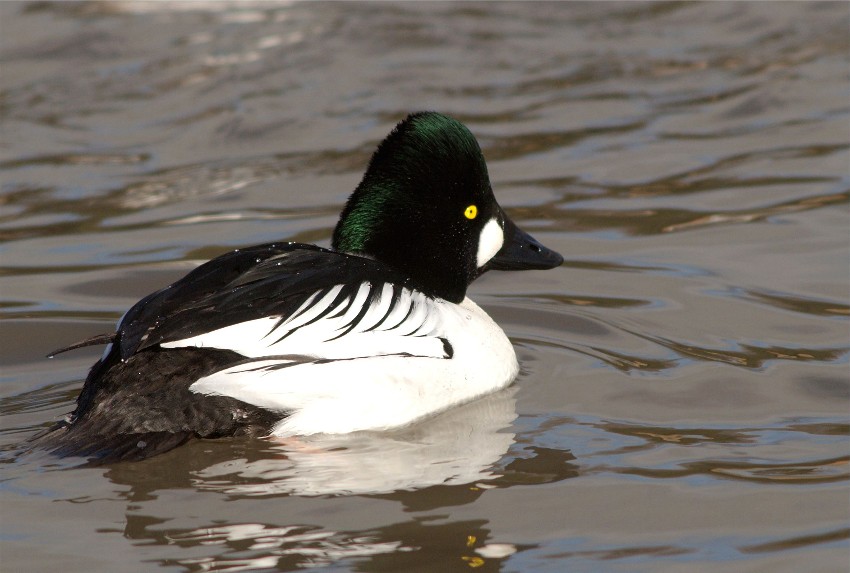
The rust colored patterns in the water almost mimic the beautiful head of this male Redhead Duck.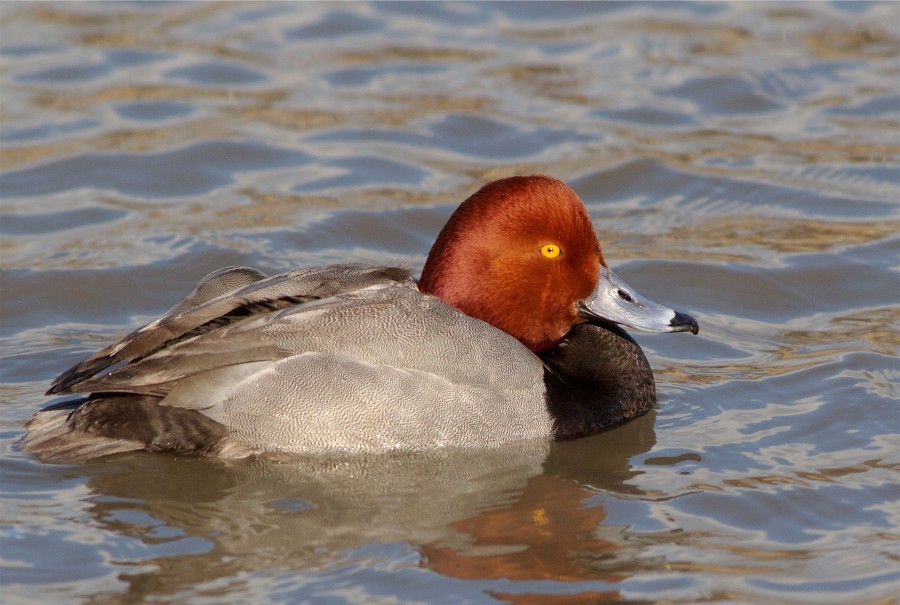
Calm waters on a clear day result in beautiful reflections of the duck itself. This colorful male Northern Shoveler made a good subject for a mirror image.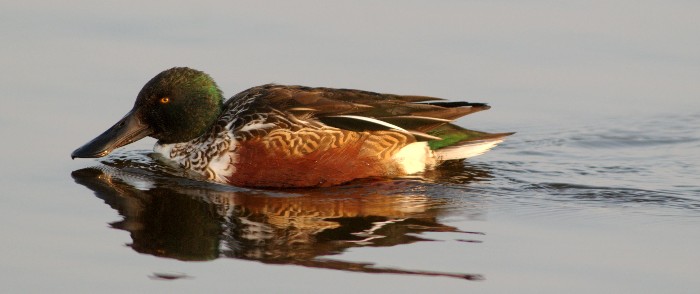
Cloudy days may not produce the vivid colors or the pop of sunny days, but the soft calm feeling of cloudy day pictures does have merit. Nothing could be worse (in my opinion) than having the same light every day.
This female Common Goldeneye was photographed under high bright conditions. It was over cast but the light was still bright.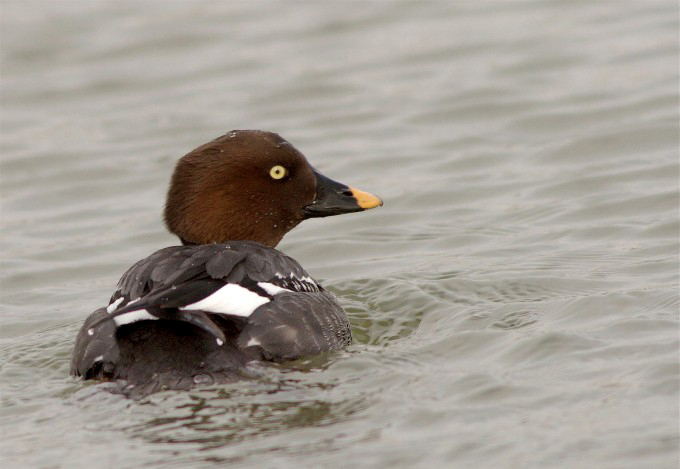
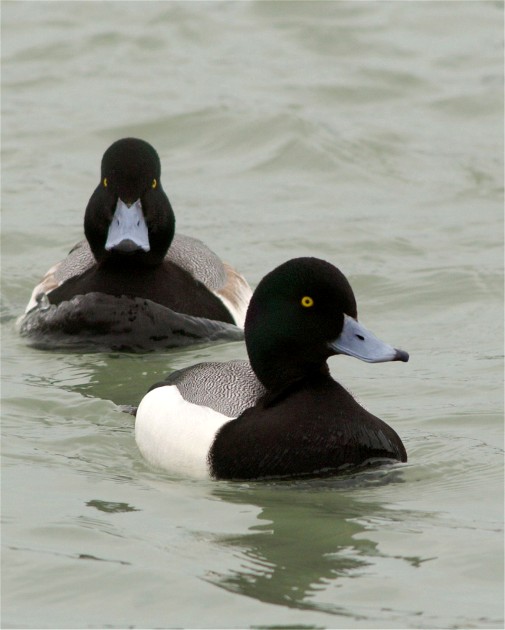
The two images below were made with skies that were heavily overcast. The only way images like this work is if the birds are tack sharp. On days like this when your subjects have dark heads, like these male Great Scaup, you will lose any iridescence. I still think there is a place for pictures like this with their soft gentle quality. The water for these two images was quiet. That meant a reflection of sorts, despite the cloudy conditions. The water is not as pretty here as it is in the sunny shots, so neither is the reflection.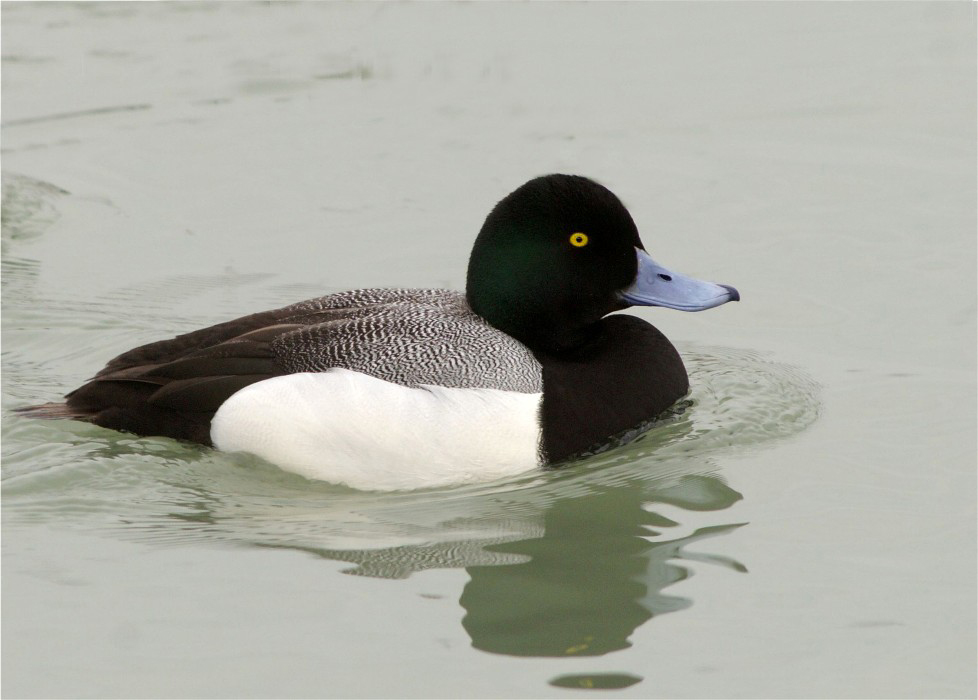
This male Red-breasted Merganser was photographed in light that was right in between the Goldeneye and the Scaup. Semi-high-bright.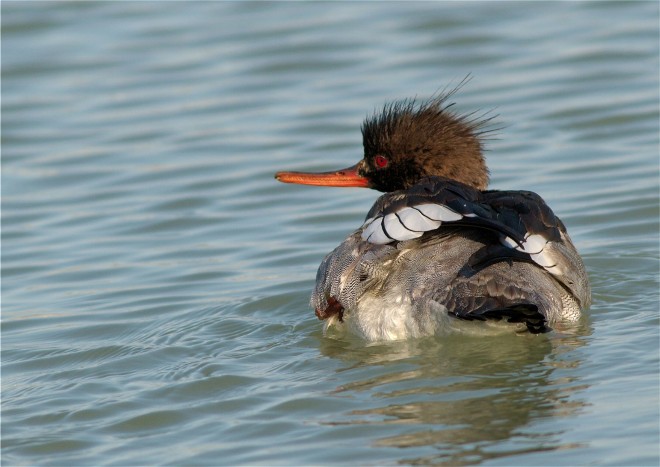
Then there is sunrise/sunset.
This happy Mallard couple was photographed about an hour before sunset. That left the water pretty ordinary but it wrapped the ducks up in a warm blanket.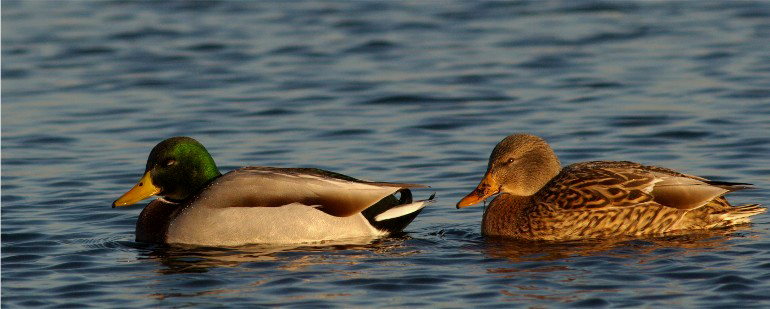
Not all water is liquid. Find a white bird, add some ice and the warm light of sunrise, and you have a pretty picture of a Mute Swan.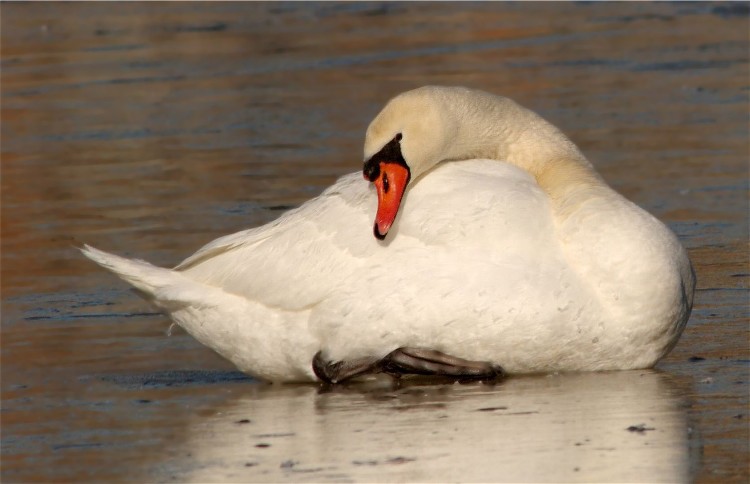
Natural light outdoor photography is all about studying the environment and the light in your potential photo. What is the sun like? Where is the sun? What is reflecting in the water? What is the color of the light? How do all of the elements come together?
We have to accept a lot of what nature gives us when we photograph wildlife. I said a lot, not everything. Moving six inches can change what is reflecting in the water. Waiting another ten minutes can turn the color of light to gold. Waiting for a cloud to move can bring to you the vivid colors of the sun, or the soft feeling of overcast. Bringing the elements together is not only about how a bird looks. It can alter the entire mood of your picture. It can mean the difference between reference and art.
The reason I write posts like this, is the same reason I used to read photography books. We all know that the whole image counts. Just the same sometimes it helps for someone to not only write about it, but to illustrate it.
In this area the best time for duck photography is just ahead. Make the most of it.
I have commented much on the most recent revolution of camera and software technology. I absolutely stand by my opinion that if you cannot keep up with current changes, you will sooner or later have to collapse any visions of pro level photography. Having said that, technique will always matter. Examine the photo of the Redhead Duck in today’s post. That was made with a 2005 model Nikon D70. That is a six megapixel camera that has horrific issues with noise. The RAW file was turned into a jpg using Bibble Labs software and I only cropped (yes this is a crop) the picture after that. No sharpening or color/contrast adjustments. I believe I could make a 20×30 non/glossy print from this image. Strong vivid light and a good lens helps but the better job you do in the field, the better those old camera images will hold up to newer technology.
Just an extra for those of you who live in the same area that I do. On Monday I was with my sister at Bong State Park here in southeastern Wisconsin. There was a Northern Harrier hunting south of the main road that leads to the Sunset Campground. Nothing unusual about that. On our way back I spotted a hawk sitting on a sign in the ATV parking lot. We pulled in and spent over five minutes less than 25 feet from this Harrier as it preened. How many pictures can you make in five minutes? We had our windows down and were talking in a loud voice. It finally flew away still totally unconcerned with our presence. No I had no camera and the bird was badly backlit but Harriers are usually easy flight shots and difficult for up close detailed portraits. Just thought I would mention it.
Make today a special one, Wayne
 Earth Images Blog by Wayne Nelson
Beautiful images Wayne & love the light on the swan & mallard couple!
So happy you made it out to Bong S.P.
Thank you so much Darlene. It is like going home again whenever I go there.
Have a great day.