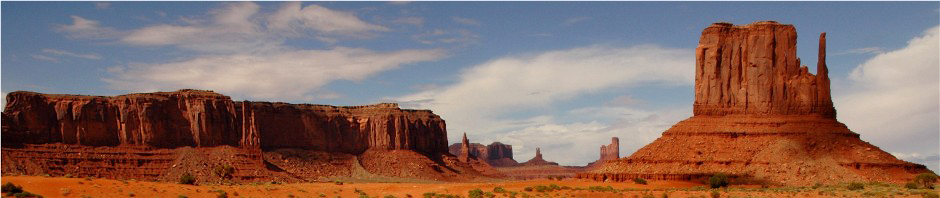
Nature photography (and life) requires a lot of attributes if you are to do it well. Two of the more important qualities are patience and persistence. When I made nature my primary photo subject in the 1980s, I came to the table loaded with persistence but short on patience. Lacking patience has hurt me in the arena of nature photography, and in life as well. Since 2005 I have dedicated myself to the vigorous pursuit of building a fortress of patience to use within my nature photography. Is it possible to vigorously build fortresses of patience? Seems contradictory.
Using bird feeding stations and blinds (hides), went a long ways in teaching me patience. It forced the issue. I became decidedly more patient when I got my first pictures of Scarlet Tanagers, Red-headed Woodpeckers and other special birds at feeders. Sharp-tailed Grouse and Greater Prairie Chickens sold me on the fact that patience brings rewards. Slow methodical (in the open) stalking techniques brought me within a few feet of hawks, and within inches of turtles and frogs. When you see the results you find more ways to exhibit patience. Eventually it becomes a way of life. The biggest difference in photographing sunrises and sunsets is that sunsets can take more patience. If you arrive very early for a sunrise shoot, you begin making images at the first sign of light. You continue until well after the sun has risen. When you are making sunset pictures it is all too easy to pack up and head home after you have made some nice shots of the setting sun. The best part is yet to come. Sticking it out to the very last ray of light, can take patience. Soon patience becomes a part of who you are. You haven’t changed, it was there all along, you just found it.
The years went on and eventually I could stand in line at the grocery store. The drive through at my local fast food restaurant now seemed quick enough for me to remain calm. Nature photography has made me a better person.
It seems like I’ve been writing this post for 10 hours. Wow! It has actually been only 5 minutes. I guess it is time for me and my camera to visit nature. She has been teaching me patience for a long time and every once in a while I need to revisit the teacher.
Today’s photos are only thematic in the loosest possible sense, although I believe every image should have a little bit of patience and/or persistence as a part of its makeup.
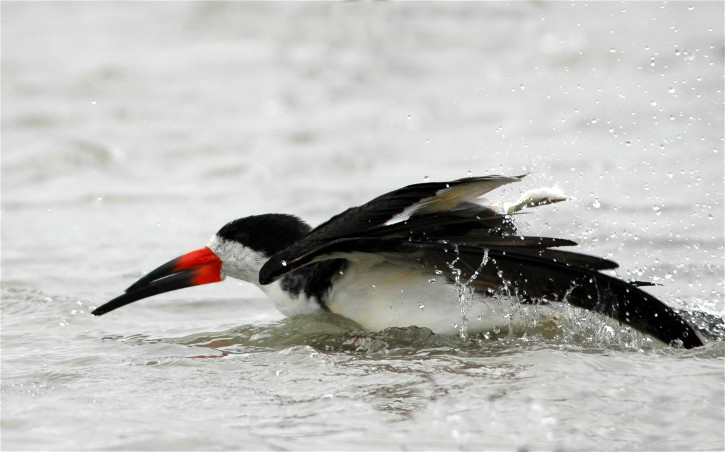
I’m pretty sure he is hunting, and he does carry his own weapons.
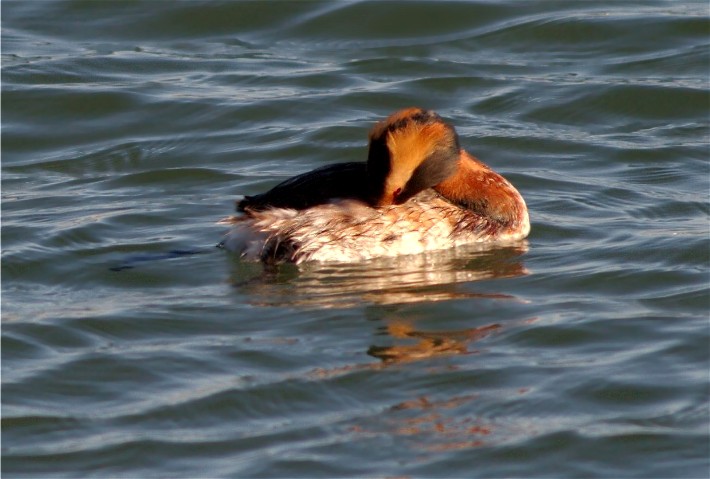
It took me years to create my first photo of a Horned Grebe. Then in two years I had hundreds of images of this species, both in breeding plumage, and with the winter feathers you see on my first grebe below. All it took is finding the right location at the right time of year. Persistence? For over an hour they struck no interesting poses, and then boom. A lot of them. Patience? The second two pictures show Horned Grebes further into their summer breeding plumage.

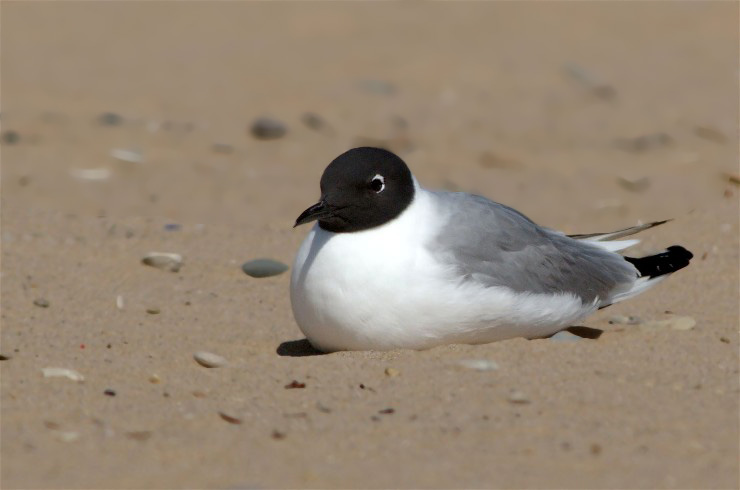
I’ve mentioned before that Ring-billed Gulls are as common as House Sparrows along the southern shores of Lake Michigan. The first gull you see below is also pretty common in these parts. It is the larger (than Ring-billed) Herring Gull. Then every spring and fall we get stop overs from the migrating Bonaparte’s Gulls (next photo) as well. Most birders turned photographers tend to have a large collection of gull photos. For a photographer turned birder like me, unless they show distinct differences like the birds below, I rarely even know what I am making pictures of. The final picture is a Black Skimmer (gull). The image was made at the Gulf of Mexico.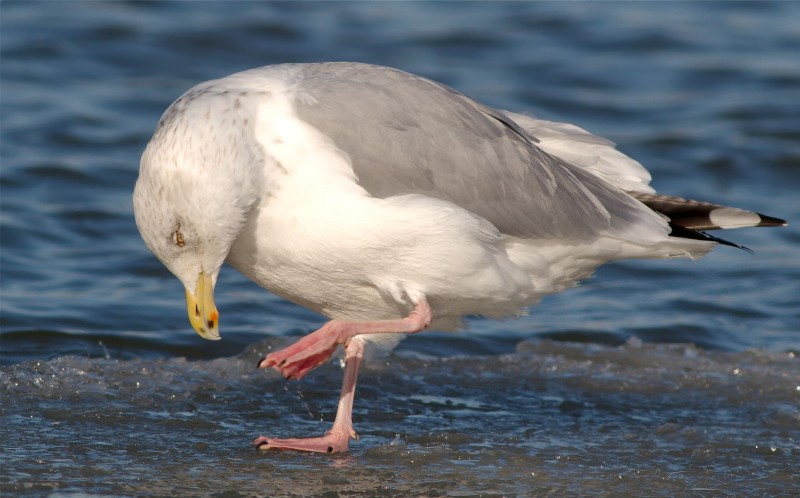
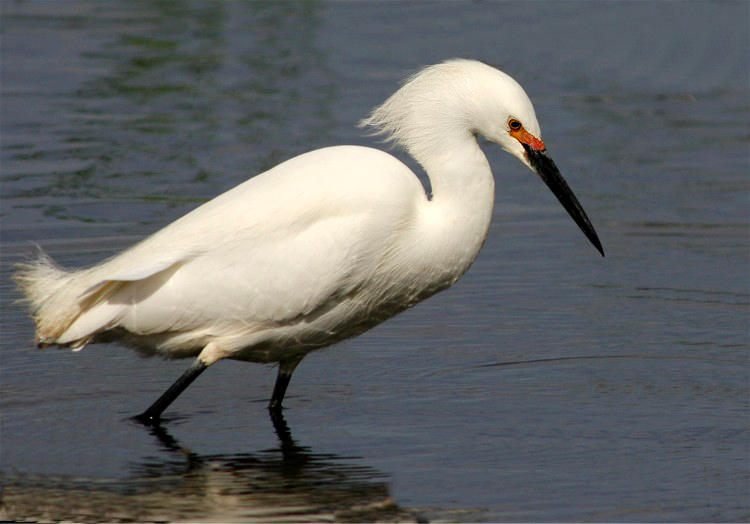
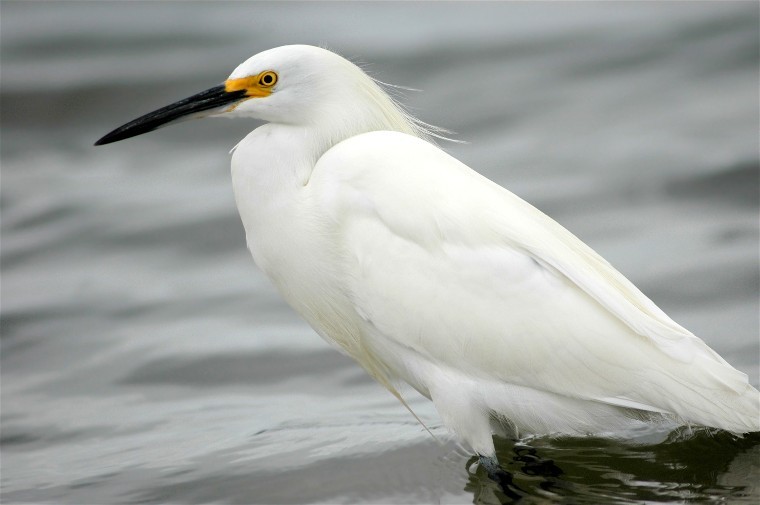
Snow White. Snowy Owls and Snowy Egrets are not colorful birds but they carry the beauty of elegance. The top Snowy Owl image was made in Wisconsin at Horicon Marsh NWR, while the first Egret was photographed at Bosque del Apache NWR in New Mexico, and the second in Texas near Aransas NWR. Those two egret pictures give a good example of how different light suggests different moods to the viewer. Both the top sunlit picture and the second photo which took place in the soft light of overcast, have their merits. It is a close call for me but I actually prefer the soft light. The overcast is just bright enough to produce some gentle shadows.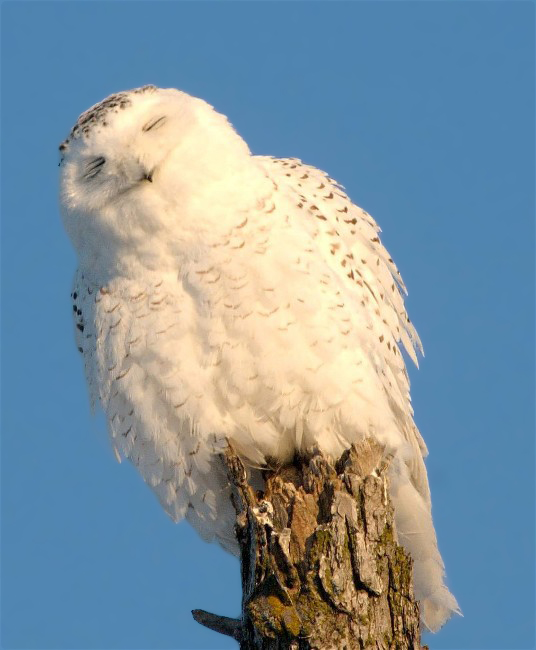
God Bless the season.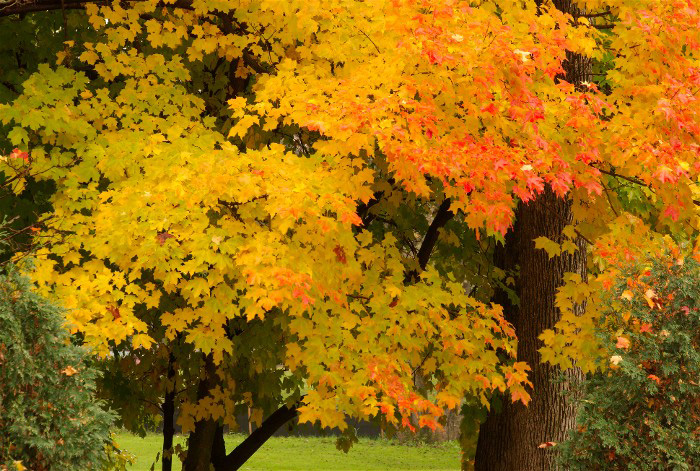

In the 1990s when digital photography began its climb to popularity, first via the point and shoot format, and then the Digital Single Lens Reflex Camera (DSLR) , those who had left film and joined the digital revolution, sang from the mountain tops that digital imaging was here forever. I have always thought that to be silly. Not only isn’t digital imaging here forever, but digital everything will eventually become obsolete. Nothing and nobody lasts forever. The thoughts on the next step are fermenting in somebody’s mind as I write this paragraph. Personally I am very grateful that I spent my photographic life making the transition from rudimentary film photography, to technically advance film photography, and on to digital. I have made pictures with everything from a 4×5 film camera that you assembled the body/bellows, lens/board, and film back to make images. I have had to put new film into film holders via a light-proof changing bag while out in the field. From that I have used Nikon’s D3 DSLR, and almost everything in between. I have been very fortunate. I learned photography and what it truly meant, and then how to express myself through that medium. I will admit that if I didn’t have to fiddle with adjustments, and go through a series of thoughts to create a good image, I wouldn’t enjoy it very much. Those things are too much a part of me. They’re too much of what makes me feel like a photographer. Who knows what the next revolution/evolution will be, but I do know that still photography will persevere in one format or another.
 Earth Images Blog by Wayne Nelson
Wayne, I remember when you and I were at Clingmans Dome in the Smokies shooting the sunset. When the sun dropped behind the mountain, all the other photographers packed up and left. I was about to do the same when you said, ” What are you doing?” “It’s over.” “Ron, Turn around and look at the sky.” I did and there were the prettiest pink-orange clouds there. We shot for another half hour. Instead of relocating our tripod to the trunk, we shot another roll of film. I learned a valuable lesson that day.
There’s nothing like those final moments just before the very last light leaves. Worth the wait.
The hardest part of nature photography for me was learning patience.
To follow up my reply comment, I have always meant to dig those images out of my slide files and post them.