I always loved getting up very early and heading out into the predawn darkness with visions of dramatic light, subjects covered in dew, and nocturnal animals dancing through my head. I imagine that many of you could guess that by all of the sunrises and dewy insects and flowers that I have shown on this blog and other places.
Have a little dew! Caught this wildflower absolutely saturated with dew in 2008. The morning sun is just beginning to touch the blossom. For a long time I was confused as to the species of this flower, because of the color. This is actually a blue Chicory flower. It’s a flower I am very familiar with but the total “dew soaking” and the morning sun created a color that threw me off. Remember I have always said that when natural light and other phenomenon create a color or cast on a subject, then that is the true color for as long those conditions last. Our job is to capture those fleeting moments and share them with the world.
While dewy flowers are a common photographic subject, I rarely see dew covered groups of flowers. My first non landscape calendar cover was a group of Virginia Bluebells covered in dew. I believe the flowers pictured below are called Trumpet Flowers. This image has laid around in my files for a long time. I always thought I made it in the Smoky Mts., but I now realize this is a digital original, meaning it was made after my final visit to anywhere in Appalachia. I guess the location where I snapped the shutter will have to remain a mystery to me.
Dew is good. A photographers friend.
I’ve been showing before and after shots of more and more digital b&w conversions. That’s because they are becoming more and more popular with the photographic public. I return to my favorite b&w subject, historic architecture. As you can see in the top photo the old adobe sandstone is pretty powerful in color. Still I like the b&w better. In making some of these conversions I have re-found something I knew way back when I was doing b&w (film) fine art gallery photography. If you show the sky in b&w it needs to be interesting. A plain blue sky would have worked with the color version of this image, but the contrast between cloud and sky is very important in the b&w version. Also the up close, wide angled perspective helps to make the b&w version more powerful.

Every once in a while I like to go back to earlier times when I used to make stock images in public zoos. I would still suggest this as a good, cheap way to learn the art of wildlife portraiture. I would no longer suggest it as a method for shooting hard to get stock images. A trip through Flickr Photos will show that there are tens of thousands of photographers traveling to the locations of exotic wildlife every day. Back when I used zoos as a stock supply even most of the top name photographers would not spend the money to travel to those real locations. I do sometimes wonder in a world that is supposed to be so much more financially stressed now, with all but the wealthy being so downtrodden, how so many ordinary people manage to travel the world. I think maybe back in the day they waited to make enough money first, and then traveled. I digress.
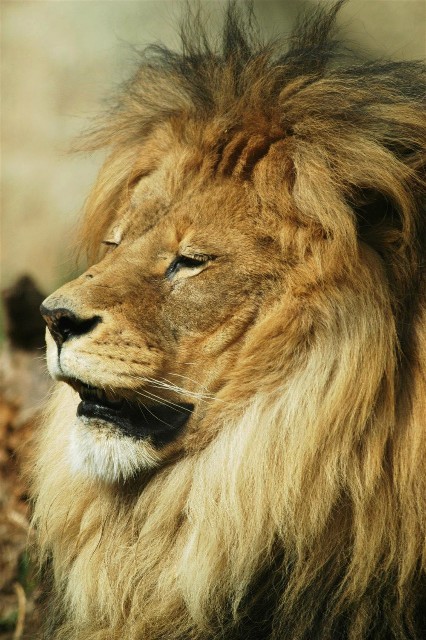
The top image is that of a Barbary Sheep, and of course the next two are obvious. The sheep is in a barrier free exhibit. I am only a few feet from the male lion, and there is a fine mesh black fence between the male and myself. I placed the camera lens (100mm) as close to the fence as possible and used a wide (f4) aperture to make the fence disappear. The young lioness is in the same enclosure but she is a ways away and my trusty 500mm was used, with another f4 aperture.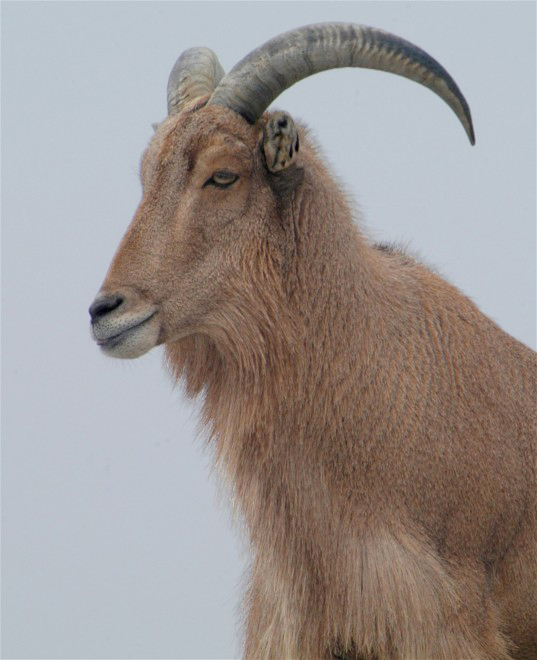

Yet another image from my beloved White Sands in New Mexico. I’ve never shown this one before, and the main reason for that is that I don’t like it as much as the other 100 or so images from this location that I have shown. I would prefer this specific shot without the desert plants near the peak of the dune. Just the same it says a ton about the color of light. Nothing gives photographers more options than the varied natural colors of light. Not only are those colors seemingly infinite, but how they affect different subjects varies beyond belief. I have shown images from this location that literally show nature’s rainbow.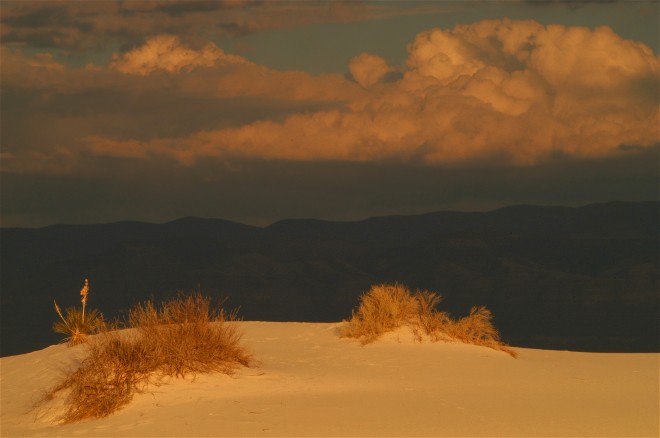
When I used to create indoor studio set ups for products and still life’s, the most fascinating part of the job was lighting the scene by using different color lights, gels, and reflectors. You could transform the mood of any image. I think it is even more interesting to try to catch nature’s light in a compelling and artful way. Photography is light!
Tips for the stock market. The photographic market that is.
Multiple plumages (winter, summer, age, etc.) of one species (Horned Grebe) in a single photo.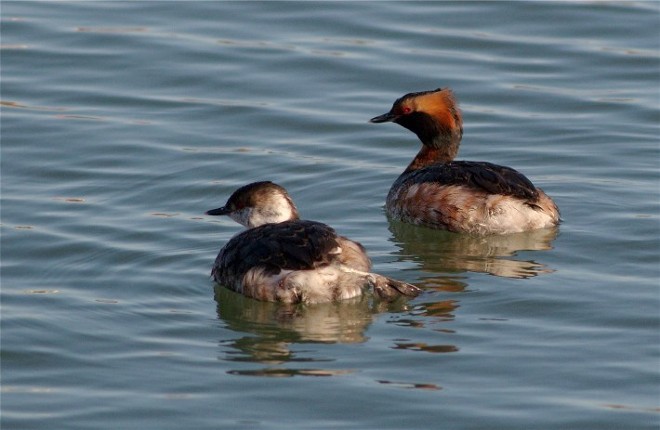
Insect shots that are close enough to distinctly show the different body parts. This wasp image was made good and tight with my Nikon 105 Micro lens.
Varied shots of a single location. Not just different parts of the scene or differing information, but images that display a variety of moods. Varied lenses and zooms, along with feet, come in handy in this endeavor. If you are healthy and able, spend as much time as possible moving around your subject. Get to know it and find out what it has to say. It will speak to you. Only click and run when you have no choice, or when you’re sure you’ve captured the essence of the place.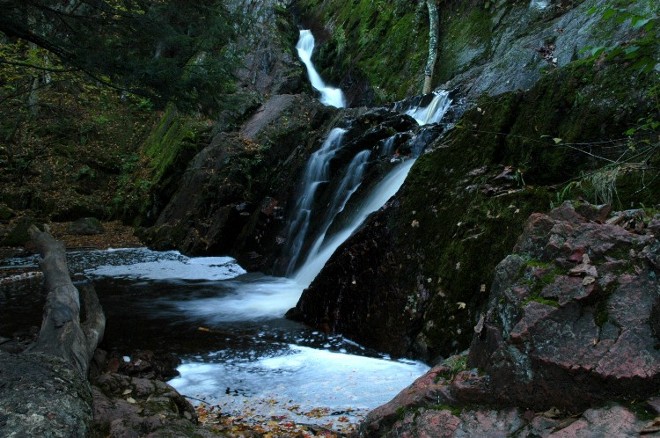
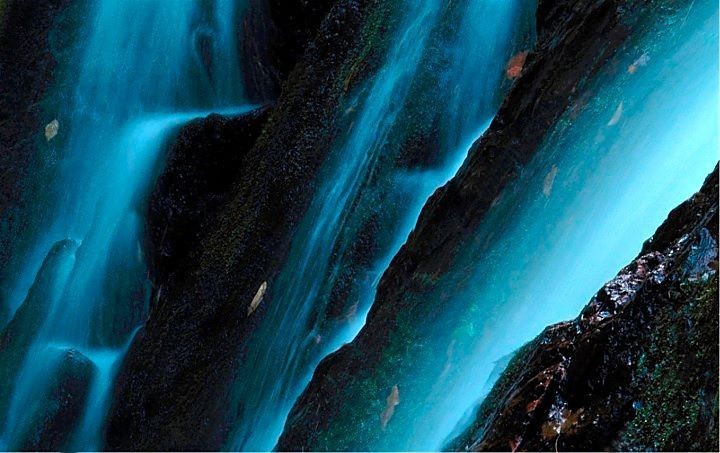
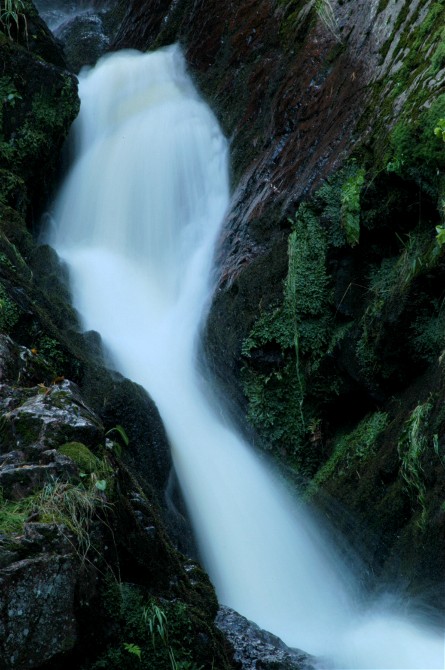
I have been asked before about why is it that the water seems to be blue in some of my Morgan Falls photos. Those shots were made on sunny, blue sky days. I am deep in the woods, but some of that blue light, reflects down into the shadows and paints the scene blue, especially the water. That blue can be corrected at the time of exposure by using filters or altered white balance settings, or at home with software. I choose not to do that for the same reasons that I give in the Chicory flower picture that began this post. I do admit that I would be a little more likely to make that correction if my subject was wildlife.
When I used to go to view (and judge) photographic exhibits, if I was seeing a one photographer, one location exhibit with lots of prints, I would feel a bit cheated if all of the imagery was made from one view, of one subject, or even in one type of light. Sometimes we get so caught up in the best location, and the most spectacular light, that we don’t convey the whole essence of a place. A show of nature’s photographic art is always about both the subject and the photographer. Otherwise it becomes self-indulgent, and you fail to show the respect and love you need to have for that very special place. You and your subject are a team.
Go out an absorb nature’s bounty, and interpret it for the world, via your camera.
 Earth Images Blog by Wayne Nelson
That first photo really caught my eye! The others are lovely as well….very nice work. 🙂
Thank you Chris, I appreciate it.