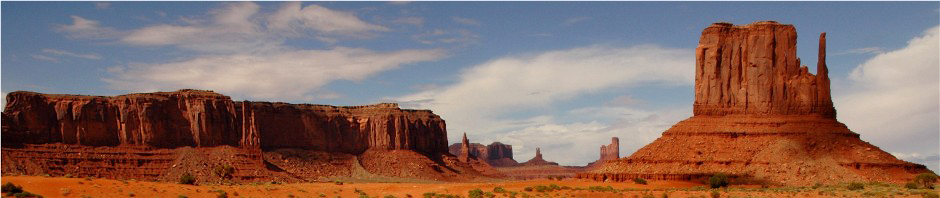
Photography is the act of decision-making, personified. Of all of the decisions that photographers make it is composition that holds the most possibilities. I have always loved to talk with my photographer friends about composition. It is my favorite subject to write about and it is what I enjoyed the most about teaching workshops and giving seminars. It is the most subjective part of nature photography. That makes it by it’s very nature, interesting. The only subject that I enjoy just as much as comp is that of the “color of light”. In fact using the color of light in imagery, is to me just another facet of composing a picture.
Traditional landscape compositions made in pleasing sunlight, have and always will present the most opportunities for making sales. There will always be a market in calendars, books and even prints for the landscape made at 8:30 am or 4:30 pm on a sunny day. When Herman and his wife Silvia and the four kids took that trip to the Grand Canyon, it was likely at some point towards the middle of the day when they viewed the canyon. It is how they remember their trip. It is doubtful that they even saw the canyon in early or late light as they wouldn’t be able to “see much” at that time of day. Few normal (we are not normal) people go to a great location to enjoy the beauty of the light and to see how it affects the land.
Having said that, most photographers have long realized that working shortly after sunrise or before sunset, will color your subjects with a golden or pink hue that will help to compositionally build a more powerful image. There are also calendar and book publishers that are aware of this. Of course there are also art buyers who seek this more atmospheric type of picture. Your market will diminish but those that buy your work will think of you as more of an artist.
Then there is the landscape that has been photographed using the absolute first or last kiss of light. These are moody and sometimes brooding images. There is mystery in these pictures and most publishers of paper products are not looking for mystery. Still there are those few “risk taker” type of editors where you may make a sale. There is a small segment of the art buying public that buys this type of imagery and they will think you the ultimate artist. Sometimes I think that the buyers of the “kiss of light” pictures are all photographers themselves.
I have always photographed all of nature’s subjects, and I also made my images in all kinds of light. The one exception is that I generally only create mid-day landscapes on overcast days. This all means that I have never been assigned a personal style for my images, but that’s okay because I get to create “scapes” at all times of day and in all sorts of moods.
Photos made in the type of light in the picture below will sell in more places than any other light. I know that to some they may not think this to be artistic, but art is truly in the eye of the beholder. This image was created in the Rocky Mts. of Colorado.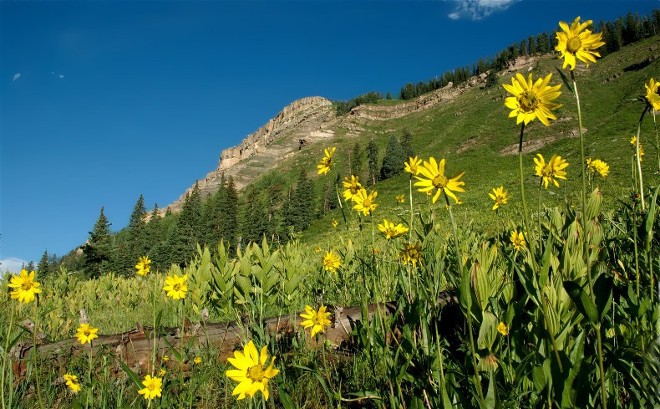
The location and subject definitely does matter in any landscape photography that is done during the “normal“ hours. This early afternoon shot in Monument Valley, “pops” quite a bit due to the 3D effect of the warm advancing colors of the red rock, and the cool receding color of the blue sky. It has the appearance of being shot closer to dusk than it actually was.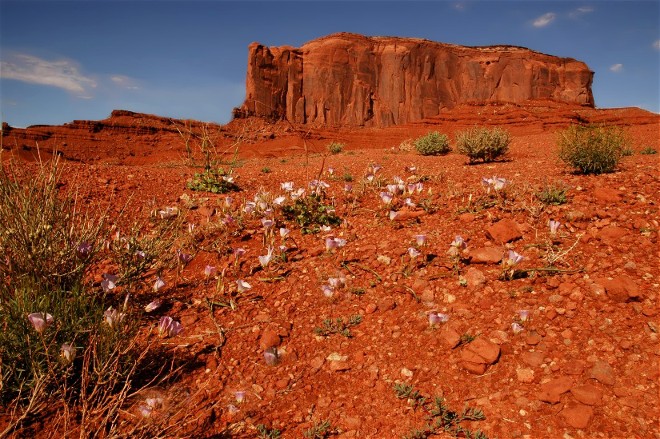
There is nothing like the sweet light just after sunrise or before sunset. It adds a little magic to the world. This rock form was photographed in the Badlands of South Dakota. Take note that at first look this may appear just to be a nice shot of a rock. The golden light of sunset adds much here, but so does that simple “appearing” composition. Separating and stretching one golden rock can be difficult in a land with thousands of rock forms. I found that light by staying out in the field instead of driving to a restaurant to fill my empty stomach and I simplified the comp through a fair amount of searching and thought.
I love working at the absolute edge of light. A full day of making scapes at White Sands New Mexico finally brought me to sunset. I had maybe five seconds to make the picture below. There is more that remains hidden than is divulged in this shot. There are only a few select buyers for images that were made at “the edge”.
Of course making direct images of sunrises/sunsets is also a viable form of landscape photography. I think most of the buying public can relate to looking straight at a sunrise/sunset. I do think that many people who seldom see or pay attention to SR/SS tend to think the light is generally pretty much the same most of the time. Depending on location, clouds, reflective surfaces and the time of year, the variation is extreme. Depending on haze (dry) and fog (wet) they can range from color that can be so spectacular it is almost hard to believe, to virtually no color at all. Sometimes the latter of those two can be the most mood effective.
There is nothing like taking a well-known subject like a tree, and silhouetting it against a pretty sky. Who can’t relate to a tree standing against the world on a small hill or the bank of a lake? Note the tree is not centered in the picture frame.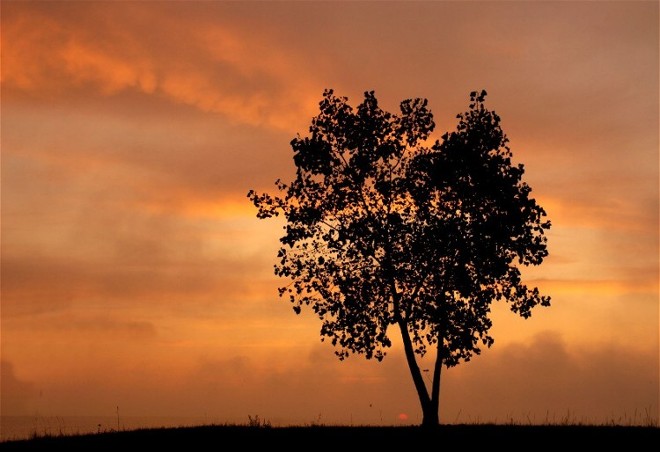
We know we have another tree here, but this time the shape is unique. I included just enough branches to let the (future) viewers know that this tree is a conifer.
This is another colorful image but the subject is less obvious and the composition is different. I included just enough of a foreground tidal pool and the small “creek” that connects it to the lake, to suggest a journey.
All SR/SS are not high color. I was mostly interested in the calm reflective waters of this small lake and how they mirrored an interesting sky. A few small areas of reddish color were a bonus.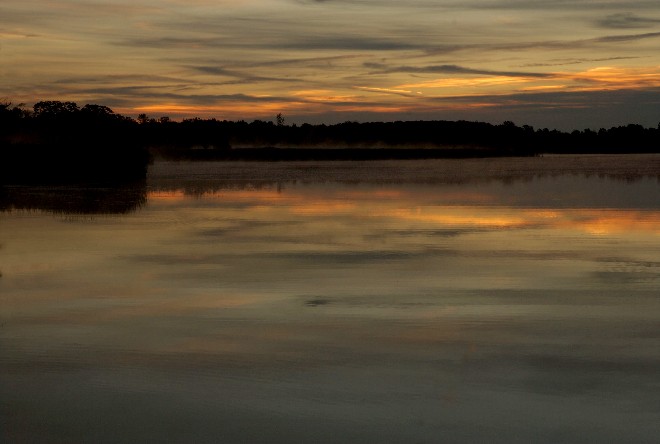
This is an image of an island on a misty Northwood’s Wisconsin Lake. It was made about five minutes after sunrise and the only color is that of the dark trees on the island. To me it carries the most powerful mood of this entire group of pictures. I intentionally leaned this shot towards under exposure. An exposure reading on those trees would have made this a 12 noon picture of an island on a lake. This was the last thing I wanted.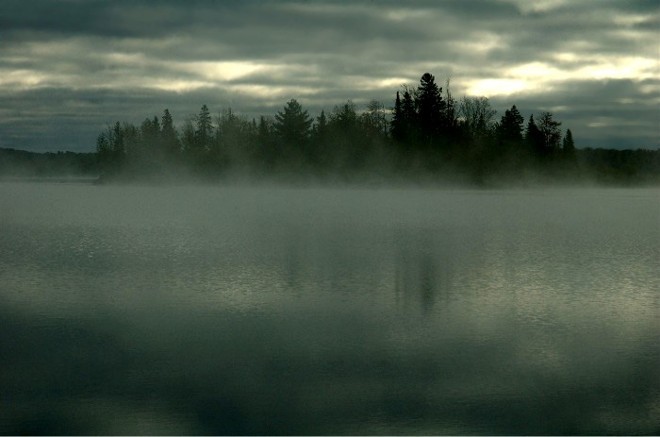
Compositions can be made to invite the viewer into the scene. Or not. Some people like the top scene of this winter river and I am sure some people don’t. I struggle with it myself as the line of snow creates a barrier to the river. I actually thought about making a set of footprints to the river, and then walking backwards in those prints, to the camera position. Not my style to do that so I made the picture the way I first saw it. I do think that running that snow-covered bank at an angle does help lead us to that beautifully snow-covered tree. The point is whether all of our comps work or not, we should never stop trying to find new ways to look at the land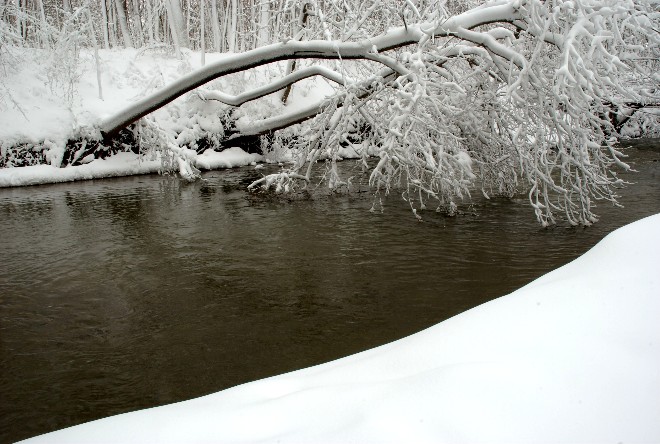
There is nothing more traditional than using a river to lead you into a delightful winter landscape.
Soon many of you will be photographing the flowers of spring and summer. This little slice of Wisconsin prairie was photographed a few years ago. It was the only group of flowers I could find on my hike, but through lens choice and my physical position, I made many compositional decisions. Most of them were concerning the matter of composing yellow, purple and green.
I have commented several times on my observations of social media like Facebook. I sometimes watch the bigger names in photography and how effective (in my opinion) they are in their use of this service. Mostly I enjoy observing the newest names in photography and seeing if they get (in my opinion) how to make the most of Facebook and to lesser degrees Google Plus and Twitter. Like with so many other things “in my opinion” Joseph Rossbach and Cheyenne Rouse, whom I have written about before, just get it. They know when to personalize Facebook. They disclose just enough personal information to make them “just people” like those that follow them. They however, do not drag you deeply into their personal lives. They are not marketing themselves like a soap opera, but like real people. They are running a business and it will always come back to the next workshop, or print sale. That is okay and it is the right thing to do as long as you do not beat people over the head with those money-making opportunities. They have a lot of what used to be called common sense. Of course it has to be common to carry that name. Then again when I remember everything personal that I have written on this blog, my website and on other websites, I guess they may have more common sense than I do as well. Anyway you look at with a new generation represented with the likes of these two, photography will be in good hands.
It is normal for me to observe today’s world but to remember yesterday’s. Today’s use of the internet and social media brings back memories of how it used to be.
In the 1980s and 90s becoming known in the field of nature photography was a different animal. I have some first hand experience with this subject.
During that time I was first and foremost a stock photographer, albeit part time during those years. My first job was to get and remain well-known to art directors, photo editors and managing editors of publications of all kinds. I realized (by 1992) that making a living from stock would be tough, and workshops and slide show seminars were one way to supplement my income. Every, and I mean every aspiring nature photographer used to read the photo credits of every picture they found in every (there’s that word again) magazine, book, calendar, post card or poster. That is how I first heard of John Shaw, Art Wolfe and Leonard Lee Rue. When my name began to appear under a good number of pictures, first in North America and then around the world, it never occurred to me that I was becoming “somewhat” known to aspiring shooters. Back then if you wanted to make a comment to a nature photographer, or buy a print of a photo that you saw in a calendar, you contacted the publication, usually by snail mail, and asked for the address and phone number of the photographer. The publication “might” then call you or write you, and ask permission to do this. Once you got back to them they would pass along your info, or give you (rarely) their info, and then if they had not forgotten about it, the person would write you (remember it is snail mail) and wait and see if you answered. My first print sale (mid 1980s) from a nature (I sold prints of sports and architecture before) photo was made from a calendar shot just that way. My first slide show was also secured (1992) that way. Many photographers (even me) used to also get calendars mailed to us with a request to sign whatever months were yours. They would often already have signatures of other photographers when you received them. There would of course be packaging and postage to return the calendar. Thankfully the stage-coach was already obsolete when I came along.
I’m exhausted just reading the above paragraph. I was very happy, when in 1997 I became involved with the internet and reduced the time and effort of the business of nature photography.
The way top photographers really arrived in those days was to get a nationally or internationally published book. I am not talking about books that you pay a publisher to print, and then you sell from your website. Maybe you get two local bookstores to carry three books each on consignment. I am not talking about E-Books. Almost every photographer today has those and they are no more special than having your own website. Having a serious publisher print your book and distribute even a 10,000 copy first edition, makes a statement that you have arrived. I believe this is still the sign of a photographer who is becoming a “top dog”, but it can be all too easy for photographers to settle for what everyone else is doing.
I want to thank each of you for stopping by to look at some pictures and read my ramblings.
 Earth Images Blog by Wayne Nelson
Here is to ALPENGLO, the most beautiful part of any day.
Amen!
Pingback: Red Camera Workshop | My Camera Corner