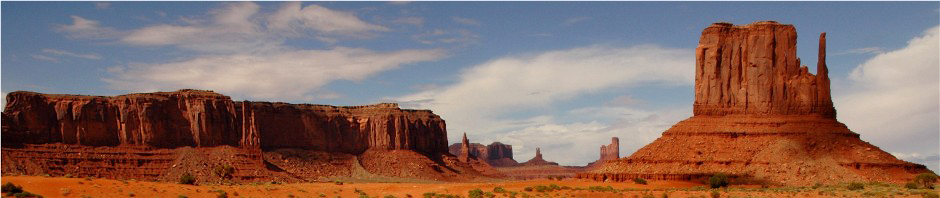
Like most photographers, I love to create landscapes in the golden light of morning or afternoon. With locations like the sandstone formations of the high desert, any degree of sidelighting will help develop those tiny shadows behind each minute piece of rock. That leads to the visual illusion of texture. In addition to color and texture, blue skies will allow you to use color contrasts to create depth. The cool blue sky will recede into the distance while red rock, or warm color leaves will advance within the picture frame. That separation will manufacture eye-popping color.
So I guess all landscape photographers should just stay home on cloudy days? What do you do if you’re traveling and have just one chance at a great landscape location? I used to teach landscape (and wildlife and macro) based workshops. What did I do if the day of the workshop was cloudy? We made landscapes. The truth is you can make powerful landscapes when clouds rule the day. It just takes some logical thinking and a bit of experience.
I have written before that the one type of landscape where I actually prefer overcast conditions, is autumn colors. The low contrast light will saturate those colors beyond anything possible on sunny days. If you have viewed some of my fall images, you can testify to that fact. The one thing that you may notice about my cloudy day fallscapes is that I rarely show any sky in the picture. There is nothing worse than light gray/blank skies.
There is no question that sunny day/blue sky shots make for bright uplifting images. This scene was made in the San Juan Range of the Colorado Rockies and this 8:00 am summer photo owes its charm to a sunny day.
There is nothing quite like the dramatic light of the rising sun, combined with the already warm colors of Navajo Sandstone to create drama. Add a deep blue sky and some mysterious shadows and the life of the landscape photographer is all good.
Flowers make great cloudy day macros. That is true for the usual reasons of low contrast, and saturated shots that are absent of those disturbing backgrounds that are either in different light than your subject, or have the speckled light of mixed sun and shade. Fields of flowers also make nice landscapes and overcast light can be just what the doctor ordered.
The first shot of Bergamot was made in Wisconsin and was quite frankly an easy image to keep the sky out of. I would have just as likely chosen this comp on a sunny day.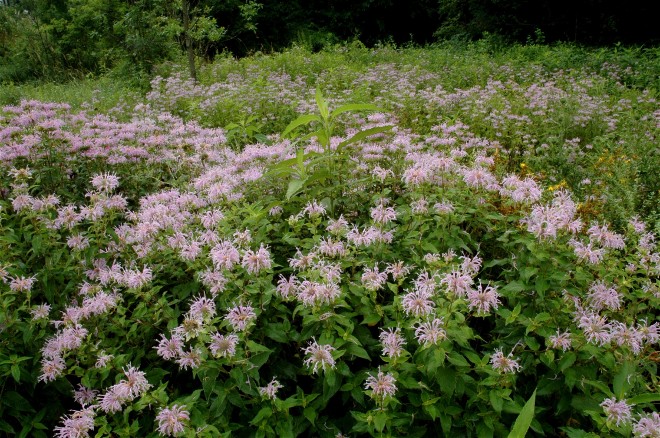
This shot of Lupine was made in Illinois and the lighting was what photographers call…high bright. There was a thin veil of clouds. They produced some directional light but it was diffused enough to still retain that soft, quiet feeling.
It took a lot more work to keep the sky out of the next two images. The first shot is of the Mesa River in Idaho. It was raining when this shot was made and the sky was an ugly blank white. The compositional issue was that I chose a focal length of 18mm to show what I wanted to appear in the scene. This allowed the sky to peek into the shot. I was limited in the angles I could choose, but finally found a comp at 25mm that took all of the sky out of the picture frame.
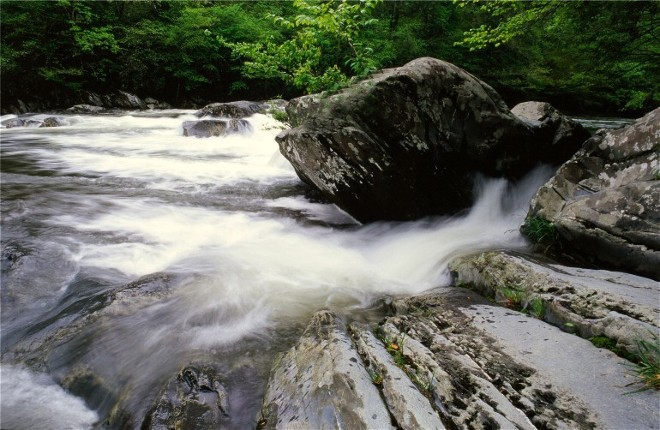
The second river is in the Smoky Mts. of Tennessee, and my original composition at 20mm again caused the continuous tone gray sky to intrude. I finally settled on a 24mm prime lens which was just right to keep the sky out, while stretching the foreground rock. This was another one of those high bright days. This was originally a 35mm slide that was copied with a digital camera.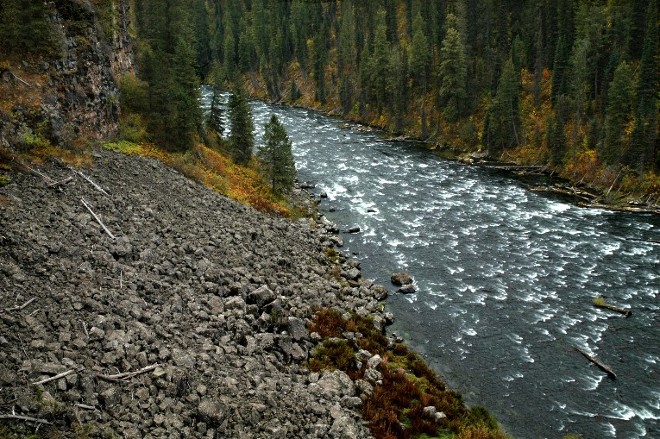
Inter-forest landscapes, be they intimate or grand, can often become hideous on sunny days. The spotty contrasty light filtering through the trees is often confusing to the eyes. I would not have wanted the sun to have been involved in either of the images below.
The first shot was made at a northern Wisconsin location that I have frequented for many years. The mid to lower section of falls never sees the sun and that is fine with me. This was an overcast day so in addition to this lower area of falls I was able to include the upper falls in some shots.
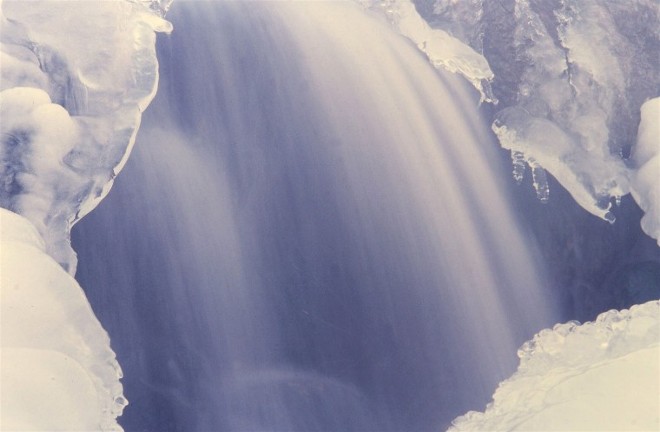
Ice and snow can be beautiful on sunny days. Just the same, our second shot of a gentle, ethereal small Wisconsin waterfall in winter would have been bothersome and unpleasant to our eyes if bathed in sunshine.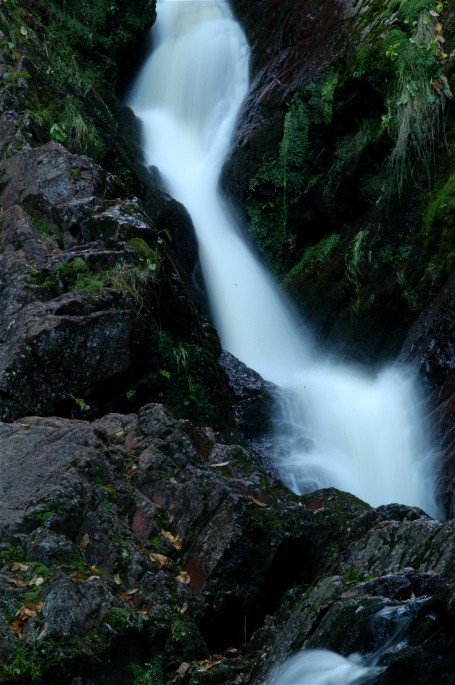
Sometimes you cannot, or do not want to exclude the sky, even if it is a cloudy day. My rule is pretty simple. If there are clouds with definition or shape, or they present tonal contrasts, I will gladly include them in my comp. If they are storm clouds or the sky has become black, so much the better.
Clouds and some minor storms filled the skies during this day in the Badlands of South Dakota. For me it only meant that I was going to have a “good day at the Badlands”. The over cast skies helped the land to produce low contrast saturated colors for my camera. There was just enough tone changes to give some life to the clouds.
The skies were similar on this day at Wisconsin’s Crex Meadows Wildlife Area. I was disappointed only in that it would make any wildlife photography more difficult for me. I have had more landscapes of Crex published than I can count. They are all sunshine shots. It was a pleasure to make a landscape made in the gentle quiet light of overcast. The clouds (like at the Badlands) had enough definition to use with fondness, but little enough (like the Badlands) that I did not want to feature them in my comp.
This stormy day in Wyoming meant I could either skip this mountain scene with Aspens, or use the storm clouds. I chose to celebrate the trees, the mountains and the sky.
This next picture is the story of a breaking storm over the desert landscape of Monument Valley. It is raining in the distance but enough light is coming through to call this “high bright” The foreground colors vibrate, while the distant skies manage to remain manageable (to the photographer) despite the fact that they are getting lighter by the second.
As my years as a nature photographer began to add up, I learned to embrace all nature subjects, under a variety of weather and light conditions. This not only meant that I would never run out of subjects, it meant that I would also learn to see the light, in a way that would benefit me forever. Never say never.
My relatively small audience for this blog does seem to be loyal. I thank you and I will remain just as loyal to you. That is how it should be with friends. You are all over the world, and some of you are at home and some are on the road. Great days to each of you, wherever you are.
 Earth Images Blog by Wayne Nelson
Pingback: Birds | Wayne Nelson's Earth Image's Blog