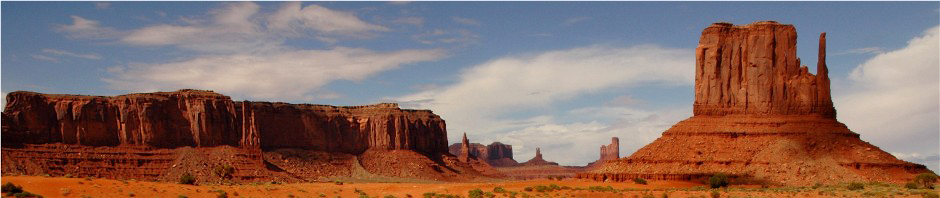
Let’s start with a little (no pun intended) macro (here) photography.
Doing super close-up photography of insects is much the same as close-up bird photography. At least in the sense that detail is very important. The dragonfly in our top image was still suffering from an early morning chill, meaning it wasn’t going anywhere. I photographed it in the only style I use under those circumstances. I used a tripod, and my self timer. I was not touching my camera in any way when the shutter clicked. Good technique means a lot in macro photography. 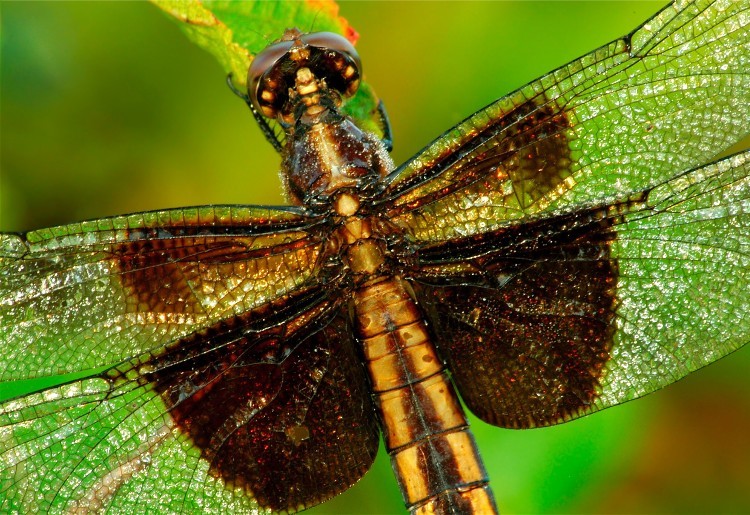
While our next image is also made from very close range, the circumstances are quite different. This butterfly picture was made later on a warm day, and my butterfly friend was very active. Following it around with a tripod would have been difficult at best. The image was made originally with a 35mm film camera, and long before VR/IS lenses. I used a single flash for this photo. I normally (left it at home) would have used a bracket with 2 or 3 flashes for this shot. A key (main) light, a second light to fill the shadows created by the first light, and a third light positioned to light the distant background. The single flash technique worked in a pinch, but did leave some shadows. If I were using a modern DSLR rig for this same picture, the only thing I would do different would be to have my VR/IS switched on. 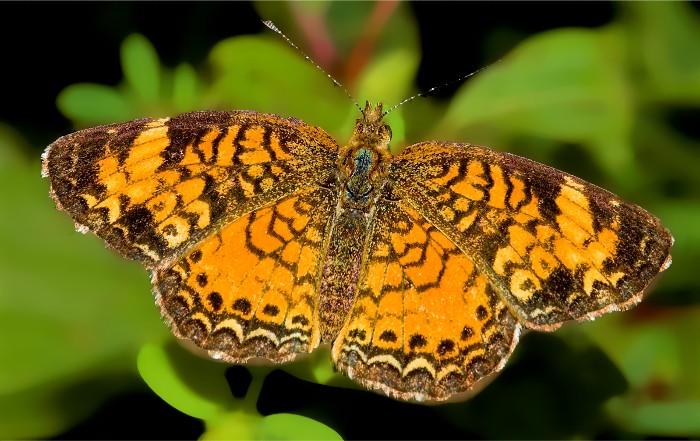
Like any wildlife (and insect) photography a percentage of my images are crops. I would guess 50% of my birds and mammals, and maybe 30% of my insects. After having been a film photographer for so many years and having been forced into the rectangular format for so long, it is difficult for me to break with that style, even today. I have tried and cannot bring myself to create a square crop. I do however like the pano crop. I generally will use it for a raft of pelicans or a line of ducks that are swimming. I liked the picture below but had some difficulty accepting so much out of focus wing that appeared in such a sharp photo. If it was only the wing on the far side of the image, it would have been perfectly acceptable to me. If it had been the near wing but my comp would have clearly displayed its lack of importance, well that works fine too. It just did not work in this image having an entire out of focus wing so I made a more rectangular crop as to feature the sharp and pretty head and body. The remaining wing was not as disturbing since the sharp body was my clear intent of this composition. Digital photography is a treasure when it comes to an issue like this. In the past I would have either lived with the imperfection or used the trash can.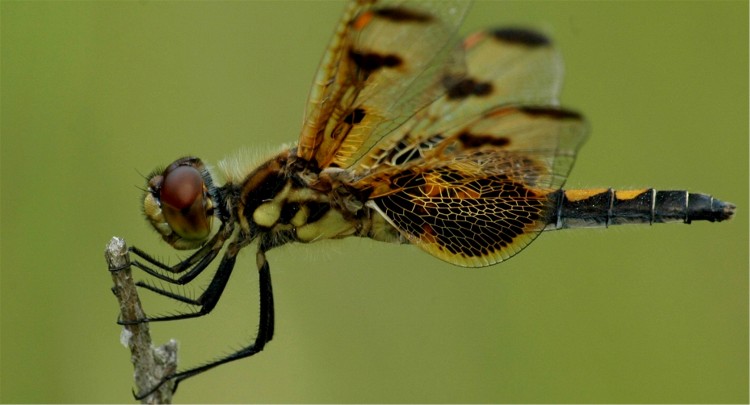
Insects are very difficult to stalk. They are “all eyes” and they can see almost 360 degrees with those eyes. Their life and survival depend on detecting movement. A very, very, very slow stalk was used to get close to this warm, active dragonfly. It could certainly see my every move but it slowly came to accept my once every 2 minutes small movement as not being a threat. Just like with any wildlife, an in your face portrait works quite well. I don’t know any subject that can be photographed in more ways, to evoke more moods than flowers. As a for instance there are some photographers who have an amazing ability to put their point of focus, while often using shallow depth of field, in just the right spot while letting everything else go soft. I sometimes teach that method in workshops and the student ( particularly women) always become better than the teacher. I am fortunate if one out of five hundred images that I shoot in that style actually work. Light also changes a flower picture dramatically, much like a landscape photo. The two images below were made in overcast and sunny light, and the difference is dramatic.
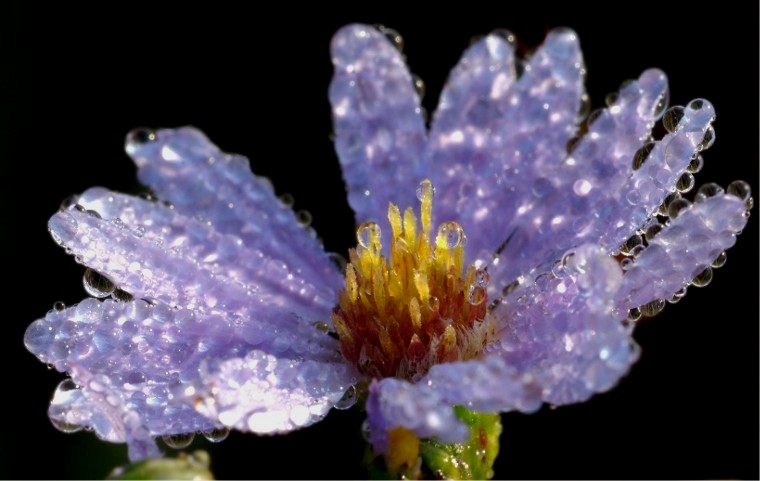
Aerial Perspective is the term generally used to photographically describe what happens as you photograph similar objects as they appear more and more distant. Landscape painters use this technique all of the time. If there are many mountains in a painting, the near-by mountains are dark. The mountains get lighter as they disappear in the distance (infinity). Atmospheric haze is the main reason for this. You can use this visual reality to make dramatic landscape photos. This technique is used in the Smoky Mountains all of the time. They will work with any mountains but the hazy Smokies are perfect. This can all be accentuated by adding a bit of contrast in the editing process. The image below was made in the Rocky Mts.
I love images that are fresh and unique but clichés work also. That is how they became a cliché. One example would be making a picture of a bird that clearly shows the reason for its name. Something like a Song Sparrow in mid song.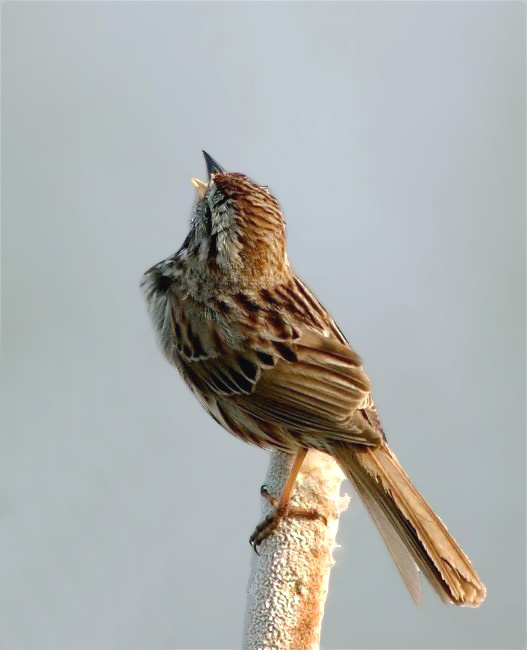
I included the image below of a flock ( flock ? ) of Wild Turkeys just because I came across it in my files and I don’t remember ever showing it before. What the heck? It was made in North Dakota.
All of the nature images we make do not have to be bright, pretty and inspiring. Nature like any subject has a place for pictures that are dark and brooding. Images that are moody and it os okay if that mood is a little off-center. This is a storm over a mountain lake in Colorado.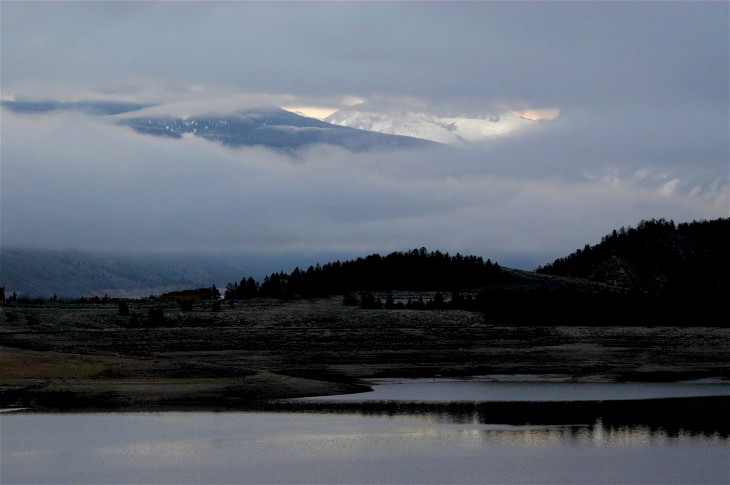
I appreciate your listening to my ramblings,
Wayne
 Earth Images Blog by Wayne Nelson
Pingback: Bent But Not Broken | Wayne Nelson's Earth Image's Blog