Before I move on to my “water” pictures, let us view a couple of superb images by two of photography’s best.
Firstly let us begin with one of photography’s greatest ever, Jim Zuckerman. Jim is a legendary landscape artist but he is much more. Among his other specialties is architectural artistry. From the oldest to modern.
This building, or ceiling if you will, rests in St. Petersburg Russia. Russia is not a popular place right now, however some of its historic architecture is a photographer’s dream. Notice how Jim composes the ceiling here. Not straight up but across the frame a an angle. Much more interesting and not at all static.
https://www.facebook.com/jim.zuckerman.12

Next comes Deborah Sandidge an all around photographer who is among the best. This flawless image of a Tufted Titmouse is representative of the spectacular work she has been creating for quite a long time now.
https://www.facebook.com/debsandidge

Mow for some haphazardly thrown together images of mine from an old folder on an equally old hard drive.
Water comes in Many forms. Most of those forms are great for photography. Rivers, lakes, waterfalls, are the obvious.
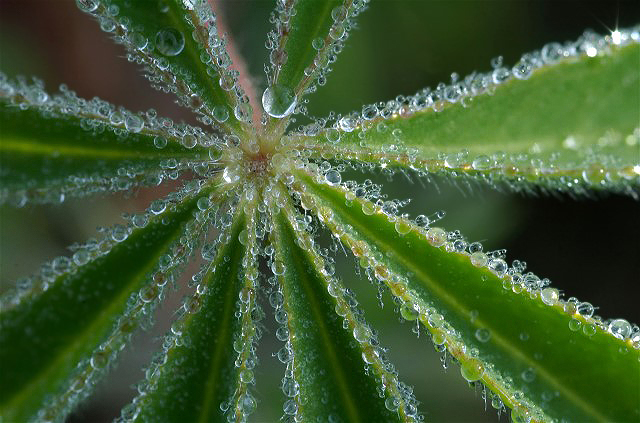
Morning dew. I doubt I can remember ten percent of all the images I have made where water was an important ingredient in the finished image. There are just too many.
The leaves of the Lupine flower are perfect for catching overnight dew or for that matter, raindrops.
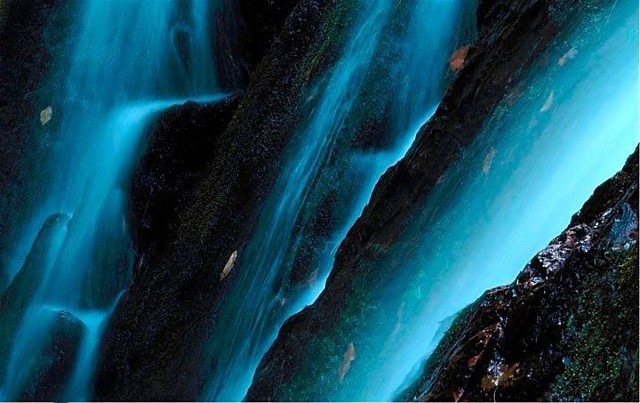
I mentioned waterfalls which are obvious to say the least. Why are so many images of waterfalls the entire falls?. I love the “piecework” style of capturing them.
Morgan Falls here appears to have water with a blue tint. That’s what happens deep in the forest shadows on a sunny day.
Turning a waterfall into an abstract vision, is or seems it should be, an obvious alternative.
Ground fog is atmosphere and water. This birch forest, and ground level fog, was to me, a perfect use of water in an unusual way.

In winter, water often turns into snow. Now snow capped mountains or snow covered hills, is a way to use frozen water, but why not the snow covered branches of a tree on a clear, blue day?
This image is of an obvious subject, but it is photographed in an abstract way.
Sometimes, we just need to look up.

Over course ice is the “hardest” form of water, and there are endless ways to harness it into an image.
These red leaves were delightfully covered with a layer of overnight ice.
The most important aspect of many sorts of photography is, “seeing” what awaits do you. Explore and find it, and then see it.

God Bless,
Wayne
 Earth Images Blog by Wayne Nelson