Spring Stuff
Spring gives nature photographers a lot to point a camera at. To me every season has a feeling or a mood, and spring is no different. Just a few of the less obvious things that spring means to me.
All of today’s spring photos began their life on film a very, very long time ago.
Moving water. Swollen streams and falling water means spring.

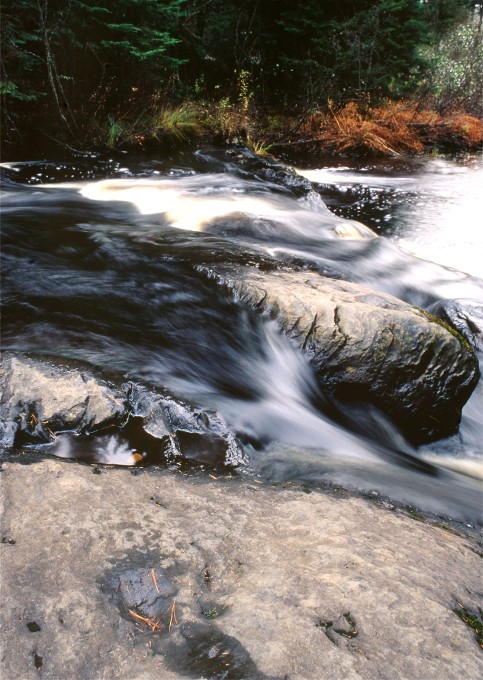
Contrasts can make an image confusing to the eye. Too much light mixed with too much dark can produce difficulties in finding which part of the image is important. There are contrasts of light and dark in this image, but the fact that the overhead light was overcast and of low contrast, helped keep the image “comfortable”. The soft flowing water and the ridged tree trunk also provide a pleasing contrast.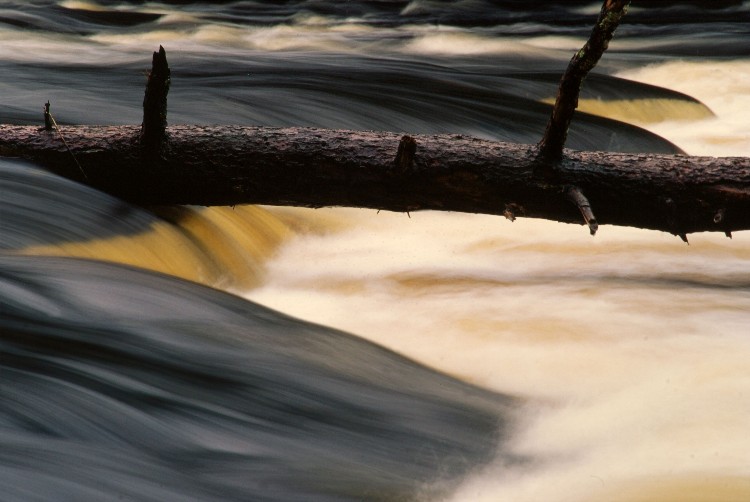
Impressionism. Spring lends itself beautifully to impressionistic images. There are no real tricks here except that you do not want those blossoms and other details to be tack sharp. It is counterintuitive, but a slight motion blur helps to keep things a little soft and renders the mood of Monet and the rest of those French painters. Multiple exposures with a tiny shift in position, or zooming a lens during long exposures are also effective. Just a hair out of focus will also work. Do not be fooled into thinking that shallow depth of field is the answer. Make the softness uniform across the whole image. You do need to have some lack of clarity or it ceases to be an impression of a scene and it becomes…well…a scene. Layers of color and texture also help, and a hint of over exposure is better than under exposure. There are of course software impressionist filters and lens filters that can create this effect if you prefer.

Certainly botanical or formal gardens make for a pleasing atmosphere and provide nice picture opportunities in spring.
In May and June when I couldn’t find any subjects to spread the mood of spring, I generally looked for the color green. New spring green is a completely different animal that the greens of summer. Vibrant and alive. Where there is green, there is spring.

Of course if you throw in some spring phlox, we once again have contrasts. There is such a thing as color contrast and it shows in this image.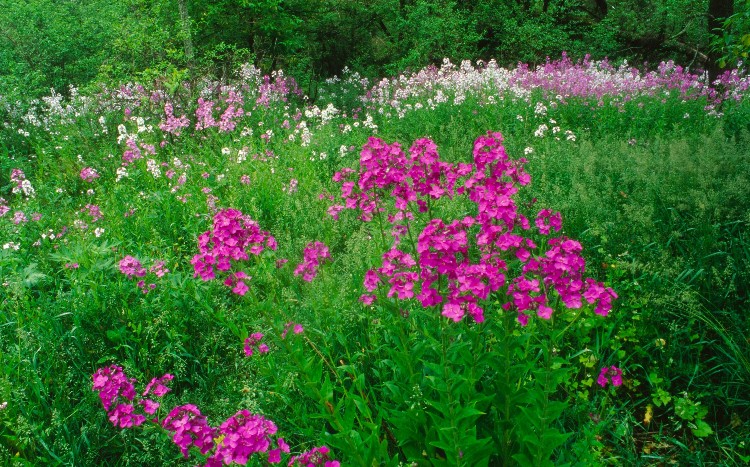
Valley Stuff
I have shown a lot of images on the Earth Image’s blog from The Badlands of South Dakota and Monument Valley in Arizona/Utah.
I have photographed the Badlands about six times and that means I had a wide variety of light conditions to work with. It also meant that my personal vision of that location had the opportunity to evolve. Every time I made pictures in the Badlands new possibilities opened up. Grand Landscapes showing the grasslands where those rock forms live. Colorful and compressed landscapes. How many different textures and colors can you squeeze into one image? Wide angle shots of single rocks, stretching them from here to eternity.
Okay…that’s the Badlands…how about Monument Valley?
Ron and I had exactly one day to work MV. Sometimes you just get lucky. Overcast skies, distant storms, clear blue skies, mid day contrasts, white clouds with blue skies and finally, an intense, colorful sunset. All in one day.
Of the MV images below only the sunset image has been shown before.
We had only decided to shoot MV the day before our arrival. We knew it would be one day, but still I had ideas swimming to and fro within the inner workings of my brain. There are about eight classic and famous rock forms that everyone photographs in the valley. My goal was simple. Well if we had a week it would have been simple. Photograph most or all of those landmarks, in traditional, non-traditional and unique ways. Then photograph the rock forms that nobody bothers with.
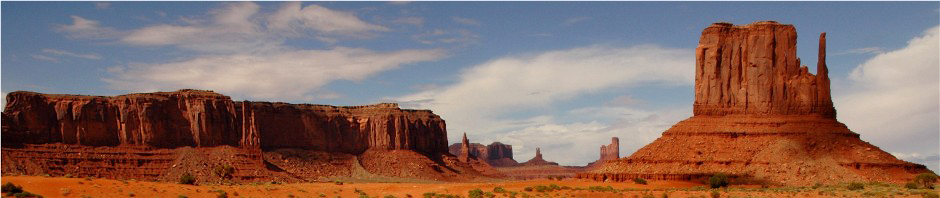
It’s very traditional to pick one or two of those classics, and feature it prominently as it stands watch over the valley floor. The first image below is one of those legendary forms in a fairly normal posture. The pano crop below gives two famous landmarks a different treatment. Near sunset the opportunity arose to use a seldom seen rock (in the foreground) and silhouettes of several iconic forms in the same picture. That rock in the foreground is displayed prominently in the evening light, while multiple legendary shapes appear in the distance. Having the lesser known rock up close and several well-known formations in the distance kind of gives equal value to them all.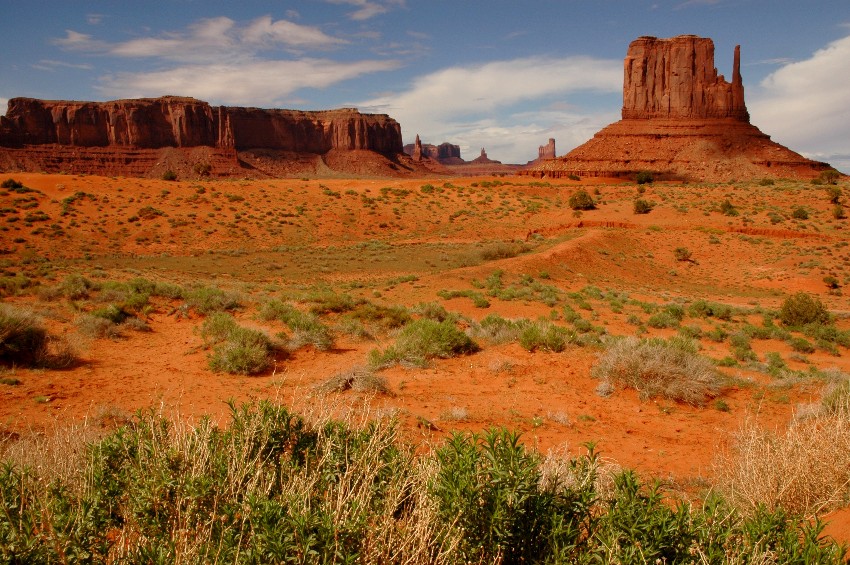
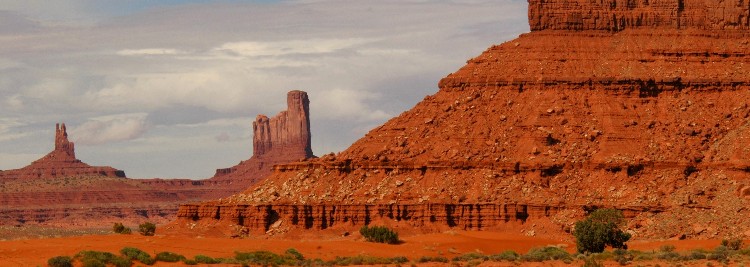

I did create images of more than my share of unknown formations. I admit I chose around high noon for the majority of those pictures and I am glad I did. The light, while admittedly contrasty, does show a quality that anyone who has ever spent time in any desert is familiar with. It is photogenic, while the same time of day in an eastern forest would be a problem. I used those unnamed formations at mid-day in case the contrasts proved to be too much, and ruined the picture.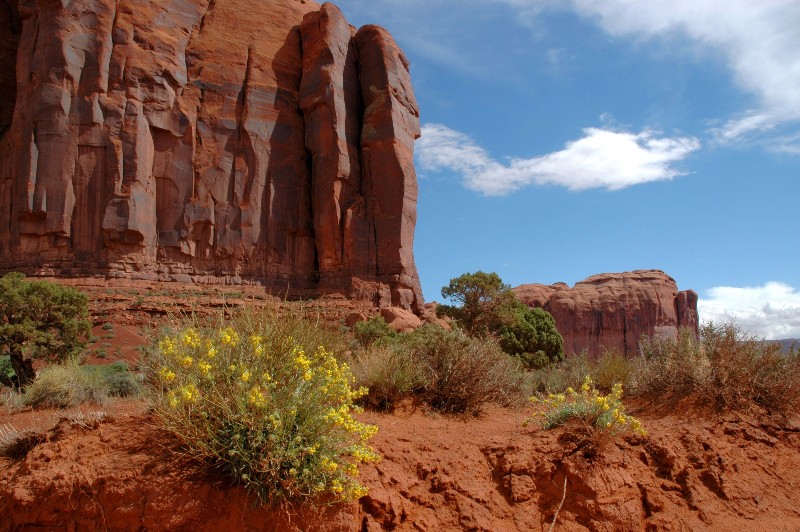
My opinions above are given within the context of stock photography. Books and calendars still need images of national parks and Indian lands. Do to the millions of fine photos that have been taken of these locations, I would think that pictures of unusual views of well know areas, or good shots of the lesser know sections of the parks, and any shots of our less visited parks would give a photographer the best chance. I was fairly successful with national parks and monuments and even in the 1980s, I was selling the sorts of pictures that I list above.
Landscapes have been my primary subject here on Earth Images as of late, so maybe next time wildlife.
Those of you in this area probably know there is a nice population of Common Loons moving through right now. If any of you live in the far southeastern portion of Wisconsin you might want to think about Lake Andrea in Pleasant Prairie. There isn’t much that photographers are going to do to influence the behavior of a migrating loons, but I still might suggest you do not spread that information to those you do not trust.
Some days lend themselves to personal reflections more than others. I guess today is one of those days. Just remembering all the special friends that I have stood side by side with. We have laughed and we cried, while we shared our own personal vision for everything from urban wildlife to wilderness landscapes. I thank each and every one of you.
God bless, Wayne
 Earth Images Blog by Wayne Nelson