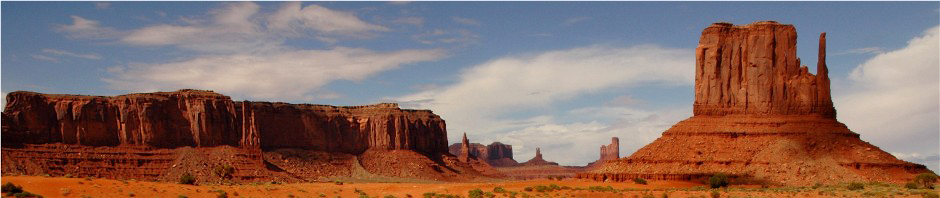
The American West presents us with a variety of types of landscapes. Certainly those things we call land forms or rock forms are among the most photographed. I have made some images of them myself.
The most common approach for a landscape shooter in a sea of rock forms is to capture as many in one image as possible. The better photographers will of course spend much time contemplating a simplified composition. Multiple rocks but organized and poetic. I have efforted to do the same many times and who wouldn’t. It is a fact that when other photographers view your work, they will recognize the effort you put into your composition. You will get credit for creating art. When the time comes and it will, to single out interesting land/rock forms, how on earth can you make comps that will have everyone chanting how brilliant you are? Often times you can’t. So what? An image that makes people look, and makes them examine, is a good image, no matter your composition.
Sometimes you don’t have many choices. Devil’s Tower in Wyoming is a rock form leading a solitary life. You do have Wyoming’s version of The Black Hills just east of here but the rock…well it stands alone.
I arrived here first thing in the morning and immediately made this image from the parking lot of the visitor center. I had never seen (at that time) an image of Devil’s Tower that didn’t show the monument standing in an open field.
After spending my day photographing The Black Hills and some Pronghorn, I drove west of the tower and hiked across a rather large field. The sunset light was weak, but I felt I needed some of the kind of pictures that have defined Devil’s Tower since the 19th Century. This was of course in addition to the more unique images I had made in the morning.
One answer to making a single rock form a “complete” composition is to stretch the foreground in front of your subject. You diminish your primary subject but you do create a comp that will please the critics.
Monument Valley, Arizona/Utah

Valley of The Gods, Utah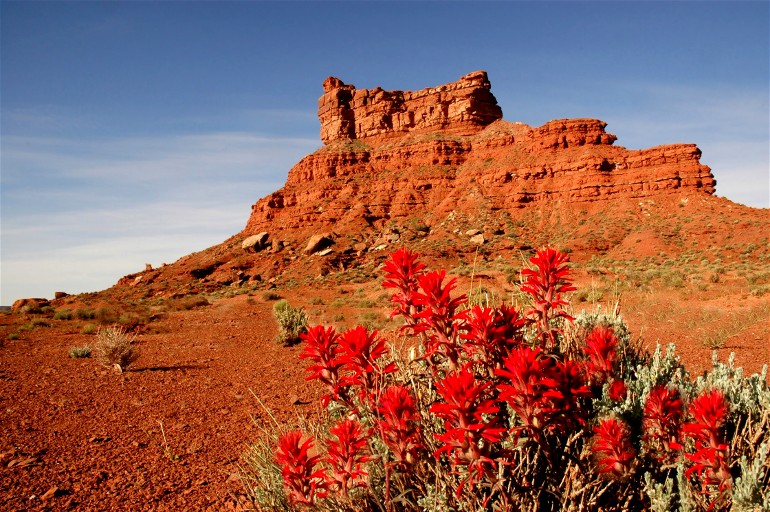
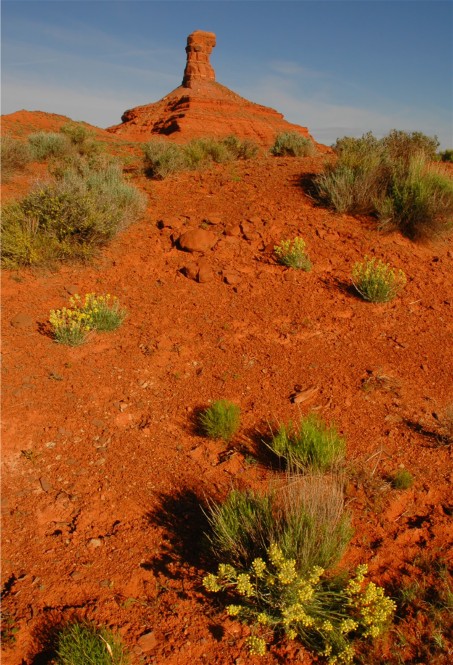
Large horizontal land forms will fill your frame. The formation and the foreground share equal importance.
Dinosaur N.M., Colorado/Utah
A mountain is a land/rock form too, and a reflection makes a beautiful foreground for putting your subject in perspective.
Yellowstone N.P., Wyoming
Obviously the closer you get, the more that one land form becomes your whole image. Even tight images like these need to be composed. Are you a wildlife photographer too? Recall how you compose a bird slightly off-center in a super close-up? One form of photography always relates to another.
El Capitan, Guadalupe Mountains N.P., Texas
Unnamed rock form in Monument Valley, Arizona/Utah.
When you are close and making a single subject image, using a wide-angle lens to stretch out that subject (rather than the foreground) works well. You’ll not win any awards for composition because it looks too easy.
Arches N.P., Utah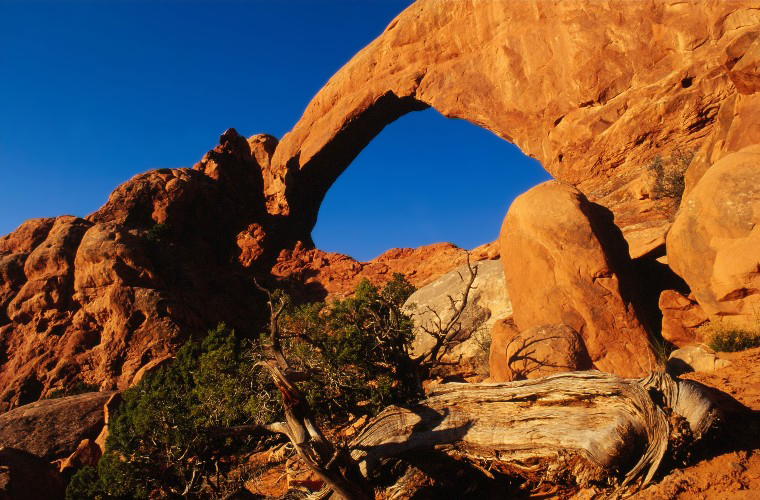
Another technique that works is to use a short/medium telephoto and carry your viewers “into” the subject. This large land arch (Wilson) becomes intimate when the frame is filled side to side with nothing but arch.
Utah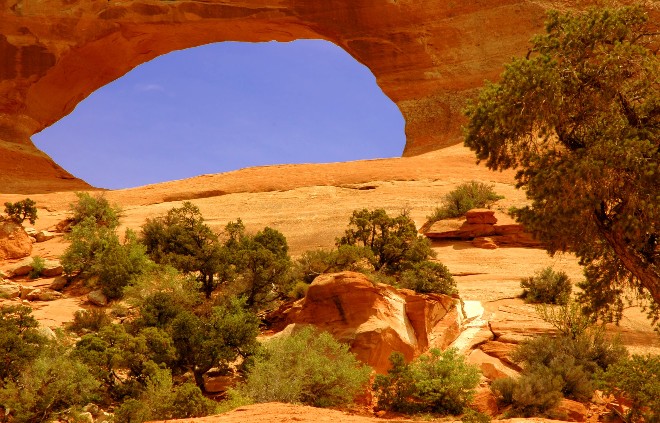
There is nothing more fulfilling in photography than to be able to walk around a scene (even a single rock) and experiment with composition. Your finished product does not have to be the sort that leaves the viewers convinced that you are a genius. In the end you will be given credit for all of the successful images that you create.
I frequently sing the praises of some of the current crop of landscape photographers. They (especially Joseph Rossbach) go to what must be incredible lengths to put themselves into position to give us the viewers, a special point of view of nature’s beauty. They create powerful images. I have to admit that (for me), I even tire of those images (occasionally) when every shot comes from an abnormal perspective. I love variety and I love photographers who show the ability to create it. Sometimes “normal” images become unique when everyone else is trying too hard to be creative. That is certainly the case with single rock photos.
Film and digital. I think most people never completely understood a piece of film and that is certainly true with most of us when we think about a digital image. A piece of color film is actually several pieces of film. It is a series of mutually dependent emulsion layers. Each piece displays a different color and tone, but they do not exist by themselves. They are dependant on each and every other layer.
When you expose a digital image you are creating a series of codes. The way those codes are produced and read, tells you where different tones and colors will exist in the image. Sort of a secret code that needs to be decoded just right.
The hard part with us “old timers” is that you can not only see, but touch and feel a piece of film. With digital it is like we are taking the word of an “expert” for what we see.
It’s funny when I look at all of the variations of tones in some of the images above. The advent of digital photographer brought (to me) flattened tones and a lack of color separations. I think improved computer/tablet screens have a lot to do with the fact that I (and you?) can see more subtle differences.
I wonder how many photographers actually think about what I have written about above. I guess that is my job, to think about the mundane and trivial. To me, life always seems more interesting just below the surface.
Thanks for visiting and come back soon, Wayne
 Earth Images Blog by Wayne Nelson