Blogging and cropping? Actually writing a blog and cropping (or composing) an image are similar. How to edit a blog, or better said how to arrange a blog, has a lot in common with cropping/composing a picture. What to leave in, and what to leave out. I am pretty confident that I can compose an image much better than I can edit a blog, and that’s okay with me.
Blogging
One mistake that I think professional nature photographer hopefuls tend to make, is to think that there is a lot of money being made by the top echelon of photographers. Those who have made it to the point of getting paid for their name in advertising, and who are booked 12 months a year leading expensive workshops and photo tours, should certainly take in the most money (gross) but their expenses are high as well. You can make a living at nature photography but if money is your primary goal, you would be better off driving a truck
You should always remember that a website is necessary to be a pro and has been since the late 1990s. A blog is also important. This blog is not a good example of that. It is in no way set up to make money or even to further a photographic career. I visit (and occasionally comment) on the blogs of Kari Post, Art Wolfe, William Neill and Rob Sheppard. All are geared toward workshops. Rob is an acquaintance and is the former editor of Outdoor Photographer. He still works with that magazine and his posts are usually informative in the photographic sense. That results in getting dozens of comments on each article. The other three get very few comments. When I comment on those first three blogs, I am often the only one. I do this because I regularly get visitors from the site link that is left behind. In general the bigger the photographer, the fewer comments they receive.
I can always tell when a photographer needs to stir up some business. You will see half price print sales on pictures that are being printed on demand, rather than pre-made prints where the photographer might be overstocked. You might find workshops to be conducted near home, and at a cut-rate. Less travel and expense means larger profit margin. E-books for five dollars a piece. The same truths were evident on my own website back when I made money at photography. You could find buy three get one free print sales, local group workshops for $80 a head, and CDs/DVDs for $8. Any port in the storm of poverty.
One thing is for sure, unlike a conventional website, a blog has to do a little more than simply offer the next print sale or photo tour. The photographer needs to add pictures and interesting or informative information, that will in turn guide people to spend their money with the photographer. Be willing to share thoughts and photographic information….for free. Show that you’re a “good guy” and that you like people. Then tell them about that workshop in Iceland.
Of course Twitter, Facebook and other such places are necessary unless you are sort of semi-retired like John Shaw and have all the business you need set through existing yearly workshops.
Understanding how to drive people to your blog is important. It takes a lot of well placed keywords and other little tricks. I have not pursued most of those tricks with this blog. It takes me a month to get the number of visitors on this blog that I often got in one day at my former website. The website took me ten years to get that kind of visitation. I am just fine with my limited but consistent audience here at the blog version of Earth Images.
Cropping
My preference for wildlife photos is to compose them in camera and be faced with little or no crop when I get home. With a little work we can all accomplish this…..sometimes. When I made the switch from slides to digital, the one thing I salivated over, was the ability to crop in closer when necessary.
The most important (and difficult) decision I made when I realized that some of my wildlife images will now (with digital) be crops, was to not compose these pictures. In other words put my subject in the middle of the picture frame. I leave as much space as possible in every direction when I know I will be facing an editing crop. Why not give yourself as many options as possible? This way of thinking is so counterintuitive to everything I stand for, that initially I had trouble forcing myself to do it. As time went on I would often shoot what I knew would be future verticals in the horizontal format. In particular I did this when shooting from my car with a pillow or bean bag. I have always struggled to make verticals sharp when the camera is resting loosely on a support. With a tripod there is no problem. Just remember to employ this “shoot horizontals when you want verticals” concept, only when you are sure that there is plenty of open space above and below your subject.
I have not edited the lighting and contrast on the pictures below. I have also skipped any other normal “nips and tucks” that might be performed.
I was sitting in front of a group of Sunflowers, photographing American Goldfinches as they plucked out seeds, when a lone bird perched itself on this drooping plant. I saw a beautiful shot coming together in my mind’s eye. My only problem was that I was not close. I decided immediately to shoot a loose, centered composition, and finish the image when I got home.
After arriving home, I pulled up my image in Photoshop and I realized my original vision was in jeopardy. To me this was never about a picture of a Goldfinch. The Sunflower, the leaves and the blossom, were every bit as much a part of my vision as was the bird. There is not only a valid natural history component to a finch on a Sunflower, but it had a natural artistry to it. I had a problem. When I cropped to go with flow of the subjects, which meant the bird and flower would be left of center, it looked like I was visually cutting off any escape in the direction the bird was looking. That is admittedly normal in those circumstances. I then broke away from everything I know about composition (good to do sometimes) and left the bird centered from left to right, and raised it just a bit from bottom to top. In the end this was still just another static, centered image. I wasn’t happy! The naturally artistic shot I saw while I was in the field was full of problems. This is why I love being close enough to compose with my camera in hand…or better said, on tripod. I finally moved the bird to the right side of the frame leaving it the traditional space in the direction it was looking. I liked it a little bit better, but the flow of the plant dropped off in the middle of the frame. I finally settled for a vertical. I would liked to have shown more of the droop of the plant to our left, but if you go back to the premise that the bird is more important than the flower, I think it works. I never brought together my original vision, and that is often the flaw in composing pictures when you get home.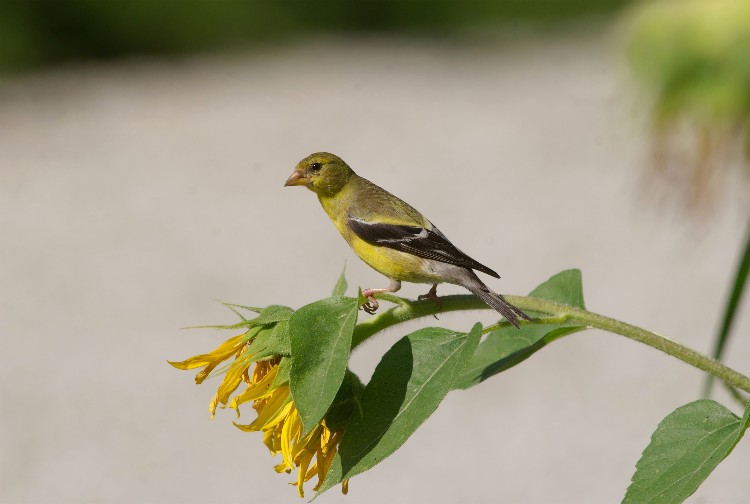
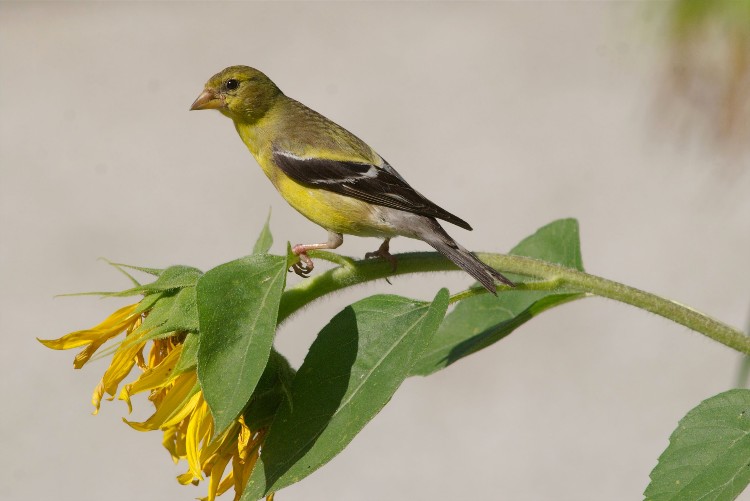


I was not quite close enough to capture the comp I wanted with this Dove. I decided to shoot a loose and centered composition and then make crops at home. The fence is a part of this image. Everything that appears in every image we make, is a part of it. Just the same, I was not excited about the fence, the way I was about the flower.
I think all of the crops (the first image is un-cropped) that I have shown below work okay with this picture. Admittedly they all fit the same compositional template. I like the verticals the best. My preference is the vertical that shows the whole body, but the tight crop does eliminate the fence entirely. You will notice that I left the bird droppings in that whole body vertical photo. A touch of art, a touch of natural history?
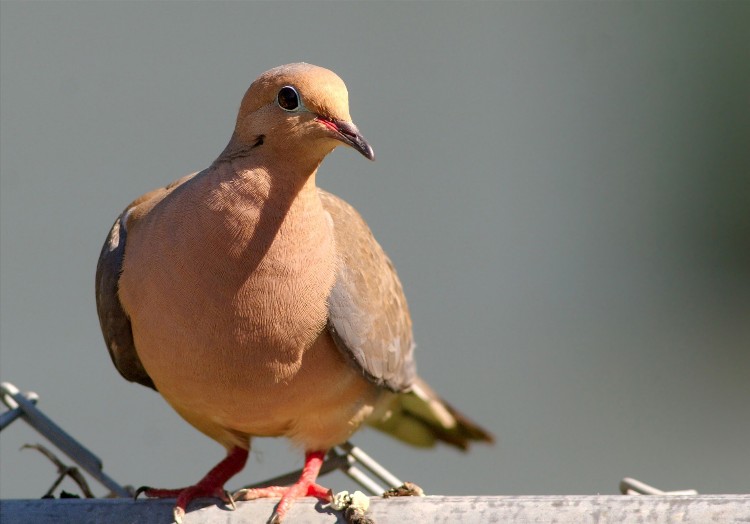
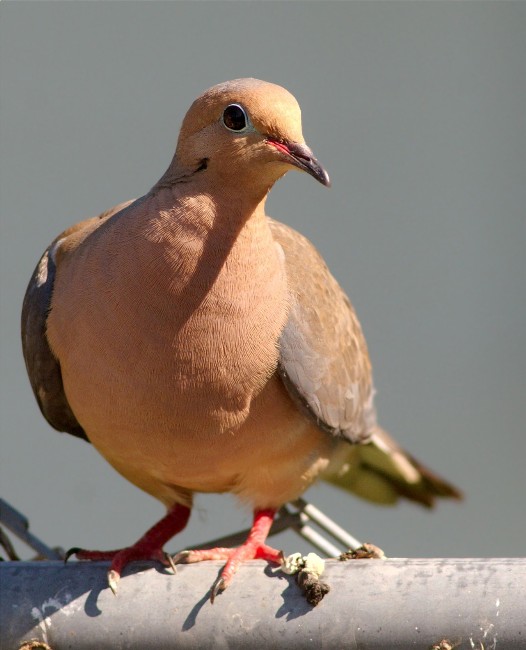
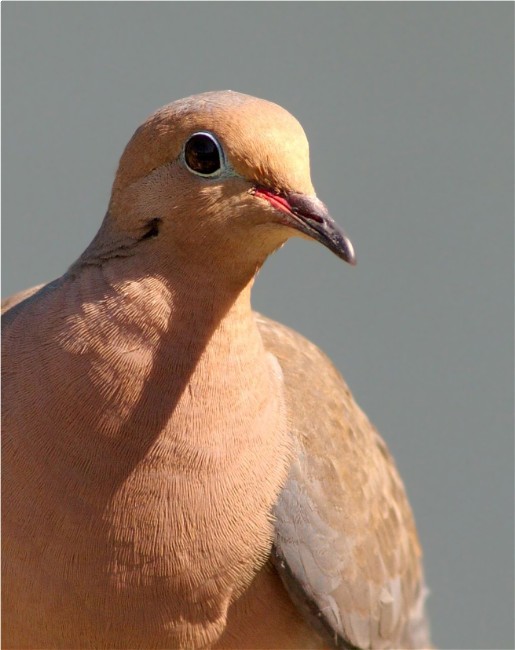
This last image is a House Sparrow and it is a pretty big crop. Imagine this picture by thinking backwards. In other words a small bird on a fence. I began with a horizontal picture, of a little bird. Cropping in close like this actually made the fence a bigger part of the finished image, because in this shot the fence is basically magnified by the crop. The image I am showing is in my opinion the best version of the original. It takes the viewer in close to the personality and pose that she was displaying.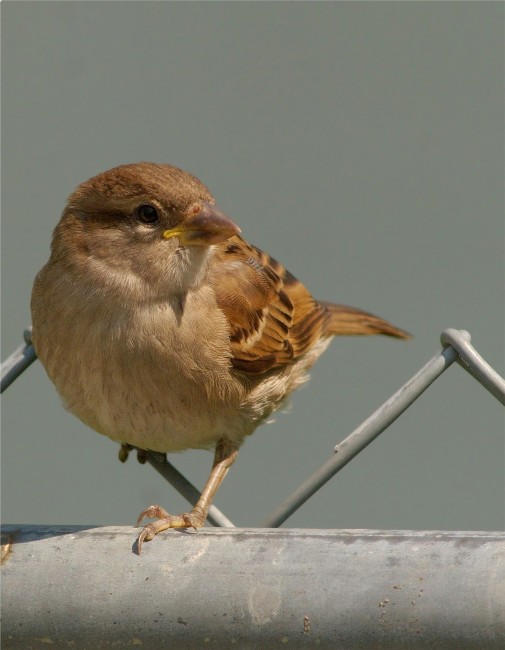
I never taught software cropping during field workshops. You only have so much time with new photographers to impart composition, and I can’t think of a faster way to create a sloppy photographer then to say…. just put the bird (or flower, butterfly) in the center of a horizontal composition and fix it when you get home. Learning comp in the field first, will then allow you to better compose cropped images when you get home.
I always loved my time in the field (not in front of the computer) so bringing my entire vision to completion at the moment of the shutter click, made my experience more memorable. I do realize that today, many photographers look forward to that time working with images and software, and cropping does open up many more options.
The single greatest benefit to being a nature photographer is that it gives you a reason to be outside. It also teaches you to slow down and “see”. Nature accumulates in your mind, in your body and your soul. Try it, you will see what I mean.
Enjoy your day and hope to see you again, Wayne
 Earth Images Blog by Wayne Nelson