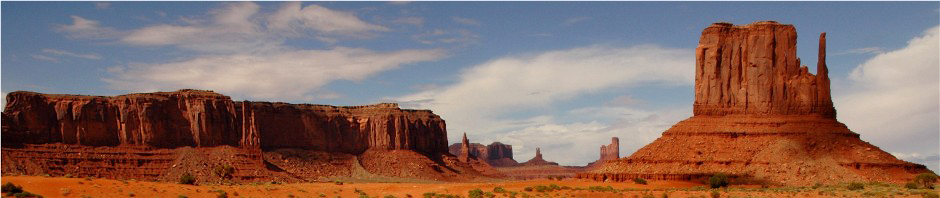
Sometimes I think that non-nature photographers believe that nature photographers, just look around and shoot whatever we see. If we make a great shot, we got lucky. If the colors come together, we got lucky. If that animal is bursting into the picture frame, we got lucky. If there is a sense of design, we got lucky. Some nature photographers sure do get lucky a lot.
I would say that more than half of my best pictures were pre-visualized long before I ever clicked the shutter button. Seeing a great photo in your mind’s eye, and then going out and finding those circumstances, and bringing to fruition a finished image that is at least based on your original concept, is very difficult, and very rewarding. Creating an image from the ground up by adding the subjects and light yourself is far easier.
A lot of the time we go out into nature, find great subjects, and create images from what we see. When we make good pictures, I guess we just get lucky. Not so much really. As long as you are somewhat mobile, and you can change compositions, wait for the light to change, click the shutter at the key moment, and you can make decisions on camera settings that will alter the final look and feel of your photograph, you are designing your image. Like a studio photographer but a lot more difficult. Luck can always play a role, but if that’s what you’re waiting for, you will be waiting a long time.
I began to see the distant clouds turn red. The morning sun can be brilliant over the prairie. I looked at the open space, the distant forest and a couple of close-up trees, and realized that even a prairie that many would consider monotonous, offered a variety of visions. I shot skies with the distant forest rimming the bottom of the frame, I made whole skies, and I silhouetted winter grasses in front of red skies. I finally came to those leafless trees. I wasn’t impressed at first. I began to notice the “conflicting” lines. The patterns of clouds ran left to right across the picture frame. The baron branches traveled vertical left, vertical right, and just plain vertical. Conflicting lines don’t often work but it pays to be different. I made a careful study of my surroundings that morning. Even when you don’t have a preconceived vision to work with, you still need to “assemble” your image. Luck!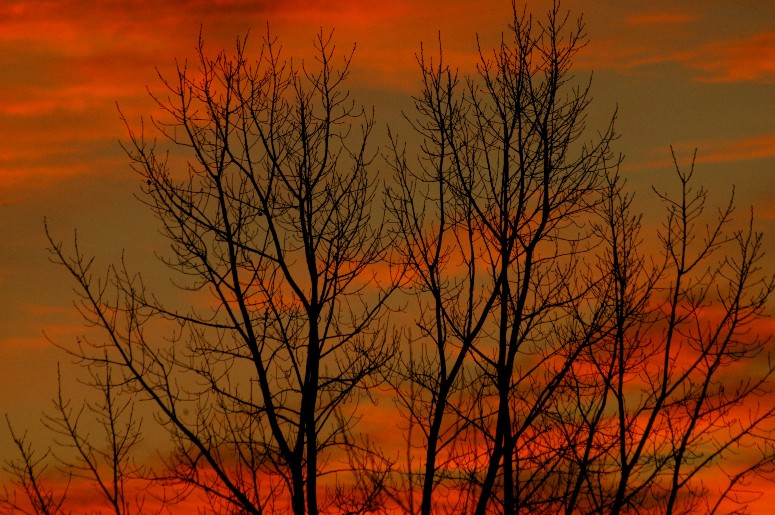 I photographed this fox, its siblings and its parents many times before this day. Both action and passive images on beautiful white rocks with a blue sky and blue lake for a backdrop. I savor those images but in my mind’s eye I was forever seeing another picture. It consisted of pretty light, an equally pretty kit fox with an intent look, a carpet of sand and a background of green. I showed up for my fifth time at this same location and was treated with some nice images of foxes in the grasses along the lake bank. Finally two young foxes grew weary and plopped down for a rest in the sand. This one spotted something in the distance. I make it a point to try not to influence the behavior of my wildlife subjects, but I was surely aware that people sometimes walk along the edge of this beach area. The potential is always there for one of those people to catch the attention of my subject. My fox friend responded just like I hoped it would. My subject absolutely deserves just as much credit as I do for this image. After all a picture of a fox with no fox in the picture really doesn’t work. Just the same if I wouldn’t have showed up for the fifth time, and I wouldn’t have chosen this location near the sand, would I have gotten the photo? Every pre-visualization doesn’t have to be the shot of a lifetime. The shot below is just another variation of my subject and the land. Just the same it was in my mind’s eye, and I kept it until I achieved success. When I am photographing wildlife, I am usually seeing my next picture before it actually happens.
Persistence is the greatest single attribute a nature photographer can have. Well that and a lot of luck of course.
It has been suggested that I set up pictures like this. In other words I create them by collecting things like feathers, flower blossoms and leaves. I have no problem if that is what you do, but that is not “quite” what I do. If I don’t find an autumn leaf on a bed of moss, I don’t make that picture. The reason I am that strict, is because these sorts of shots, of which I have made hundreds, are for me an exercise in mating a natural history discovery, and art. I have admitted many times previous, that I am guilty of occasionally moving that blossom or leaf…..just a hair in order to make a better picture. Now all of those rules and the exceptions to those rules, are just something that is personal to me. What is necessary for me to succeed, is to spend a lot of time looking down for those mini scenes, that bring natural history and art together. It’s always on my mind, with apologies to Willie Nelson. It might be luck, but I definitely sway that luck in my direction by persistence and effort.
We are a part of every image we make. Just because we don’t build it from the ground up, doesn’t mean that we nature photographers (and our subjects) don’t deserve at least as much credit as other photographers. Serendipity is a real occurrence and we should all celebrate those moments and use them to our advantage, but if all we do is wait for that to happen, we will have very thin picture files.
Art is in the mind of the creator whether we are shooting outdoors with existing scenes and subjects, or sitting inside and piecing together an image we have always wanted to make. Of course a little luck is always appreciated but the more you create visions in your mind and go about the business of bringing those circumstances together, the luckier you will be. I guarantee it.
For those of you who are interested in storm chasers and more specifically lightning photography,
Michael Bath specializes in that endeavor. His website http://www.lightningphotography.com/ gives you a nice selection of images to look at, as well as info about Michael. I have never had much success with this sort of photography and maybe it is just as well.
Considering any kind of nature photography as art is a fairly new concept. While Steigliz and others brought photography itself into the world of art in the early 1900s. It was really the 1950s-60s and Ansell Adams with his black and white landscapes that finally made the statement that at least nature scenes could be art. That is as long as it was black and white. Galen Rowell crossed a new bridge when New York and other art centers accepted his color landscape work as art. His recognition of the color of light and how to bring it to film, changed nature photography forever. Then Frans Lanting, Art Wolfe and others finally proved that wildlife can be art in and of itself, as well as in the mind and heart of the photographer.
As an aside, Steigliz’s wife was legendary painter Georgia O’keefe. Both were friends of Ansell Adams.
No matter what you do in life, there is always someone who walked your path first so that you might have an easier journey.
Make today a special one, and I’ll talk to you again soon, Wayne
 Earth Images Blog by Wayne Nelson