Short Stories that is: It seems there is nothing I’d rather do than collect a bunch of pictures and talk (or write) about them.
Over the years when the opportunity has arisen to get some really close flight shots of birds, I have been known to occasionally cut off a wing. Not literally but photographically. If they are flawlessly sharp I usually crop the picture and cut off the other wing. I try to make a picture that takes the viewer right into the world of the bird. Often times those flight shots are not perfectly sharp enough to crop. The image below was ever soooooo close to being good enough. Just not quite. I truly love Northern Harriers especially females, so every couple of years I share this image anyway. This picture was made at Bong State Park for those of you from this area. She was hunting along the road side and I stopped the car and quickly leaned my lens out the passenger side. I focused and snapped this shot and she actually flew towards the car. I genuinely thought she was going to fly into the car with me. I actually ducked. So many great memories.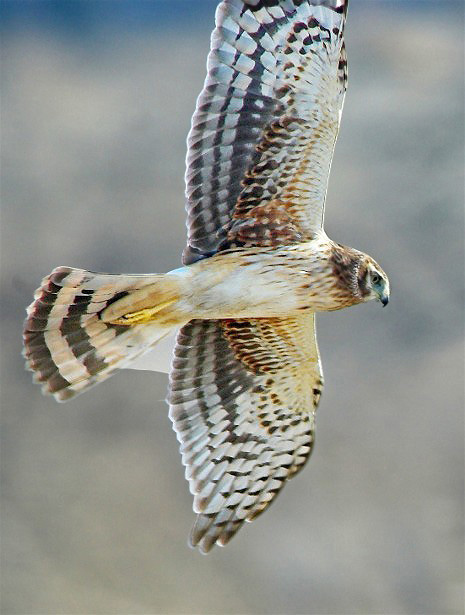
How much information is necessary? I have photographed a lot of western Arches in my life. I mostly show the entire arch in what is hopefully good light. Wilson’s Arch is just along a state highway in Utah and I came across it after two days in Arches N.P. This is a heavily visited and slightly marred arch and as I peered through the darkness I could see enough that I almost took a pass on making the photo. Then I saw the eastern light begin to color the opening. Sometimes a small amount of information and splash of great color is more powerful than a grand scenic. Many years after I made this picture Ron and I stopped here for a brief visit and I explored Wilson more thoroughly. It is indeed a nice place despite its nearness to the highway. I think the most misleading part of this image is just how big Wilson is. It is quite a climb to that opening and people look pretty tiny when they stand there.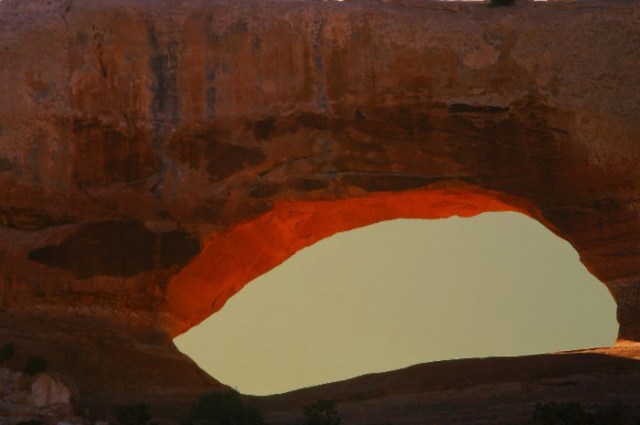
I usually show close-up images of American Bitterns. I have been lucky in having them close to my car (and tripod once) on many occasions. If you always show close-ups of a species it doesn’t make a definitive statement about them. I liked the way this bird struck a “bittern pose” but sat there with its head out of the grass. They do seem to think they are invisible when they strike that pose.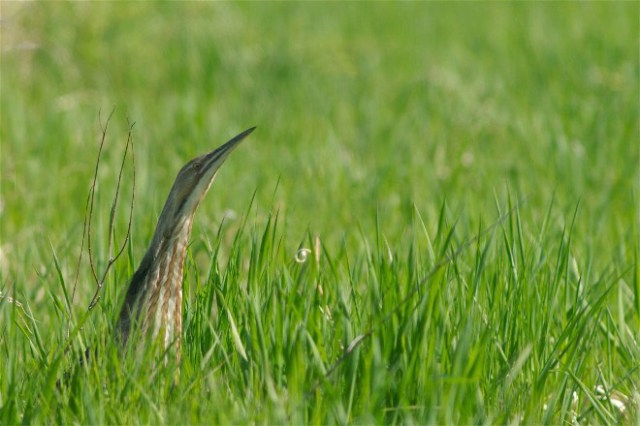
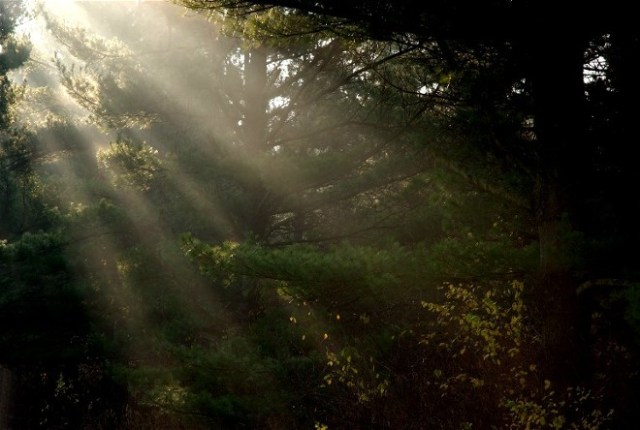
A favorite play of light technique of mine is to use God Beams. I have to give the late great Galen Rowell credit for creating that term, and yes I did ask him before I used it the first time in the mid 1990s. Capturing those angled rays of light spreading downward from the clouds, they will turn the ordinary into the extraordinary. The first image is a shot of lake Michigan. It was made across the street from my house. The second is just an ordinary coniferous forest in Illinois. I think it is fair to say that it is likely, that in the history of that woodland, and the history of photography, nobody else has ever made a photo inside this part of that forest. The truth is of course that I was hiking and then those beams came down. I am thankful. When I shoot these rays I generally underexpose close to one stop. When I get the image home I add a few extra clicks of contrast.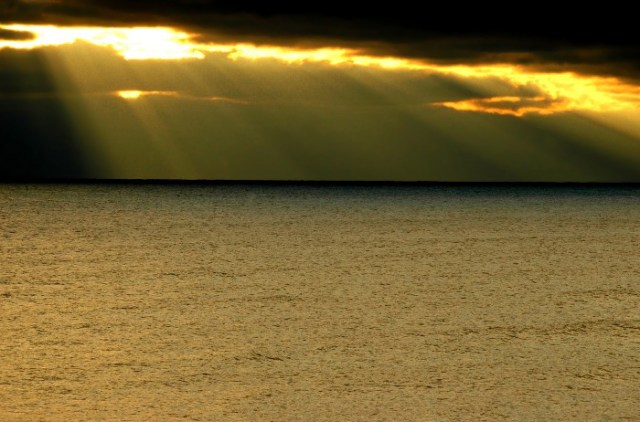
The Common Yellow-legs, especially the Lesser, is without a doubt the most “common” species of shorebird that we get in these parts, outside of the Killdeer. They are pretty tolerant of people and seem to strike a lot of nice poses. Of course all birds need to preen and that always makes for a nice opportunity for a picture. Sometimes (at least to me) the plain birds can be just as beautiful as the colorful ones. Beauty can be in a bird’s design, or in it’s pose, or in some indefinable characteristic.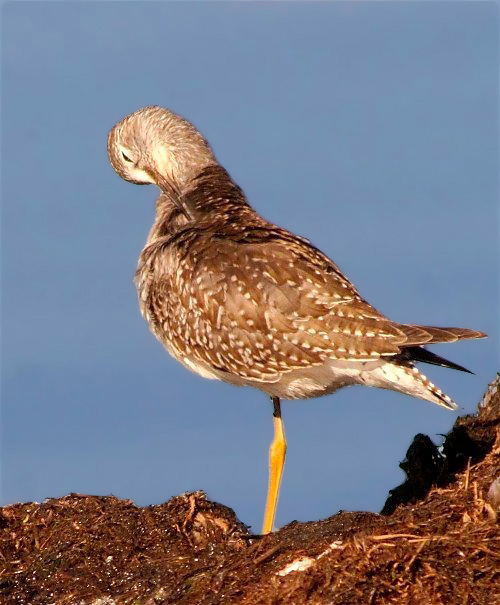
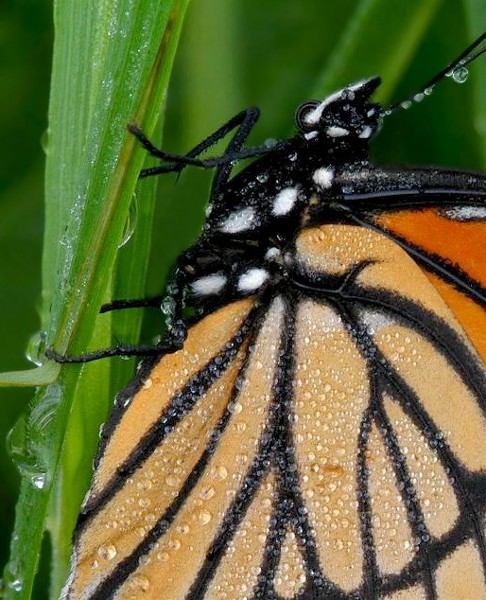
For many years I created butterfly images by handholding my camera with two or three electronic flashes. Those flashes, when used correctly and with a little bit of luck, would approximate daylight while giving you the speed of the flash for stopping any movement, instead of relying on shutter speed. In my later years I changed to a long macro such as 200-300mm, a tripod and daylight. Being encumbered by a tripod makes this kind of image difficult, but I like the results. Any of you who own one of today’s latest generation of high-end DSLRs, should be able to bump your ISO 20 times from what I had to use. This with virtually no noise. That should allow you an incredible opportunity to make some of the best shots of active insects that have ever been made. Of course knowledge of your subjects, their habitats, and the time of year and location that they can be found, is still important.
The first picture below is a Buckeye Butterfly on a Purple Coneflower and the second is a super close-up of a Monarch still wearing some dew from the night before.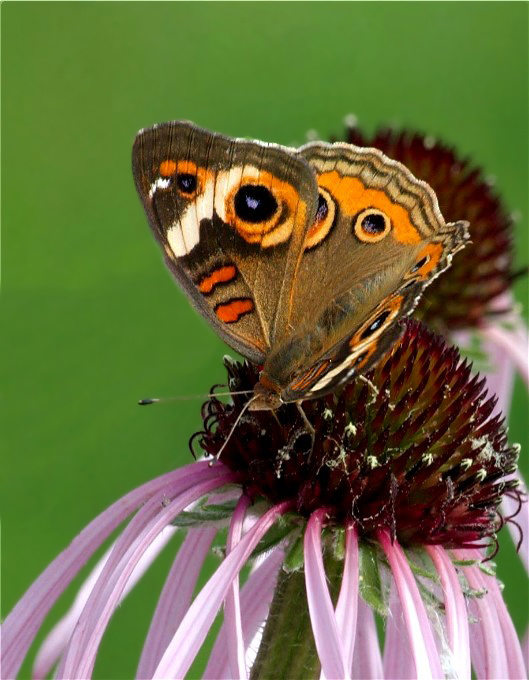
To me any animal running or flying that is wild and free in nature, is fair game (so to speak) for my camera. Animals that have come from domestic critters, definitely fit the bill. Would you pass on photographing two wild stallions fighting for dominance? For me the same is true of pigeons. Most of our city pigeons in this area are bluish/gray, and most of our country birds are white. The one below must be a crossbreed. In fact I did not even think this was a pigeon at first. It was completely alone. I have never seen that before. It moved, walked, flew and ate just fine, so I am guessing it was healthy. It could be a pigeon/dove hybrid but I don’t see the dove in it. It might be that the truth was revealed when I got out of the car and the bird was not frightened. A human raised pigeon? I love this bird’s eyes.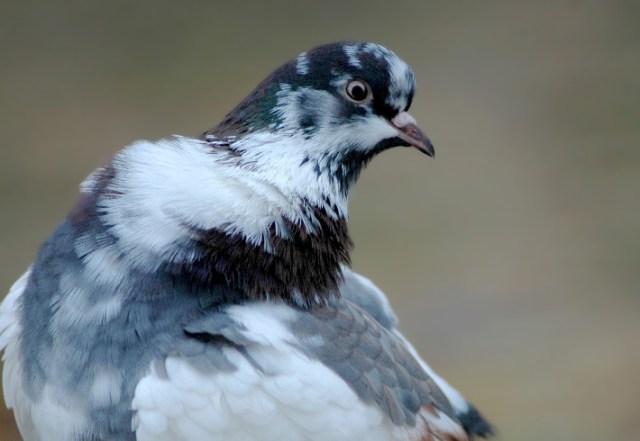
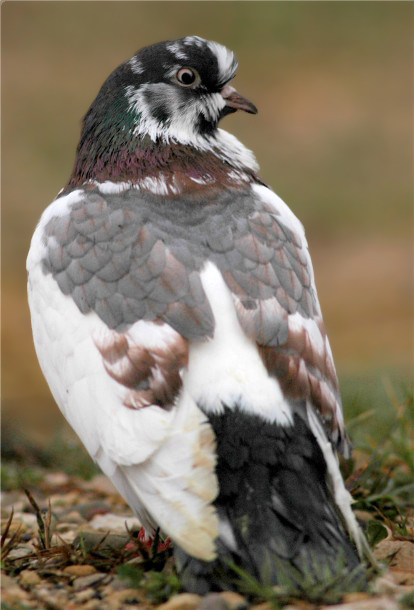
I love the little mysteries that nature photography brings us, even if it is just wondering about a pigeon.
It has been a long time since I have commented on “comments”. You are encouraged to make comments here. Initially I will have to approve them but after that I generally open them up so your comment will self-publish when you post it. Those who you see making regular comments, such as Ron, Darlene, Gary and Cindy have a “blank check” to write what they want when they want. We had others commenting at one time and some of those individuals have an open invitation as well. You do not have to agree with me to write an acceptable comment. I will however remove or possibly edit any comments with vulgar words or hateful statements.
What those of you who visit Earth Images don’t see, is all of those comments that I do not allow. 95% of them are spam. The other 5% are either vulgar or self-serving beyond just wanting to advertise their site or blog. The only other reason for rejection is if you are so far off topic that it wouldn’t make any sense.
The final publication (paper edition) of a Wisconsin icon, Wisconsin Trails Magazine has hit the news stands. I was privileged to begin a relationship with WisTrails when the original owners Howard and Nancy Mead still ran it. I am proud to have had images published in their calendars in all of the different formats that they were published. I was published in their magazine numerous times including once having the portfolio section exclusive to my work.
There is really nobody left in the publishing business like Howard and Nancy. They adored this state and the magazine was published with loving care. In the beginning Howard did all of the photography in b&w with a 4×5 view camera. After WisTrails was sold to Journal Sentinel Communications it continued to be successful with a new editor who realized why it was successful in the first place. With another editor change its demise under the parenthood of Journal/Sentinel was inevitable. One only needs to follow the philosophy of the Journal Sentinel Newspaper to realize WisTrails was doomed.
I have been published in better known national and international publications, but none meant more to me than WisTrails.
In my previous post I included a link and sort of an endorsement of the “american society for the prevention of cruelty to animals”. I am an opinioned individual and I rarely agree with any organization entirely and the ASPCA is no different. They are one of the best when it comes to treating animals that most logical humans would agree are in need of help, as a result of abuse and neglect. I do not agree with their stance on hunting. I am not a hunter, just a common sense individual who eats meat and refuses to live in hypocrisy.
I hate that discovering the politics of an organization has become a part of not only donating to that organization, but putting up a link on a blog. I do realize it is those organizations themselves that have created this by their own political involvement. I guess we all just need to use our own conscience.
Support or don’t support this one organization (american society for the prevention of cruelty to animals), but help to slow the epidemic of cruelty towards animals who cannot help themselves.
I have alluded to, but not been specific about, reasons why it has become more difficult for me to write on Earth Images, and other blogs. More and more my initial writing is a jumbled mess that has to be untangled. Sometimes I only make new mistakes while I attempt to untangle the old ones. I only write this to help you understand any tangles that might (will?) make it through to publication.
I always appreciate it when you stop and visit us at Earth Images, Wayne
 Earth Images Blog by Wayne Nelson