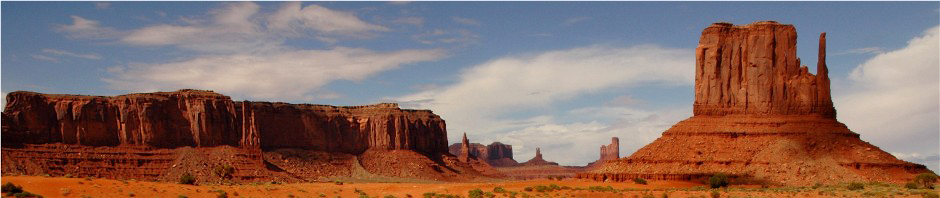
I write a lot about using shadows in naturescapes and macros. They not only make images pop, but they separate areas of a photograph and often provide visual tension and even a sense of mystery. The images that I normally use as examples are primarily pictures with sun and shadows. What about pictures with shadows and sun. When shadows or at least shade, makes up the majority of your subject, what does a few “points of light” do to a photograph?
This first picture was made in the Badlands of South Dakota. I hopefully have proved in the past, that both sunny days and overcast works well in the Badlands. What about both in the same image. The fact that the majority of the rock forms in this photo are in the shade made for a unique opportunity. Three small distant sections of rock are lit by the sun. The visual tension here is subtle. This image was made well after sunrise so the color of those sunlit rocks is not red or gold, just a little warm. This is a digital copy of a 35mm slide.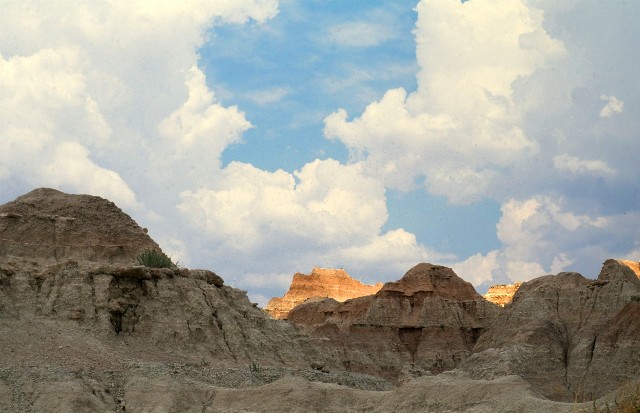
The next photo takes the “point of light” concept to the extreme. This Monument Valley picture was made right at sunset. If you look carefully you can see the extreme sidelight. It not only colors a portion of the rock up front, but a few tiny slivers of light sparkle at the edges of those distant rocks. This was emphasized through the editing process as a few clicks of contrast were added. I metered from the top/right of the bright foreground rock. This is a digital copy of a medium format film image. I have made pictures like this throughout the west, but the shores of Lake Michigan have also been a favorite spot.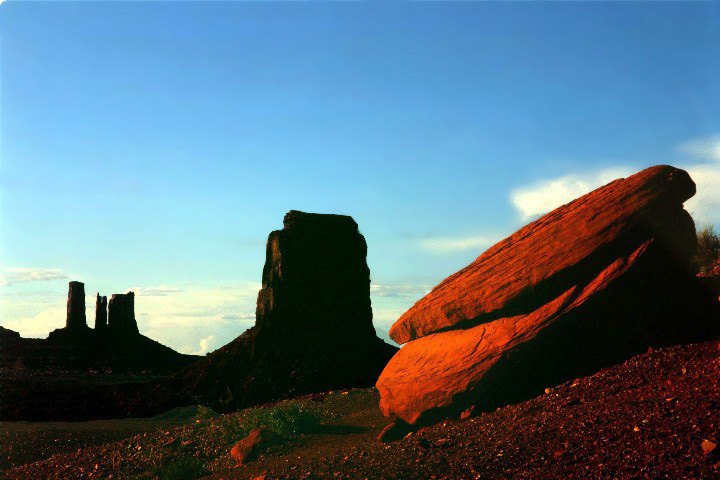
When I look at the rocks of the Badlands and the desert rocks of Monument Valley it brings back memories of an ex-brother in law. My wife and I were living in Colorado when her brother and his girlfriend came out to visit us. He wanted to see his sister but did not agree to head west until he heard that the eastern slope of the mountains where we lived, were lush and green. He hated deserts and saw no beauty in anything unless the color was green. He of course had never actually seen a desert. It always baffled me because from my first movie western to my first copy of Arizona Highways Magazine, I was stunned by the western landscape. Of course I am stunned by green landscapes as well. I guess I’m just stunned. Brother in Law had a problem because his girlfriend was from Phoenix and she wanted to visit home as well. He finally agreed and after two weeks in the Arizona desert, he eventually talked that same girlfriend into moving to Arizona. He became the desert southwest’s biggest salesman. It is not unusual for people from the eastern half of North American to miss the beauty of red rock, mountains of brown and gold, and sand dunes. We all make first impressions of many things and for some people that finishes it for life. For many people like my ex-brother in law it often only takes a little time and a great view. About 24 hours in his case. There is beauty all around us and it is just waiting for your camera.
I digress.
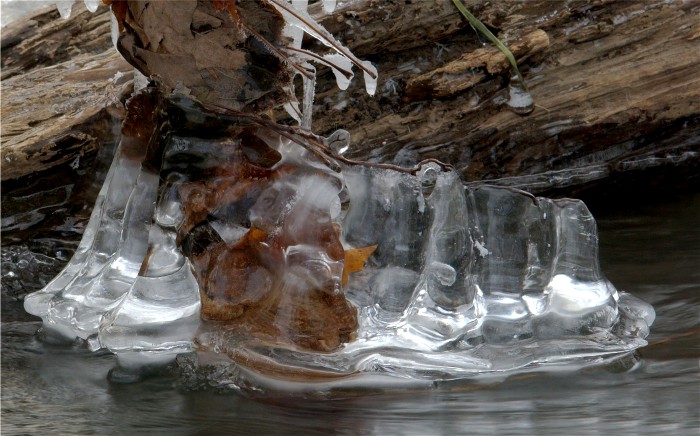
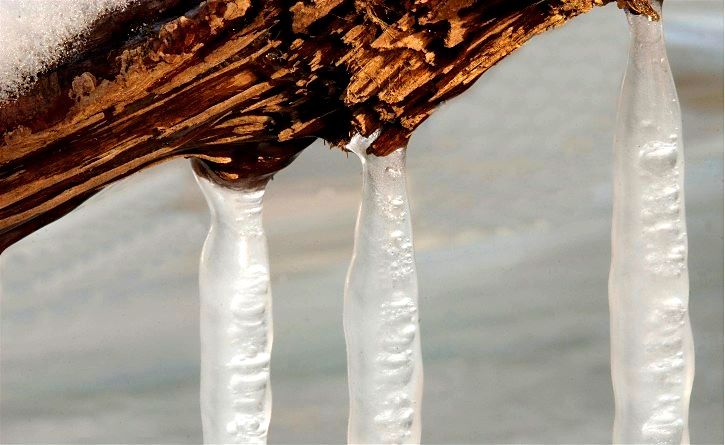
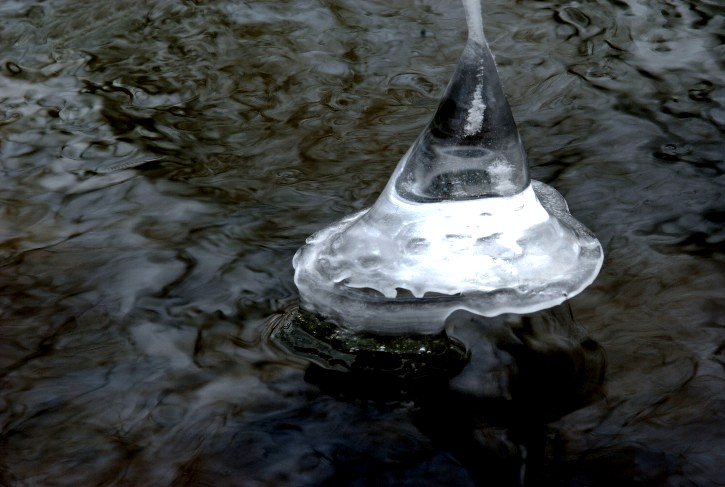
One of my favorite subjects has always been ice. Winter ice brings a lot of opportunities to nature photographers. All of these pictures were made on the same day. The sunrise brought the promise of a day of sunshine streaming through bits of ice. The clouds appeared and left me with soft light macros. All light can be beautiful.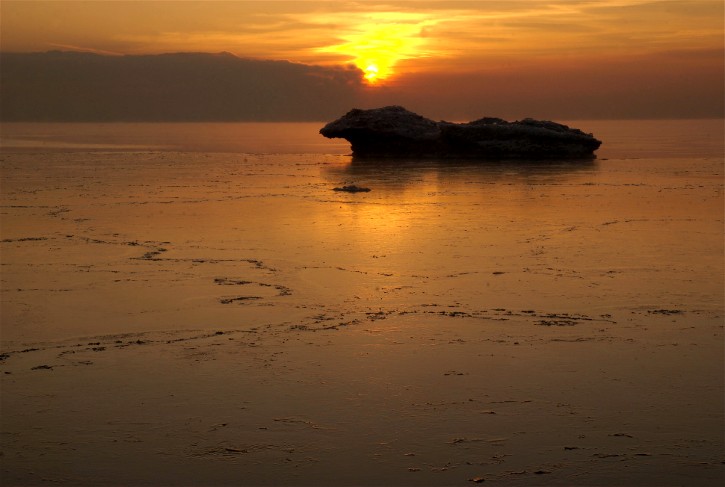
I thought we’d close with some birds in winter. Bird photography has a whole different feel in winter. Birds seem different when they are viewed in the snow and cold. In many cases they care less about your presence. Vivid Memories of Snowy and Short-eared Owls, Bald Eagles, Rough-legged Hawks and an assortment of arctic ducks fill my mind. Photographing birds in winter is something that I miss.
Common Crow. I left my camera on multi segmented aperture priority for this image, instead if switching to manual 1% spot metering. There was nothing nearby that was mid-toned to get my reading from. I changed my setting from minus 1/3rd of a stop to plus 1/3rd. My reading came from the snow and that meant that the camera would attempt to make the snow gray, and therefore turn the bird to a black silhouette. Adding a total of 2/3 stop of light kept the snow light. The bird retained detail because of the light skimming across its front. That skimming light also meant that there are flecks of blue shade on the snow. This was perfect for a strong image of one of the most common but least photographed birds in North America. Those of you who know me also know, that I have made a lot of sales by photographing the animals that many others ignore.

Bald Eagle
Male Ring-necked Pheasants
Pigeons
Ring-billed Gull
Snowy Owl
Rough-legged Hawk
I have spent a fair portion of my years of photographing nature, doing so in winter. Sometimes under very cold conditions. Dressing for the weather is important. That may seem obvious but I gave stumbled upon a few photographers over the years that were badly under dressed. They usually have to seek warmth just about the time that something good happens. They tend to be male photographers.
The image of the Bald Eagle was made with the temperature at -5 F. I spent 5 ½ hours photographing eagles that day….all outside. I had two opportunities to warm up inside the Lock & Dam Master’s building. 10 minutes each time. It was -10 F when I began the day and right about 0 F when I left. I was comfortable all day with many layers of clothing, boots and two pairs of socks, and on and on. My cameras functioned perfectly although I had six batteries with me as I kept one camera body and five batteries inside my clothing at all times.
Don’t put your camera away in winter. The pictures may be fewer between, but great opportunities will occur.
 Earth Images Blog by Wayne Nelson