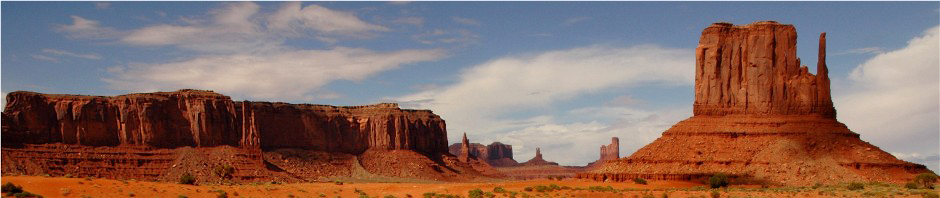
I first visited the beautiful San Xavier Mission Historic Site somewhere around 1984. My mother had passed away and I was looking for a place where my father and I could travel and enjoy both nature and human history. He had been stationed (Army Air Force) in Arizona in 1940, before heading to Hawaii. In addition to the beauty of the desert, and all of the Native American and Spanish history, he could enjoy some of his own history. It was a great trip and we viewed where his air base had been in addition to the places in Mexico that he and his friends used to visit. We also marveled at the landscape and stopped at many historic locations. The most famous of the latter was the San Xavier Mission. It was (in 1984) and still remains an Indian reservation. We marveled at the architecture and eerie feeling of the ghosts of the past.
This was not meant to be a photographic trip for me. I brought one 35mm camera, two lenses, a table top tripod and two rolls of film. While my father was an amiable and kind person who would do anything that pleases whomever he was with, I could never bring myself to hold my traveling companions hostage to all of my image composing and related things. I made three indoor pictures of San Xavier. I have no idea what happened to those images or if I even had the film developed.
In the late 1980s I returned to Arizona, and again many times after that. I had all of my equipment on those trips. Of those trips one included a return to San Xavier. This time I made a lot of exterior images of the church, beginning with sunrise and ending in late morning. Unfortunately an attempt to make interior natural light images was stopped by a guard. I did have a tripod and large camera with me and I cannot blame him for not wanting me to set up inside the church.
One of the best parts of my return was some great Indian Fry Bread. A small food stand in the corner of the parking lot was selling it……..and I was buying it. One piece with some hamburger and cheese, and another with honey for desert. Admittedly the honey bread was a lot more authentic than my cheeseburger bread, but I was hungry.
Warning. When I write about things like loving fry bread, please do not take that as a recommendation for you to partake. I am not playing the role of critic. My guess is that if ten readers would eat fry bread because of my writings, one would like it, one would not, and everybody else would think…..what’s the big deal. You can certainly find breads that anyone would consider better than Indian Fry Bread. The same is true when I talk with passion about locations. That is because everything I do, and for that matter, many things I have eaten, have been flavored (pun intended) by the whole experience. Eating that bread at San Xavier, wasn’t just about eating bread, it was about eating that bread at San Xavier. It is an entire experience to me. Visiting Crex Meadows Wildlife Area has been photographically productive for me, but not so much for many others. Even my trips that included only a few pictures have been great to me because I include the flowers I find, the bugs I see, the people I meet, and the atmosphere I feel when I am there as a big part of the experience. I admit that I do feel regretful when people don’t make a special connection to a location I have written about. When somebody goes somewhere because of my words, I truly want your experience to be a memorable one. Not the same as mine, but one that belongs to you. When it is all said and done, whether that happens or not is up to you, not me.
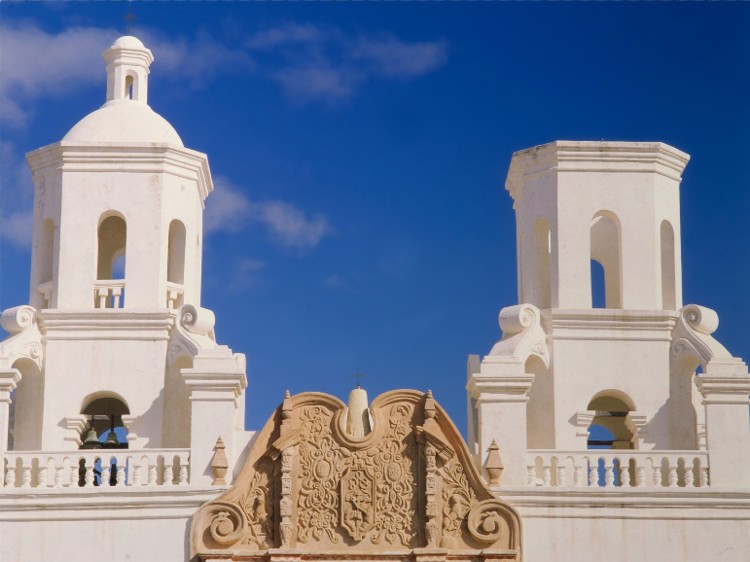
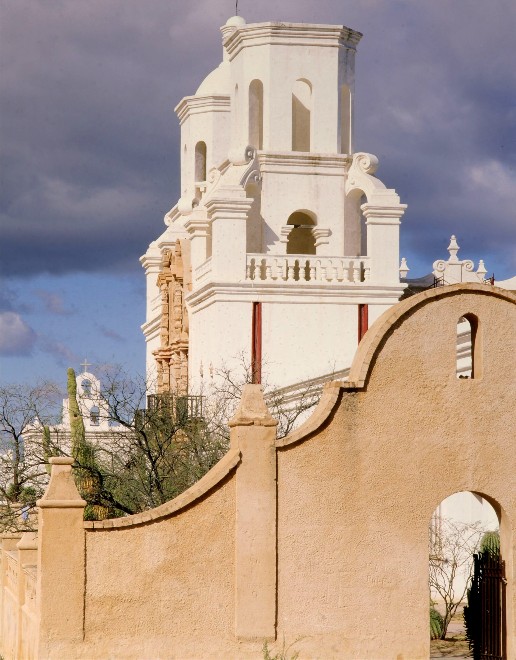
The first two of today’s images at the bottom of this page, have been shown many times previously and have even published in book form. The rest have never been shown before.
The information below came from http:// www.sanxaviermission.org
A National Historic Landmark, San Xavier Mission was founded as a Catholic mission by Father Eusebio Kino in 1692. Construction of the current church began in 1783 and was completed in 1797.
The oldest intact European structure in Arizona, the church’s interior is filled with marvelous original statuary and mural paintings. It is a place where visitors can truly step back in time and enter an authentic 18th Century space.
The church retains its original purpose of ministering to the religious needs of its parishioners.
Location:
The Mission is 9 miles south of downtown Tucson, Arizona just off of Interstate 19. Take exit 92 (San Xavier Road) and follow signs to the Mission.
There is no admission charge to visit Mission San Xavier. Some 200,000 visitors come each year from all over the world to view what is widely considered to be the finest example of Spanish Colonial architecture in the United States.
The History:
The current church dates from the late 1700’s, when Southern Arizona was part of New Spain. In 1783, Franciscan missionary Fr. Juan Bautista Velderrain was able to begin construction on the present structure using money borrowed from a Sonoran rancher. He hired an architect, Ignacio Gaona, and a large workforce of O’odham to create the present church.
Following Mexican independence in 1821, San Xavier became part of Mexico. The last resident Franciscan of the 19th Century departed in 1837. With the Gadsden Purchase of 1854, the Mission joined the United States. In 1859 San Xavier became part of the Diocese of Santa Fe. In 1866 Tucson became an incipient diocese and regular services were held at the Mission once again. Sisters of St. Joseph of Carondelet opened a school at the Mission in 1872. Franciscan Sisters of Christian Charity now teach at the school and reside in the convent.
The Franciscans returned to the Mission in 1913. Recently, Mission San Xavier became a separate nonprofit entity. It remains a testament to the endurance of culture though out our history.
Timeline:
1692 Father Kino visits the village of Wa:k
1700 Father Kino begins foundations on a church never built
1711 Father Kino dies in Magdalena, Sonora, Mexico
1756 Father Espinosa constructs the 1st church
1767 Jesuits are expelled from New Spain
1768 Spanish Franciscans take over the Mission
1783 Construction begins on the present church
1797 The Mission church is completed
1821 Spanish Franciscans leave
1846 Cooke’s Mormon battalion passes by the Mission
1854 Gadsden Purchase puts the Mission inside the United States
1859 Santa Fe diocese begins first repairs of the Mission
1887 Earthquake damages the Mission
1905 Bishop Granjon begins major repairs
1913 Franciscans return to the Mission
1939 Lightning strikes the West Tower
1953 Church facade is restored
1963 San Xavier becomes a National Historic Landmark
1978 Patronato San Xavier established to preserve the Mission
1989 Leaking walls force emergency restoration
1992 Conservators begin a 5-year rescue effort of the interior
Today the restoration continues when funds are available.
The Architecture:
Constructed of low-fire clay brick, stone and lime mortar, the entire structure is roofed with masonry vaults, making it unique among Spanish Colonial buildings within U. S. borders. The architect, Ignacio Gaona, is credited with building another church in Caborca, Sonora Mexico.
Little is known about the people who decorated the interior. The artwork was probably commissioned by Fr. Velderrain’s successor and most likely created by artists from Queretero in New Spain (now Mexico). The sculpture was created in guild workshops and carried by donkey through the Pimeria Alta to its destination at the Mission. Craftsmen created gessoes clothing once the sculpture was in place.
The church contains numerous references to the Franciscan cord both on the facade and throughout the church.
The shell, a symbol of pilgrimage after the patron saint of Spain, Santiago or James the Greater, is replicated all through the structure in window treatments, the sanctuary, the facade and other details within the interior.
The Baroque architecture style features playful dramatic elements such as theatrical curtain displays, faux doors, marbling, and overall sense of balance.
The Restoration:
An earthquake in 1887 knocked down the mortuary wall and damaged parts of the church. Extensive repairs began in 1905, under Bishop Henry Granjon. The next round of restoration followed the years after 1939 when a lightening strike hit the West Tower lantern.
A group of community leaders formed the Patronanto San Xavier in 1978 to promote the conservation of Mission San Xavier. Shortly after a comprehensive study of its condition was completed, water seeped into the west wall of the church’s sanctuary, forcing an emergency conservation effort by the Patronato. In a five-year program, an international team of conservators cleaned, removed over-painting, and repaired the interior painted and sculptured art of Mission San Xavier del Bac.
The Patronato continues exterior preservation work begun in 1989. Its restoration team is removing the earlier coating of cement plaster, repairing the historic brick beneath, and re-finishing the exterior surface with a traditional lime plaster. The sooner the cement can be removed, the greater the amount of original fabric can be preserved. More remains to be done if we are to guarantee this landmark for future generations. Please help us preserve this national treasure.
Send your tax-deductible donation to: Patronato San Xavier
P.O. Box 522, Tucson, AZ 85702
520-407-613 www.patronatosanxavier.org patronatosx@earthlink.net



Thank you for stopping by at Earth Images.
 Earth Images Blog by Wayne Nelson
Nice post, Wayne. My first trip to San Xavier was with my father about 1973 or so. My dad was a decent photographer and fell in love with the missions. Eventually he went all over Mexico and the southwest in his little camper trying to capture images of them all in the hope of doing a little book of photos and history of each location. Oh, and I do remember fry bread fondly. Mine had beans and I was quite hungry too:)
Cindy
Thank you Cindy. The memories we make are even more important than the pictures. We were both very fortunate in that we got to travel (by vehicle) around North America exploring and enjoying. We got to see a lot of those “small places” that others miss in addition to the famous ones.
I am hungry for that bread right now.
Thanks again,
Wayne