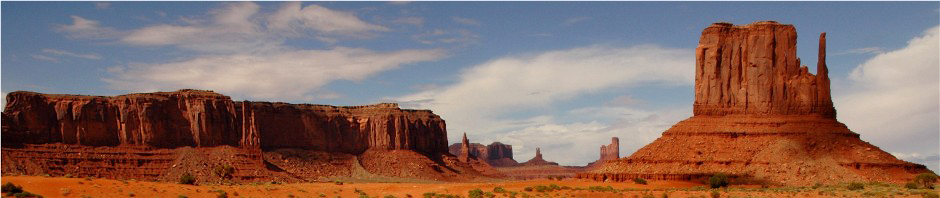
Compositional rules can make any photographer better. One such rule accurately states that symmetry is death in photography. It makes for boring images that do not engage the viewer. Your eyes absorb the entire photo, but you quickly lose interest. Well composed images that utilize the rule of thirds, or power points, maybe leading lines, or recognize the need for a wild animal to carry extra breathing space in the direction it looks or moves, that keep primary subjects out of the “bulls eye center“, will hold the viewer in most instances.
Just the same every photographic rule is worth breaking. At least recognizing that those rules are not sacred is something that I believe to be important.
If symmetry is important then why do images with mirrored reflections work so well when they are divided symmetrically? If leaving travel space for a moving animal in the direction it is moving is necessary, than why does a swimming animal that is leaving a wake often work best when the animal is past the center point, and has less room in the direction it is traveling? There are “logical” reasons as to why those techniques work, but if nobody ever broke the rules in the first place they never would have been shared with the world. One of the true joys of photography, is the pursuit of new and unusual ways to view the world through the lens of our cameras.
I’ve said many times that there is no nature subject more versatile than flowers. From the straightforward to the abstract, or from a field of flowers to the minute details on one portion of a single blossom, the possibilities are endless. Many would not call my Geranium image below a flower photo. Two little blossoms in the bottom of the picture frame might suggest this is a photo of a tree trunk, or Geranium leaves. Have no doubt about the fact that I believed (and still do) that this picture delivers you to those blossoms. It will do so every time you re-view this picture. This is a flower photo. It is primarily about those two little flowers.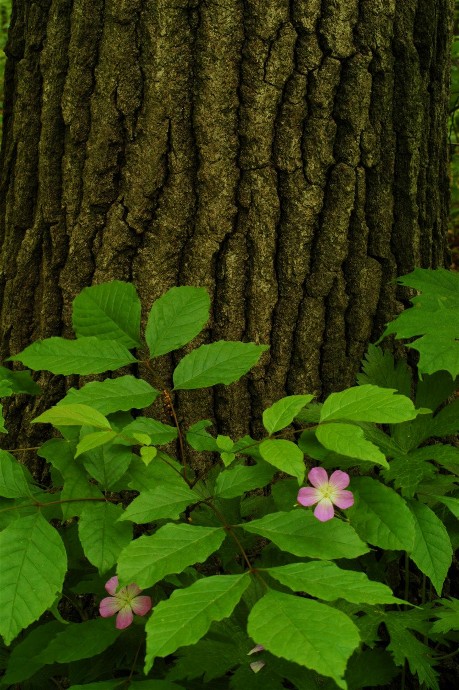
Wild Prairie Smoke is one of my favorite flowers. While you cannot see the entire flower, I do believe that the essence of Prairie Smoke is obvious in this picture. There are a million ways to look at a flower….or a landscape….or even a wild animal.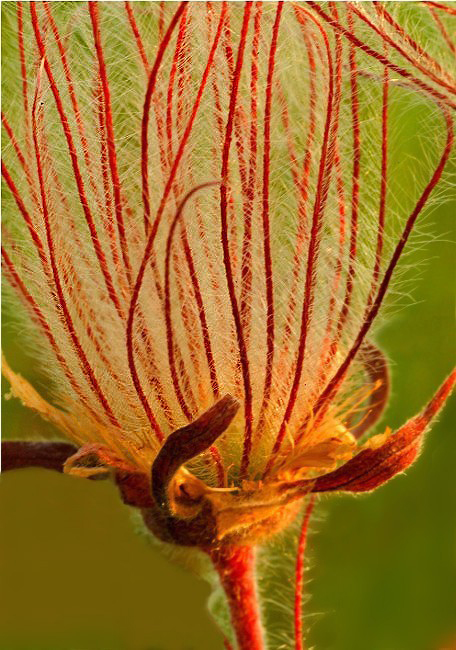
When making sunrise/sunset images that contain a silhouette, the general compositional rule is usually to keep the dark area to a minimum. I agree with that philosophy because it otherwise leaves the viewer with a lot of negative space that just kind of lays there. The shape of a rock silhouette is only interesting around the edge of that rock. I have made thousands of such images just that way. Just the same if all I would have done is follow the rules, I do believe I would have stagnated, as a photographer. The Badlands image below breaks that rule by a mile. I have devoted almost half of the scene, to pure black. It is an obvious and normal subject, that has almost become an abstract. No pain no gain. You will notice that I show this image framed and signed. That is unusual for me but that white signature definitely breaks up that large area of continuous darkness.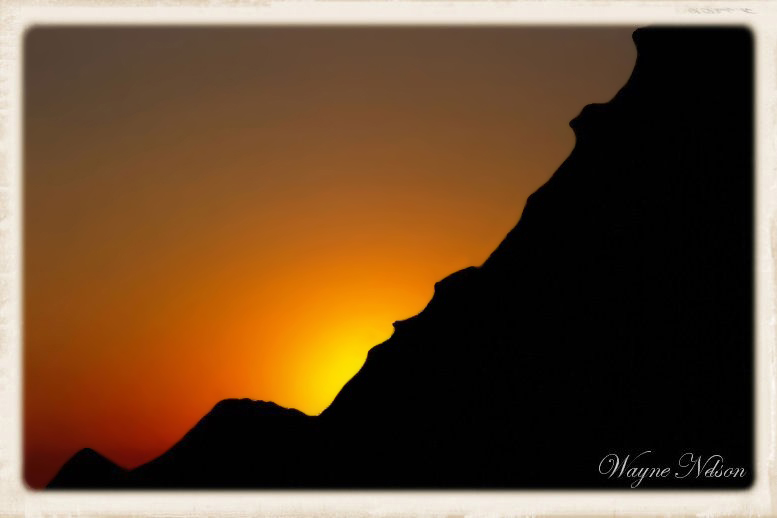
I am forever getting flight shots of birds while they are flying away from me. I actually love these “three quarter shots” as the bird angles away from you. This image of a Caspian Tern was made while I was quite close to my subject. This is still a crop as my original image had the bird dead center in the frame. I guess you could say this image employs some traditional compositional rules and breaks others at the same time.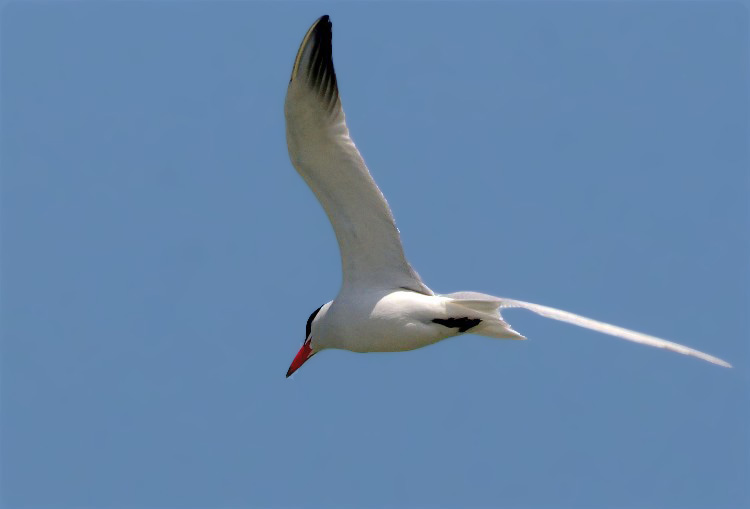
I create a lot of pictures where my primary subject stands out, or pops out may be a better description, from a black background. Flowers and dew covered webs are my primary subjects, but I will use any subject that I find. I know that there have been some that either think they are a digital creation, or at least it is not natural and therefore they appear weird. If I told those people that on any sunny day, I could take them on a walk through a woodland, or even an open field that is rimmed by shade trees, and find (naturally) several examples of this to show to them, would they believe me? The length of the lens you use, and the selection of your background, is one of those natural occurrences that sets us free as photographers. In most cases all I do is make a proper exposure for the sun, and choose a lens that is long enough to narrow my background to the shaded area. The difference in exposure needed for the sunny subject, and the shaded background, is generally enough to keep the background black. Yes if the background shows one flick of light, or there is a small part of a leaf that shows detail, then I will darken it digitally. It is true that our eyes can adjust when the camera cannot. That black background will appear black to our eyes, until those eyes (and our brains) adjust. Almost all of the images we create depart a bit from what our eyes and brains tell us. Most imagery is two-dimensional and our brains our 3D. Even 3D photography does not really give an accurate example what we see with our eyes. Photography is a mating between how we see and how the camera sees. It will always allow for some personal interpretation.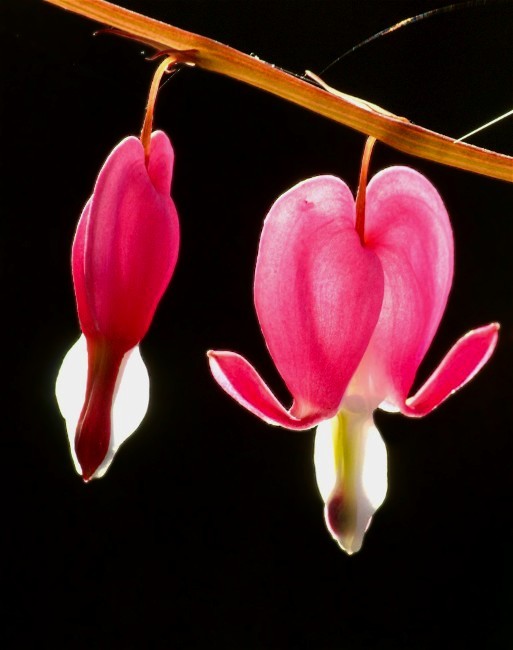
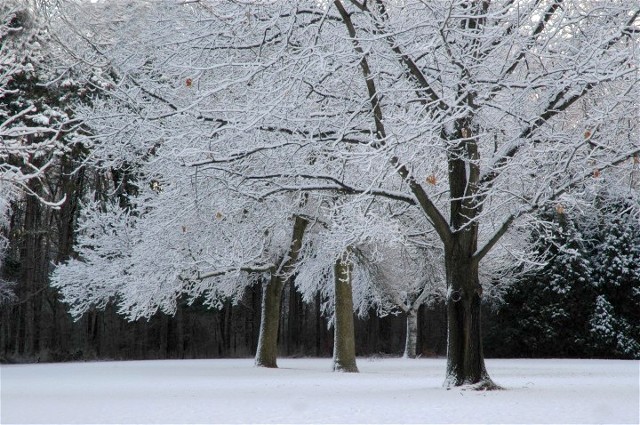
For you nature shooters who photograph everything she has to offer, before you know it, autumn and then winter will coat the land with fresh new colors be they warm or white. I enjoy framing images that feature trees and I especially like giving the viewer a path through the scene, or at least opening up some free space in the image. The images below do not fit any particular rule of composition, although you can ascribe to the snow picture, a bit of the leading lines principal.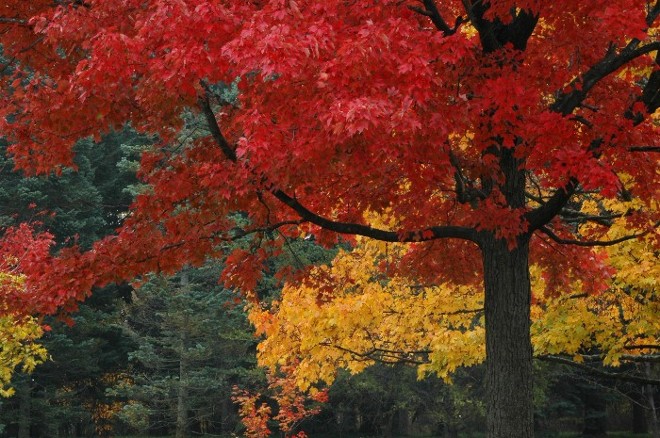
Anyone who has followed my writings know how much I love to think, talk and write about images. Why or why they do not affect us in a special way. We all have our own opinions on this subject. I have been proud to have been employed a few times over the years, to judge photographic art contests. They have included a camera club competition, a gallery show and a website contest. I judged one alone, one with a single co-judge, and one as a member of a panel. It is amazing how far apart we have been at the start of those multiple judge experiences. Towards the end we always came closer together, but still the final decision was a compromise, and would have been different if I had done it by myself. The process of working with someone else to make a decision about photographic art was however, a great way to open my eyes to seeing in a different way. Those times were a growing experience for me.
 Earth Images Blog by Wayne Nelson