One of the things that I have (over?) stressed in my writings, is to never limit yourself as far as how many subjects you can photograph, or how many different ways you can “see them” with your camera. Sometimes we look with our eyes, sometimes with our brain, and sometimes with our heart.
I must have shown a million (well a thousand) sunrise/sunset pictures in my life. There as many different ways to photograph a sunrise as any subject in nature.
I would guess this image was created somewhere around home. Whenever I am “no where special” and searching for a way to photograph sunrise, I find something to silhouette. Trees are among my favorites. I guess I have composed those images in a lot of different ways. Rimming the left side of the photo with the tree, and leaving the rest of the image empty, left the viewer with some free space to breath. I also enjoyed the wee bit of fog that lines the land just below the horizon line.
I shot this picture at f9 and 1/25th sec. I used a 80-200mm zoom set at 116mm. My metering mode was manual with 1% spot. It looks like I metered from the second brightest part of the scene. Just above the bright horizon. That would make that area the 18% gray or mid-toned section of this picture.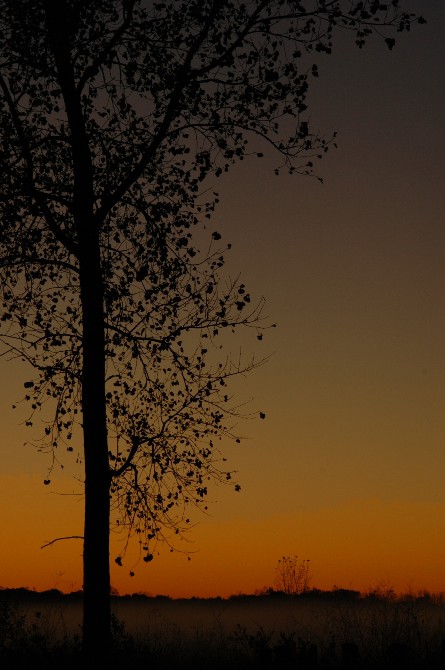
Both of our next two sunrises were made in Big Bend N.P. in west Texas. I arrived after an all night drive just in time to see a bit of light showing above the mountains. I was tired but I went to work. The first shot contains the most visually stimulating mountain shape that I could find in the two-minute interval between arriving and grabbing my tripod and camera. I then turned a bit to the north as the darker skies began to fill with light. This time the skies were more important to me than the silhouette, so I settled for the less interesting shape.
First shot. F18, 1/40th sec.,18-70 zoom set at 70mm, manual spot metering off the clear sky. That sky is mid-toned.
Second shot. F18, 1/250th sec.,18-70 zoom set at 46mm, manual spot metering taken from the brightest part of the scene. I wanted the sky above the clouds to remain fairly dark. I preferred a good contrast between sky and clouds while keeping the silhouette black. Note how metering from the brightest location changed the shutter speed from 1/40th to 1/250th sec. that is 2 ½ stops of light. I am guessing that ½ stop was because of changing my direction to the north from the east, and the other two stops were a result of which part of the scene I metered.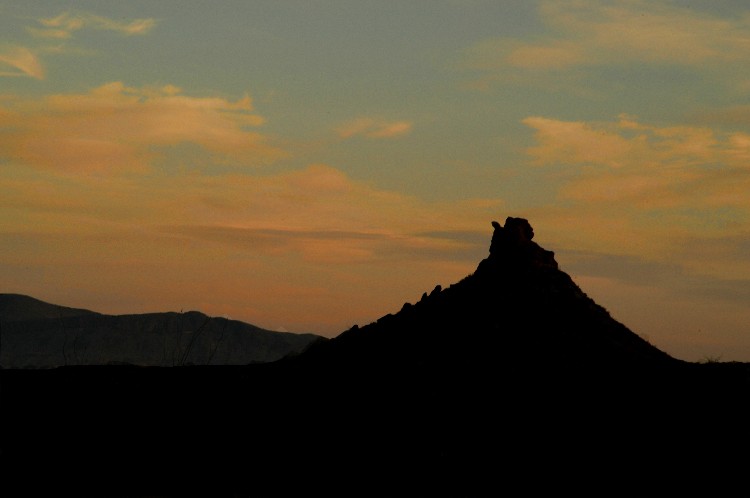
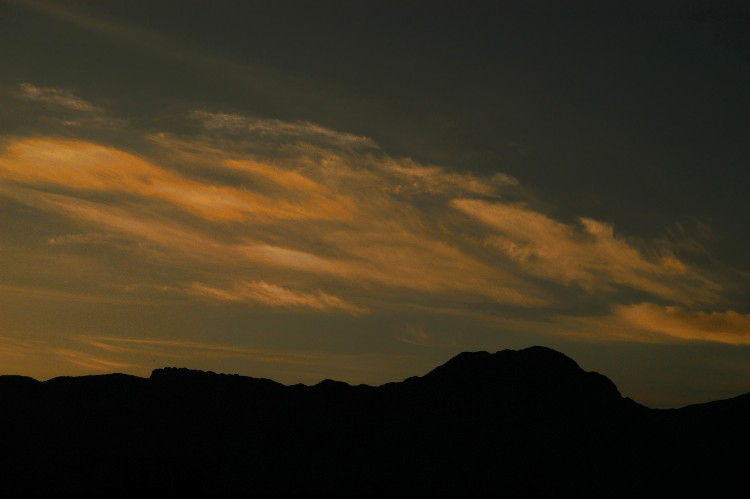
All sunrise/sunset images are subjective. We never completely capture them the way our eyes see them. That makes the basics of exposing for sunrise/sunsets really simple. Decide which portion of the scene you want to be mid-toned. Meter there and let the higher and lower values fill in the scene. I usually prefer underexposed sunrise pictures. That allows me to keep the colors rich and saturated. That means I need to meter (and keep mid-toned) a fairly bright section of the image. When I want an image that is lighter, wispier and ethereal, I meter from a darker area within the picture.
Just as an aside, when you are tired and desire to make a shot, but need badly to get some sleep, push yourself to make the picture. You will eventually get your rest and feel good again. When that refreshed and energetic person emerges you will have another great image in your files. You will forget the exhaustion quickly, but you will have the picture, and remember the moment forever. There are decisions and often compromises to be made every time we bring out our cameras.
So much wisdom in one person…aye.
I won’t go into exposures for each bird picture but aperture priority and multi segmented metering were used except for the swan portrait where I used center weighted manual for some reason which I cannot explain. I am quite sure my decision to use that mode was profound and brilliant, lol, so we will just leave it at that. There are of course many ways to arrive at the same exposure.
My first two times photographing migrating Tundra Swans brought soft low contrast (overcast) light conditions. I had driven 90 miles to Goose Pond to make those photos. I would never make a drive like that and leave without pictures. Sometimes with overcast light, close-ups can reveal details that direct front lighting will miss. It is also possible to make distant pictures like the flight shot that have a gentle, soft atmosphere. Every image we make does not have to be of high contrast. Different light imparts different moods. 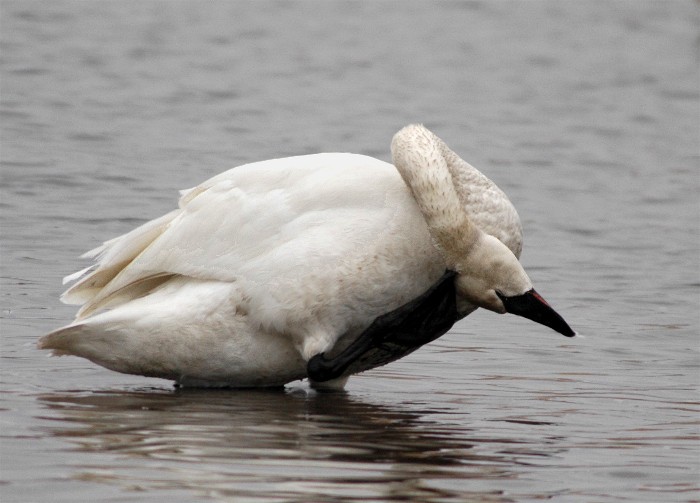
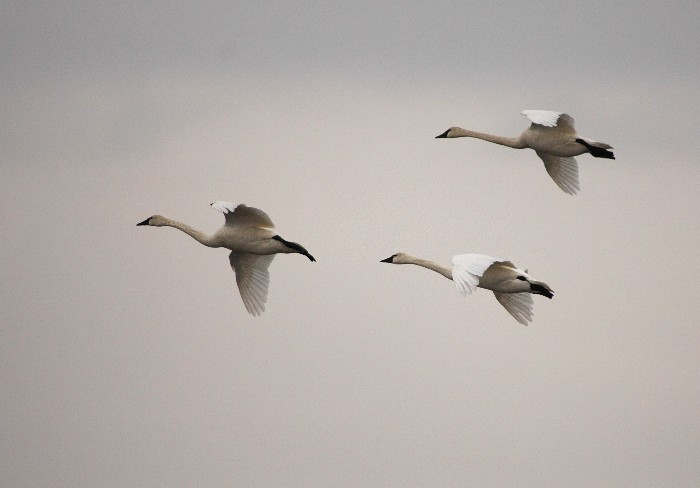
Over the past six weeks the most read post on this blog has been Cloudy Day Landscapes. Those visits come primarily from Google searches. That shows me that when people go out into the field they want to make pictures no matter what the light conditions. I like that.
What would I have done if there were no birds or other wildlife at Goose Pond? I probably would have pulled out my macro lens. There is always an image to be made. An open mind is one of the greatest assets that a nature photographer can have.
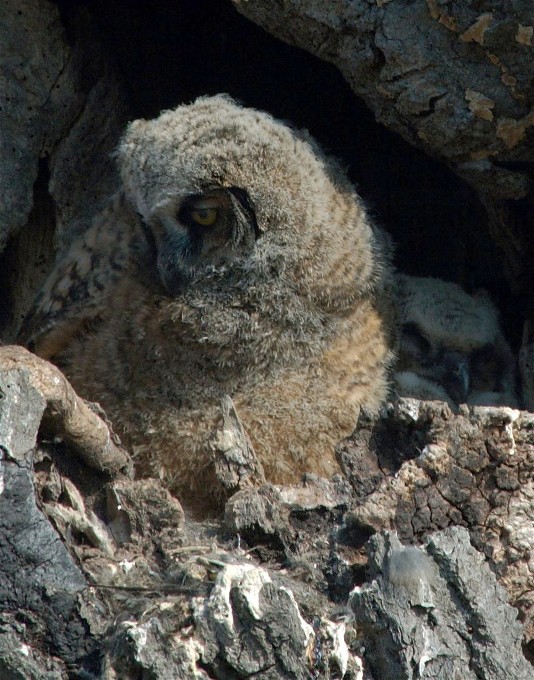
Sometimes finding a subject and making pictures is easy. A couple of young Great-horned Owls in a nesting hole that I already had visited many times before, makes for low stress, sure thing photography. Time to let my subjects do the work and curious youngsters always come through. It was sunny when I made these shots. On other occasions those conditions caused problems, which helped me to decide to shoot here on cloudy days. The sun peeked out from the clouds this morning but not as harsh and shadowy as on previous visits. Good pictures can be made in most light conditions.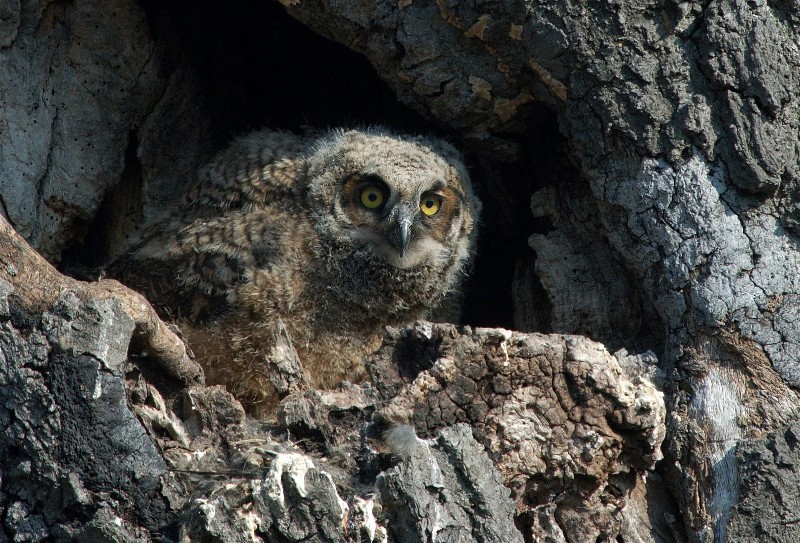
One of my favorite young birds has always been this baby Sandhill Crane. I will admit that I am glad that there was golden light on this early morning walk along the Horicon Marsh NWR boardwalk. I actually was at Horicon to photograph the boardwalk itself as an assignment. I had just been there two days earlier and spotted a mated pair of cranes with a small baby. They were well out on the peninsulas that live in between the waterways of the marsh. If I had not gotten the boardwalk photo request I may not have returned to Horicon for another week, and my fuzzy little friend and its parents may not have been so close to the walkway.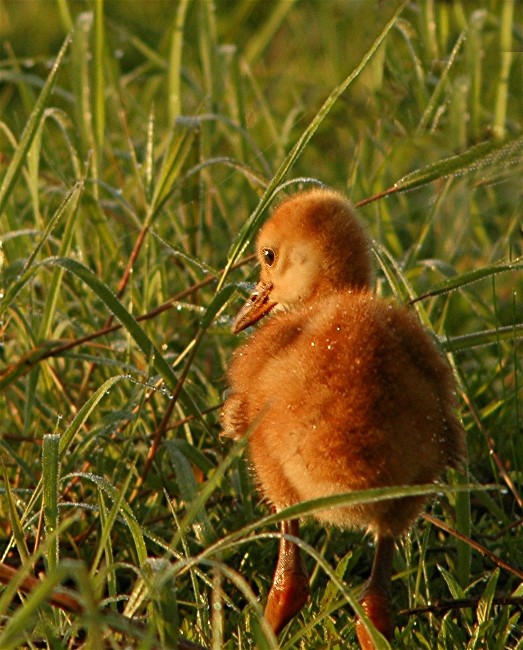
Sunlight that is slightly softened by a thin veil of clouds can be the best condition of all when it comes to working with wildlife. It lights your subject without being harsh. Such is the case with the very common Greater Scaup male that you see below. These birds are usually ignored by photographers. I find that they photograph like a movie star in a tuxedo and I am always happy to make their picture.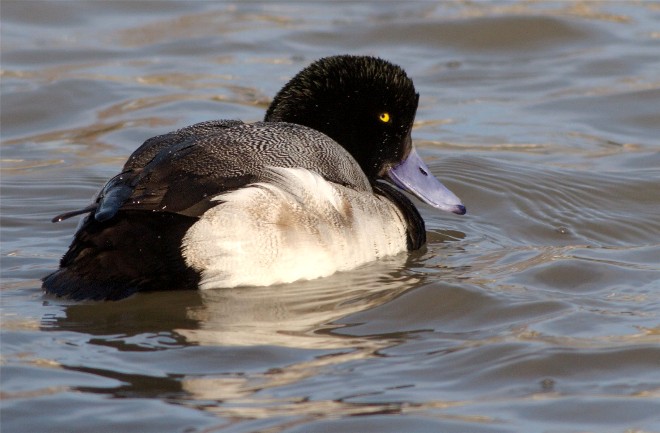
Government is not reason; it is not eloquent; it is force. Like fire, it is a dangerous servant and a fearful master. George Washington
 Earth Images Blog by Wayne Nelson