I’ve often said that all of those years that I spent photographing auto racing and other sports gave me a heads up in bird action photography. Panning a camera, timing movement, and a flair for the spectacular all allowed me to start a “tiny bit” ahead of other photographers. Any advantage ended quickly. Capturing images of wildlife in action is harder than car racing photography. The cars come by you lap after lap. Some races that I covered gave me 500 laps of opportunities. I often get one chance with an animal. There is no substitute in photography for making a lot of pictures. The more wildlife images you make, the more you understand about your subjects and the better you get at it.
The four car racing pictures below were all made at night or at dusk, and electronic flash was used.
The art of photographing single cars in dirt track racing is to catch them in a four-wheel drift, or broadslide. Any of you who have driven in the snow, or mud have experienced this. A ten lap, ten car heat race was ensuing and I had quit paying attention to the #3 car. He had fallen behind so I concentrated on multiple car shots. As he came up the backstretch and prepared to enter the turn, my ears told me to get my camera on him and pan. Number 3 was the first car that night to attempt to negotiate the tight turn without lifting his throttle foot. Instead he pitched the car sideways (broadslide) allowing the sliding tires to scrub off enough speed to make the corner without crashing. I made my picture of a perfect four wheel drift and returned to what I had been doing.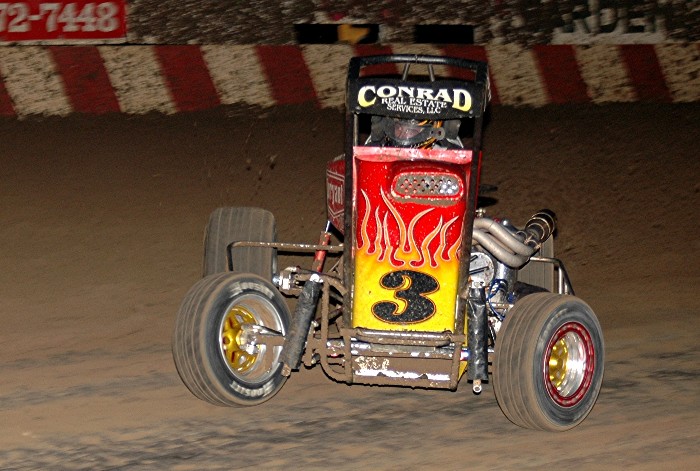
Even (or especially) with birds, I use all of my senses to know when something different is in the process of happening. Photography is about hearing, smelling and feeling as well as seeing.
When I needed a shot of a single car (to sell), panning was the best way to do it. I visually picked this sprint car up just as it passed me the lap before I made this photo. While it was still a half of a lap away, I sighted it in my camera’s viewfinder and followed it with my moving camera. I clicked as it began to enter the turn. The actual picture was taken several car lengths later. Always (even with birds) click the camera early with a fast-moving subject. A car like this could be traveling 100 mph or so. It covers ground fast. Birds travel fast enough in flight to practice the “early click” technique. Practice is exactly what will make you good at it.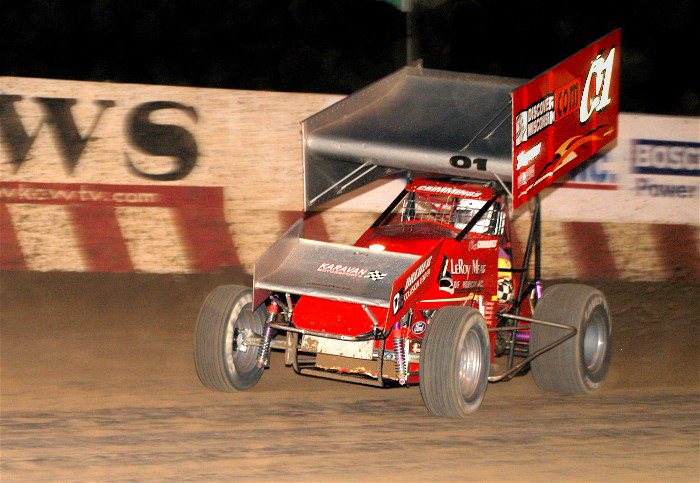
Almost all of the car races I photographed, were for the press. That is where your credentials come from that allow you to go where you need to, in order to get those pictures. I worked for both newspapers and magazines. The essence of any race, be it big or small, is the final pass for the lead. Races are competitions. That shot tells you who beat who to win the race. It can happen on the first lap, the last lap, or anywhere in between. That made the practice of panning multiple cars very important. The dirt track sprint cars and the pavement late model stock cars you see below, actually race each other quite differently. Still the process of telling the story is the same. Note the body roll on the #7 stock car. The car is “rolling over” under braking in the turn. That fact is meaningless to the press that I worked for, but could be important to race teams or car builders. The same was true of rear bite and chassis flex on dirt. Those shots often meant money to the photographer. The point being, that no matter what you photograph, there can be ways to find value in good images. From landscape art prints to how effective the suspension on a race car is, there can be either emotions to be felt, or facts to be learned from a picture.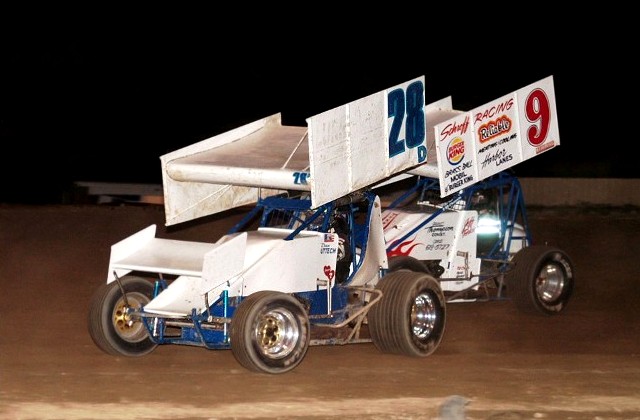
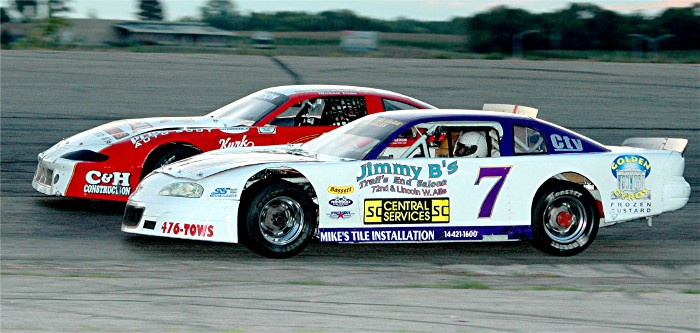
Those years of auto racing photographer were a fun time. I started at 19 and in many ways it was a primal experience. The noise, speed and danger, while you stand just feet away from the action, is an adrenalin rush. Having said that, standing in a woodland watching a Whitetail doe with a newborn fawn, or observing a Bald Eagle as it soars above, fills me up in a way that no fast car could ever do. Watching a caterpillar gently eating a leaf, and imagining the beauty that metamorphosis will bring, or contemplating the meaning of a mountain sunset, has actually made me a better person. Wouldn’t change those racing days for anything, but I am comfortable and satisfied with my decision.
There are genuinely more kinds of action with birds than there is in racing. A wing flap. A courtship dance. Some birds can lift straight up. In fact some birds can fly as fast as a race car. I once attempted to photograph (by panning) a diving Peregrine Falcon. I still retain (in my personal files) five fuzzy images of the falcon and its target, a Ring-billed Gull. The gull escaped.
I knew racing photographers who would photograph a car pulling slowly out on to the track (25mph?), and pass it off to editors as a high-speed shot. There is a way to cheat a little in bird photography too. Just find a nesting bird. They will leave and return frequently whether they are still nest-building or feeding their young. Prefocus on the landing spot and reposition your camera at the same distance, but with the nest out of the picture. Put your camera on manual focus and you will have a nice supply of quality images to share. When you find a perched bird anywhere, focus on the bird and wait for it to burst or jump into flight. More quality photos.
Panning: Panning birds with a long lens is a challenge. 400mm+ lenses have a very narrow field of view. That makes those lenses a wonderful tool but trying to quickly find a bird and then immediately shoot, is a nightmare. I am sure all of us who have used those lenses have at some point, decided to use it as a scope, and get a good view of a distant tree. Time after time we look through that long lens and we cannot find the tree. I always visually hone in on my subject when they are just a tiny dot in the distance. It helps if your bird is coming straight at you when you first sight the bird to pan. If they are going right to left or the reverse, they cross that narrow field of view very quickly. Practice makes…..well not perfect but better.
I picked up this Great Egret a good distance from where I clicked the shutter, much like I did thousands of times with race cars. I manually focused at that distance and did my best to follow focus the bird through, not just until, the moment the bird was where I wanted it to be. In other words I pushed the button milliseconds before it reached the spot where you see it. 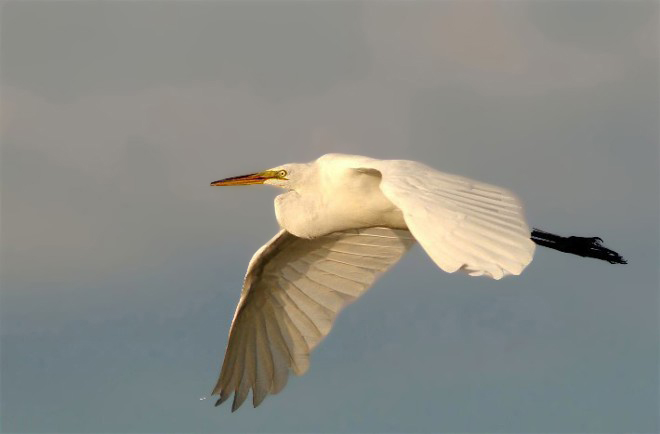
Combining panning with multiple birds can be tricky. These two Bald eagles were glued together in a beautiful aerial display. Several attempts and several sharp images resulted.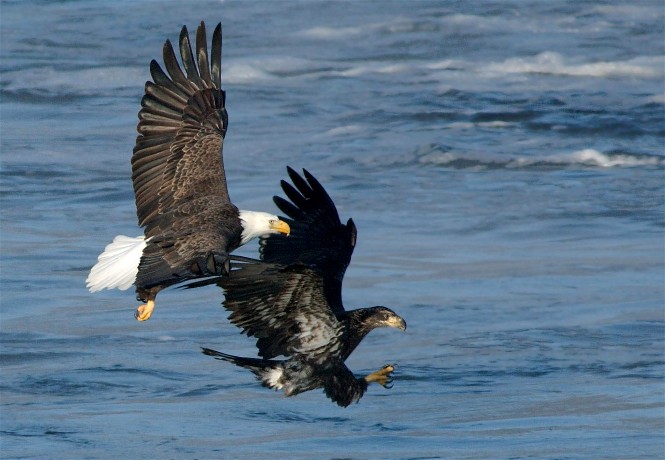
Behavior is action too: The Caspian Tern below is offering a courtship fish to a potential mate. Getting this shot was actually kind of difficult as every time this bird would catch a fish, it would go up to another bird, and then eat it itself. I finally prepared for that to happen again and it plied this female with the fish instead. They mated in back of some gulls (privacy I guess), but I did photograph other birds copulating.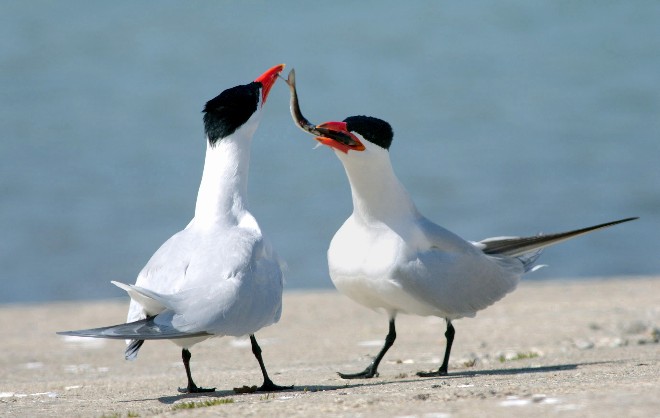
This dancing male Sharp-tailed Grouse was easy. He came straight at me, and hesitated dancing in one spot for at least three seconds. Time enough for several shots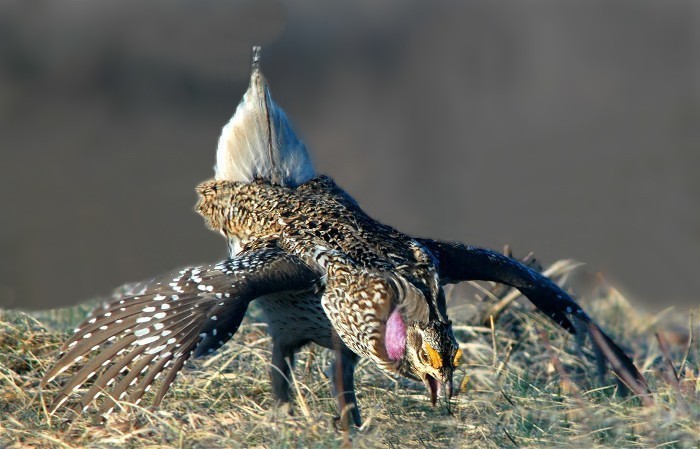
Cheating: The next five pictures were all made by cheating and having a prefocus set on a specific spot with birds that were coming and leaving on a regular basis.
This female Purple Martin has a nesting hole reserved at the Martin Hotel just out of camera view.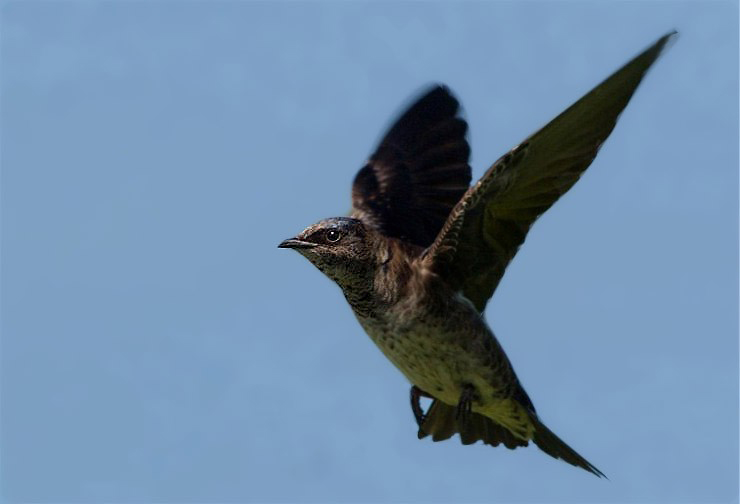
Nest building Great-blue Heron. The nest is just out of camera view to the left. It is almost the same distance from the camera as where I photographed the bird, making focus consistent.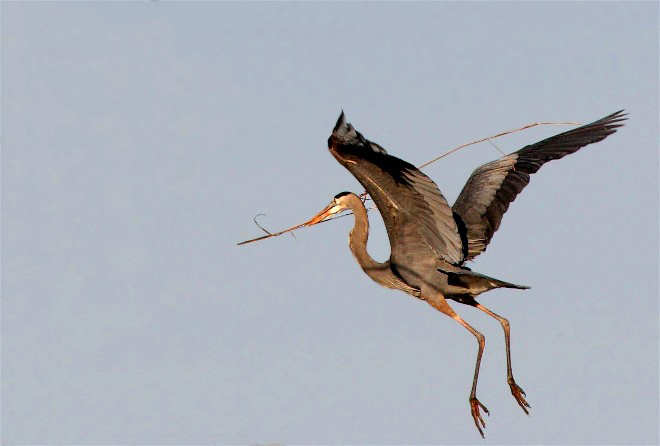
It’s pretty easy when you have an exposed nest and birds sitting on it. Focus and wait for them to do something. Osprey.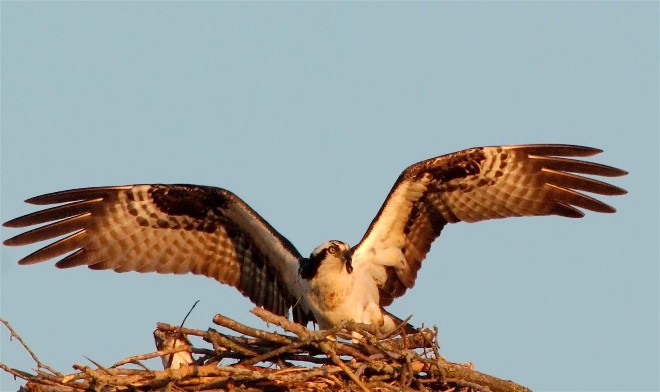
Please always be careful around nesting birds. Allow enough space, and then slowly give them time to accept you. I have never made a picture that was worth the well-being of my subject.
There is a hummingbird feeder just out of camera view that this and many other Ruby-throats were constantly using.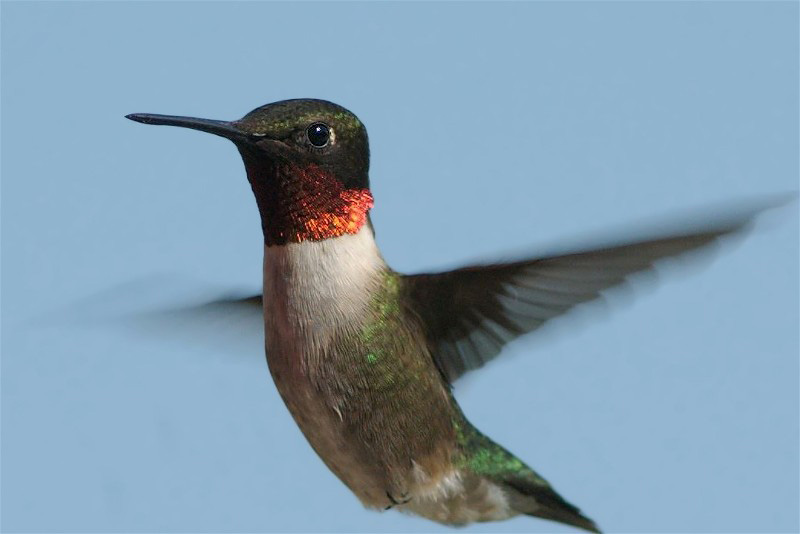
I was making portraits of this Double-crested Cormorant for several minutes as it preened and dried itself on this branch. All the time I was waiting for it to burst into flight. I was lucky as it headed for water and some more fishing, I caught it as it began to dive for the water.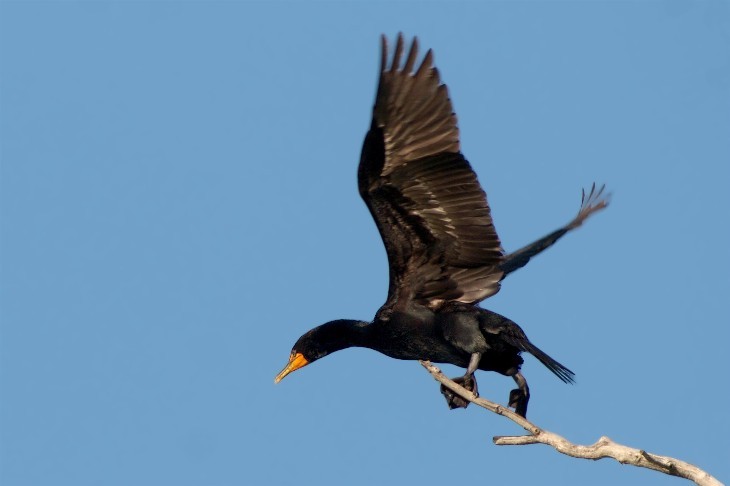
A bird on the ground or in the water is eventually going to leave. As this Great Egret waved its frilly feathers and began to lift off, all I had to do was pull the trigger. Wading birds make for easy art.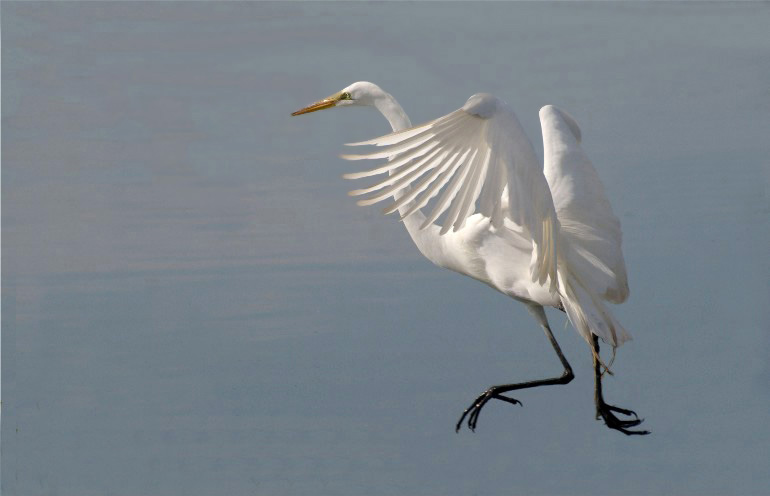
Anything you do with a given photography subject will help when you try another subject. Portrait photographers almost always make beautiful wildlife portraits. Architectural photography is a great training ground for both grand and intimate landscapes. Studio photographers that work with small subjects come well prepared for nature macros. No matter your subject the way to get good at it is to shoot, shoot, shoot.
 Earth Images Blog by Wayne Nelson
I remember being in mud and we did not broadslide. LOL
If we would have broadslided (a word?) very far we would still be at the bottom of the canyon. Maybe with luck a member of the Ute tribe would have recovered our bodies.