Fur Today:
There is really no special point to this series except to share some photos of North American wild mammals and birds. No real wildlife natural history lessons or photography lessons, just appreciating the animals through pictures.
Our first two images include two closely related, and somewhat similar rodents. Both are semi aquatic, and they often share a habitat.
The Muskrat in the top photo is one of thousands in the Horicon Marsh NWR area in Wisconsin. They can be the nervous type that flee when you get close, but like so many animals if they are busy eating (or building) you will often be treated to a long, close experience. I have found Beavers at Horicon Marsh as well.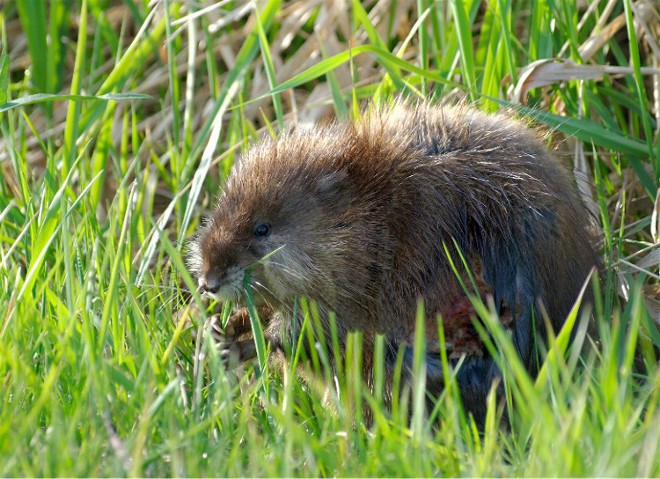
The next photo of a North American Beaver can easily be mistaken for another Muskrat. This is especially true when they are in the water. Beavers have a wide flat tail, versus the narrow vertically flat tail of the Muskrat. Beavers are larger but of course a young Beaver and an older (male) Muskrat can switch sizes so to speak. Of course the biggest differences are the fairly small lodges built by Muskrats and large lodges that can dam a lake or river that are built by Beavers. This image was made in Crex Meadows Wildlife Area in Wisconsin and you can find Muskrats here as well.
Our next group of images are meant honor the most common North American members of the deer family. I have not included Black-tailed Deer, or family members such as elk or moose. Are there any more immediately recognizable wild mammals in the world than deer?
I have included four images of White-tailed Deer. They include does, yearlings and fawns. All four shots were made in Northern Illinois.


My final deer pictures are that of two bucks of the Mule Deer species. They were both made in Wyoming in the spectacular locations of the Jim Bridger Wilderness, and Yellowstone N.P. respectively.

My original intent was to show a variety of pictures from the greater hare and rabbit family. Then I realized that Snowshoe Hares (in summer), White-tailed Jackrabbit, and Eastern Cottontail Rabbits were the only species that I carry in my files. This despite the fact that I have seen Mountain, Desert and Western Cottontail Rabbits as well as Black-tailed Jackrabbits. I have just recently shown some EC Rabbits on this blog and my Snowshoe images are on film so I have included just one lone White-tailed Jackrabbit. This image was made in north central Colorado.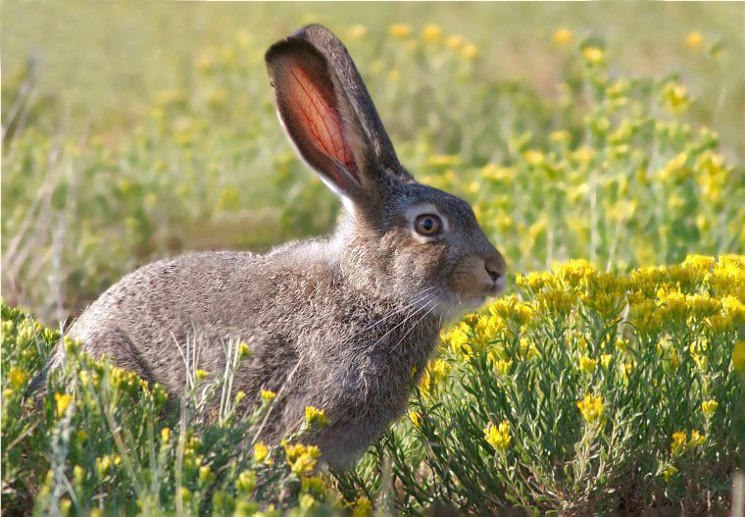
If there is anything that I have come to learn about myself, it is that I require intellectual and spiritual nourishment every day of my life. I feed my body with a sandwich and a salad, and I feed my mind with knowledge and my soul with grace and faith. I know that the last of those requirements has become politically incorrect, but I will find a way to persevere. Never let your thoughts be held captive.
 Earth Images Blog by Wayne Nelson