Some people only like conventional compositional imagery. Still others think anything that is made in a straight up fashion, cannot be artistic. They think that sort of imagery is something everybody can do. There is never a way to please everyone but I think most of us accept both styles of imagery. Simply said, we like what we like and don’t usually analyze it. Conventional photographic wisdom suggests that when you are working in an environment that dictates a limited depth of field, make sure your main focal point, or the most interesting part of the scene is in focus. You can let the rest go soft. Most of us agree with that philosophy. But what if the soft out of focus portion of the scene is between we the viewers, and the most important subject in the scene? Is it acceptable to have a damselfly sharp but partially in back of an out of focus piece of vegetation? When I am photographing a bird and an out of focus branch is between the viewer and the bird, I will take it out of the photo if I can. What if you can’t? I would guess there would be a very few that would like the picture below. Still there would be some that would call it art. I knew what the picture would look like when I took it. You have to make new and different pictures from time to time. You have to challenge yourself. Sometimes it works, and sometimes no.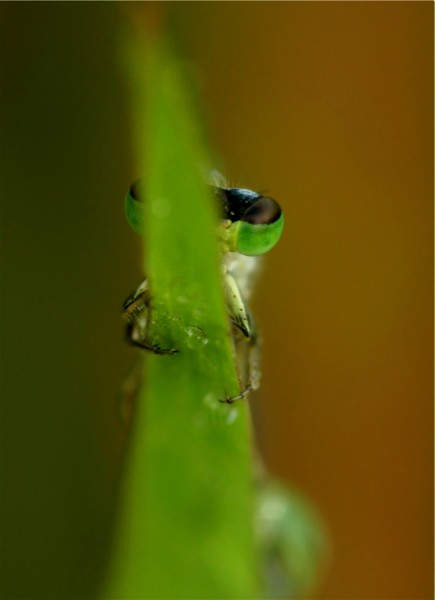
There are a million ways to photograph a waterfall and I think I have found most of them in my lifetime. I was limited in my point of view on this rainy Idaho day as I made pictures of Mesa Falls. I wanted a composition that showed the water disappearing over the cliff. I know that many would look at this image and say, “too bad he couldn’t get the whole waterfall in the picture”. Does a unique composition work better if it is shown with other more conventional images of the same subject?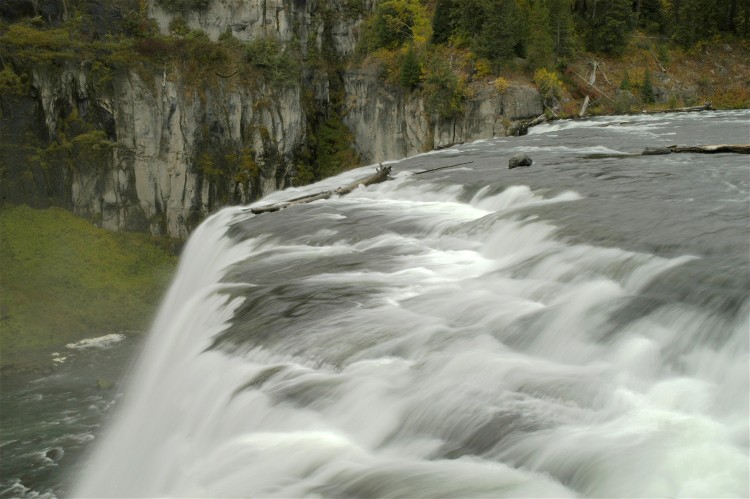
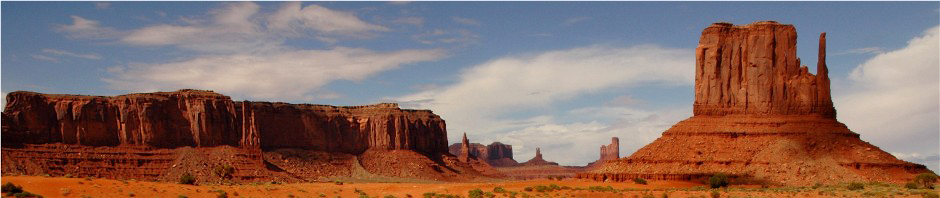
When you shoot a really straightforward or traditional comp, is it just a boring view or is it acceptable when the subject of your image is beautiful and powerful? Some would say that the below shots of The Maroon Bells and Devil’s Tower are too boring. Can a beautiful place be boring just because the compositional technique used has been done many times before?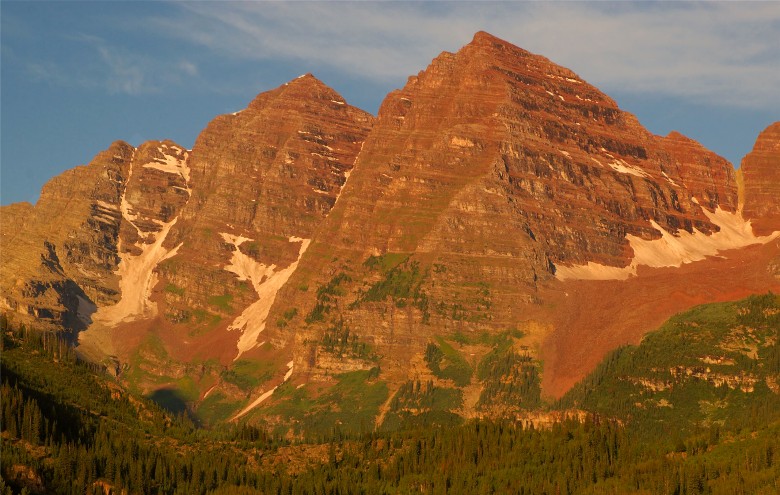
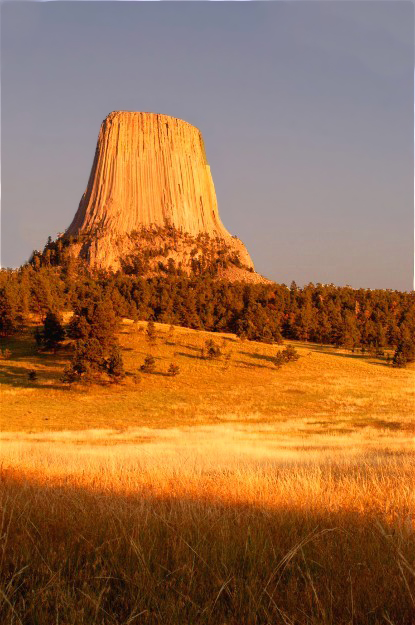
When you are viewing a picture does it matter at all whether the point of view is original or unusual, or traditional and straight forward? I personally think not. It only matters whether you the viewer, like the image you’re looking at. Intent is in the mind of the creator and it is the result that wins the minds and hearts of the viewer. Of course those minds and hearts can all differ.
Let’s take a minute to depart from this subject, although there are some similarities. Back a while in a post I called Creative Choices (can be seen from this homepage) , I dealt with wildlife photography and how much of the current work is made with total depth of field. In other words the entire hawk or wolf is in focus. When we shot with 64 or 100 ISO films we had to shoot “wide open” (2.8, 4, 5.6 etc.). We would shoot for the head…or face…or eyes. It was accepted. My question was, is it now only acceptable to cover the whole animal with focus, or can we creatively still use shallow depth of field? I showed three images of Red Foxes in which I believed two were an effective use of shallow dof, and one needed (the head was not sharp) total dof. As usual, I neglected to show comparison shots so I have done that below.
That first fox was used in the original article. I still stand by my opinion that shallow dof works well here. The second shot is made with total dof. I also believe this works well. The second fox has its body parallel to my camera making a totally sharp animal possible. It also helps that the background water is void of much detail keeping this a clean and simple image where the viewer enjoys the fox.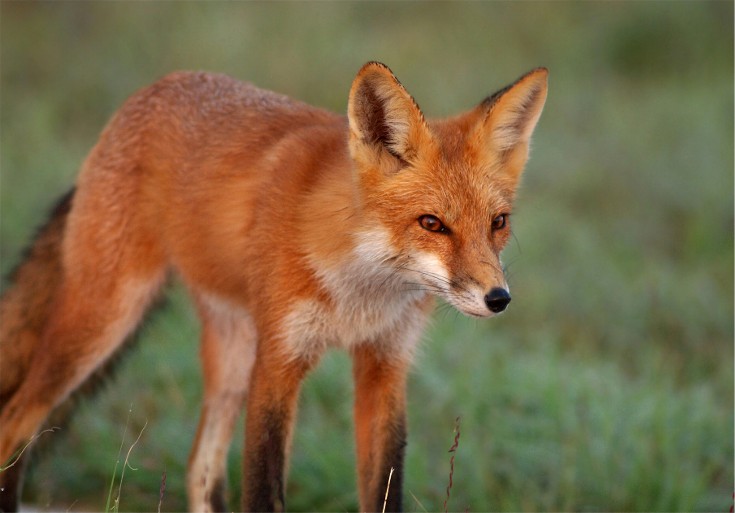

Overall I do think that total dof with a beautiful animal is hard to beat. Just the same the creative choice belongs to the photographer. As viewers of images I think it is important that we look at everything with an open mind. Sometimes it helps me to return to a picture two or three times. Often that is all it takes for the “unacceptable” photo to become a winner.
The two images were taken about 500 feet from each other approximately four months apart. The little fox in the second picture is either a sibling of the older fox, or even possibly the same animal. They grow up so fast.
July 11, 2012
American Robin with breakfast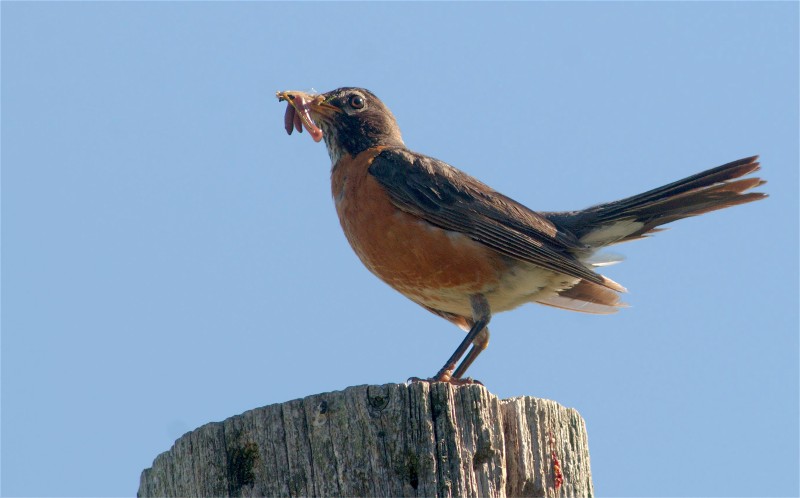
Solitary Sandpipers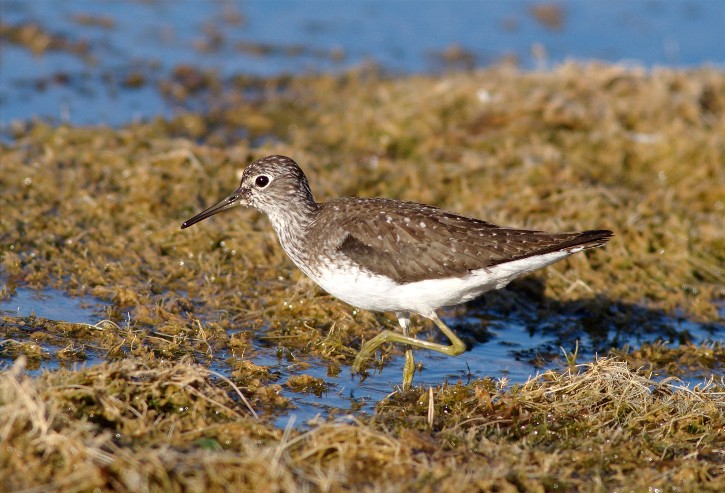
Green Heron
 Earth Images Blog by Wayne Nelson