When I share my thoughts about pictures, sometimes there is a progression of pictures that go through my mind, and I share whatever it is that I might think about or remember, when I look at them. Other times I have a series of thoughts about photography, and I find pictures to match them. Today was a bit of both.
In 2008 this female Red Fox became only the fourth of that species that I had been privileged to photograph. The other three were fleeting moments but Foxy started an adventure I will never forget.
I followed Foxy and her family through that season, but unfortunately started something that I have since regretted. I was still a full-time professional at that time and my website was generally visited by all the serious photographers in this area. The home turf of Foxy became the common meeting ground of many an area photographer. It seems like anytime too many of one group, including photographers, gather, the selfish will eventually ruin it for the rest. The baiting of foxes to make better pictures began and in 2011, the area finally saw the descendents of Foxy and her successors become so habituated to photographers with food in their hands, that wildlife control was forced to move the foxes repeatedly until they got the message. I am grateful that I also got to meet many other fox families, along with some photographers of conscience. That allowed my photo files to swell with more fox photos than I had ever dreamed. Always be careful who you share your findings with.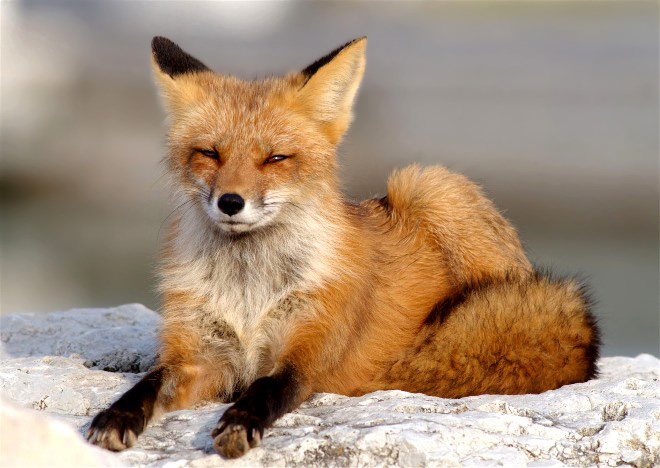
Below is Foxy’s “husband” from that same year. I have my share of fox with prey images, but I keep this one despite the fact that my close proximity to him meant that I lost his tail. I do so because he reminds me of that first summer.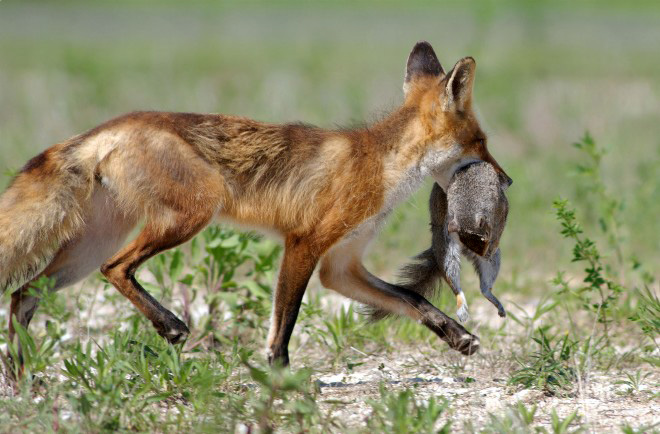
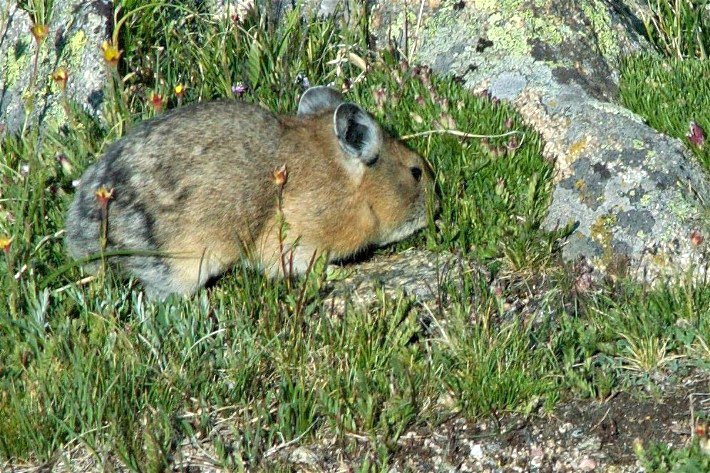
It took me took me twenty years of wildlife photography to make pictures of Pikas. I had seen and not photographed Pikas when I lived in Colorado, but several trips back the CO and Wyoming were fruitless. In 2007 I stood near Trail Ridge Road having the time of my life photographing Yellow-bellied Marmots in an alpine tundra’ rock field. A small vole like creature caught my eye and sure enough there was my Pika. He/she was spending this July day carrying grasses back to its rock shelter. These tiny critters do not hibernate but instead live deep under the heavy ice and snow, amidst the rocks. They then feed from the grasses they collected during the summer months. I made a few quick shots and then on its fourth or fifth trip I hit the mother lode. Pikas also cache a plant called Yellow-blossomed Alpine Avens that contain a natural preservative. That is the plant that preserves the other plants that keeps the Pika alive during the long hard winter at 12,500 feet. The second shot is my little friend returning for some more of the Avens.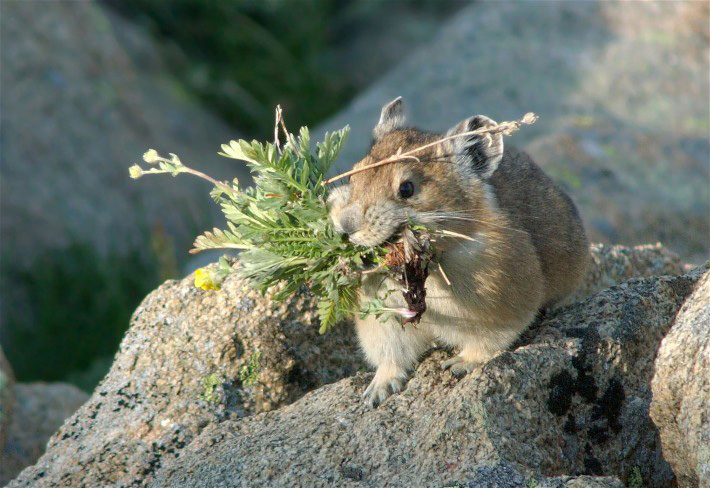
I drove to the top of Brockington Mountain in the silent darkness of predawn. Now a mountain in Michigan, qualifies as a large hill in much of America. Just the same the view of the north end of the Keweenaw Peninsula is wonderful. Keweenaw is the peninsula at the end of Michigan’s Upper Peninsula. As the sun began to lighten the clouds, I noticed a small lake just south of the town of Copper Harbor. If those clouds would really light up, they might also add some color and brightness to the lake. While I waited for the light to appear I went through my usual set of rituals. I fiddled with my cameras, zoomed in and out, moved my tripod around for new comps, and finally made a decision I could live with. I made my pictures and then sat and enjoyed the “mountain” air. Life is good.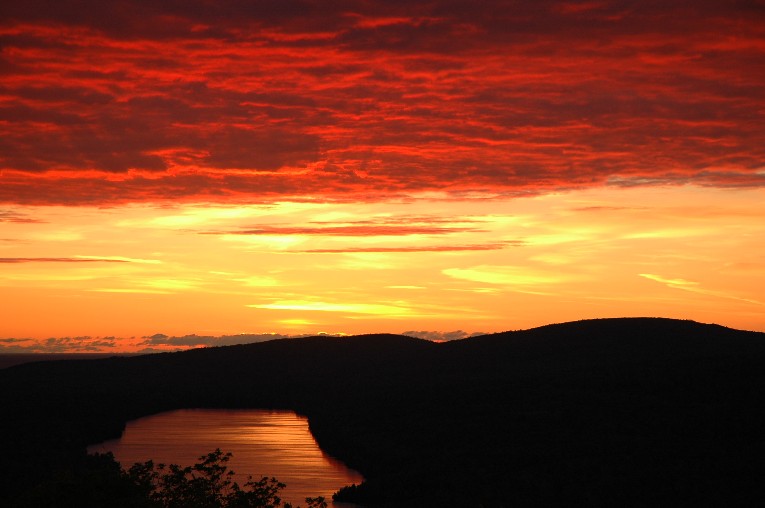
The Wilson’s Snipe was recently recognized as a different species from the Common Snipe. The two snipes are similar in appearance but they have a different number of tail feathers and they vary a little in their neck patterns. The “winnowing” sound used by the male to defend his territory and attract a mate, is highly recognizable by those of us who have heard it. It is not a vocal sound, but rather is produced by air flowing over the outstretched tail feathers with each wing beat. The clutch size of the Wilson’s Snipe is usually four eggs. The male snipe takes the first two chicks to hatch and leaves the nest with them. The female takes the last two and cares for them. Apparently the parents have no contact after that point. The nest is made of neatly woven grasses and should be close to water.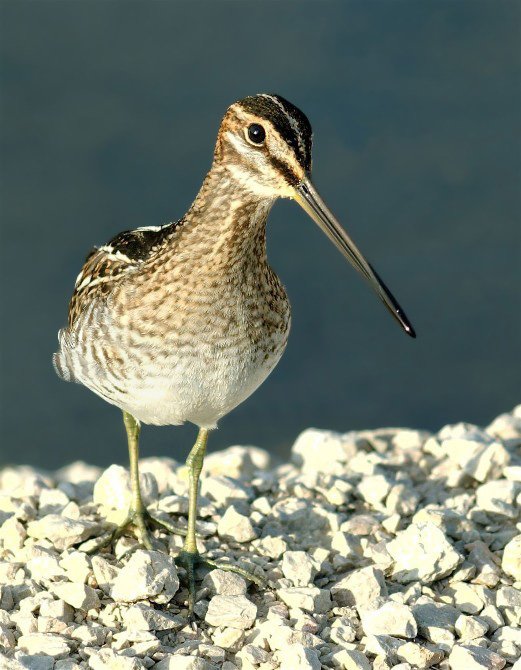
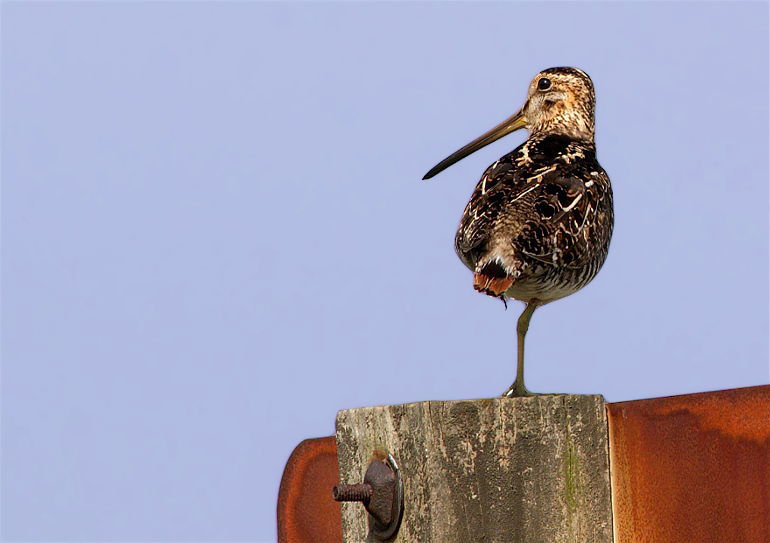
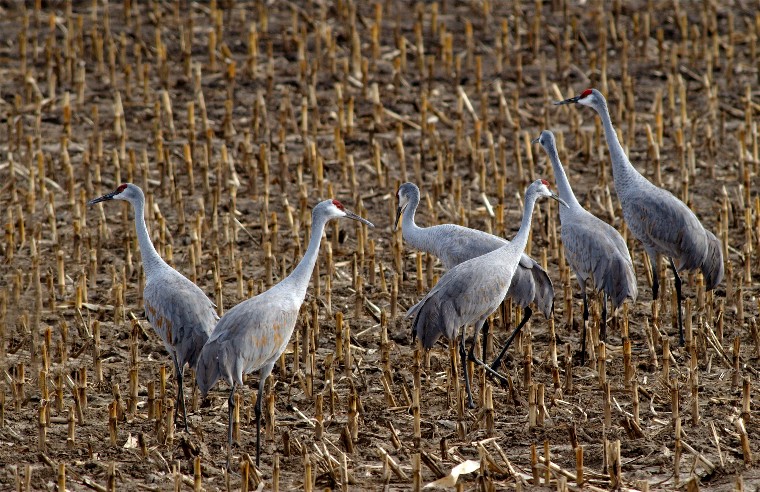
I make a lot of the fact that the color of light transforms our images. There is not (my opinion) any one right type of light, but it changes the color of your subject, and the mood of the scene.
I have always debated whether Sandhill Cranes are predominately gray or brown, or some combination of the two. I can show you hundreds of photos of these majestic birds to prove each of those assumptions. Below you see two images. The first was taken in the early morning sunshine and the second was made on a sunny, but haze covered midday. The color of light.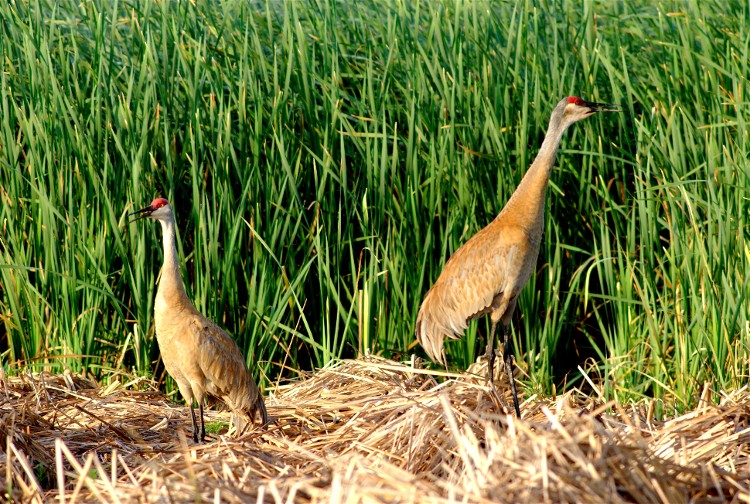
I thank you for visiting Earth Images and God Bless,
Wayne Nelson
 Earth Images Blog by Wayne Nelson