It’s hard to ignore the yearly explosion of Canada Goose goslings. With ducklings I usually get my images of them in a nice single file procession in the water. With goslings, bunches like this are pretty easy. We usually have to wait on the “moment” when our subjects strike a nice pose. No time was spent waiting with these guys. This shot was made with a 500mm lens a few years ago. I was sitting in a car at the time.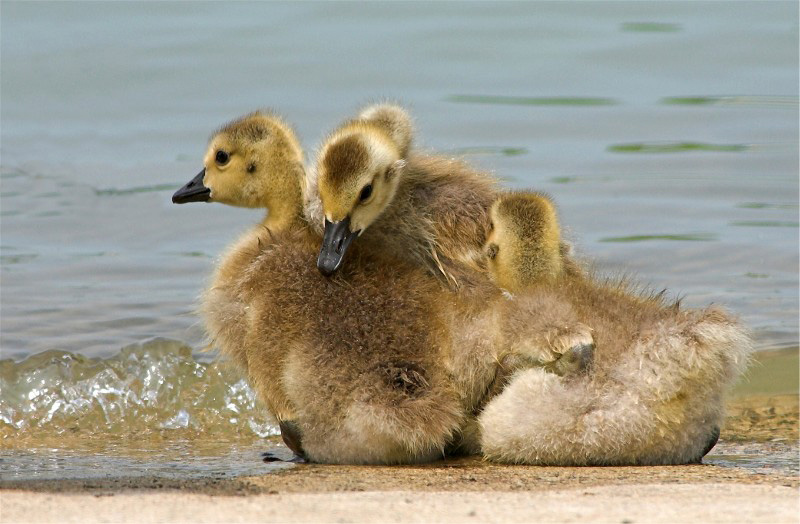
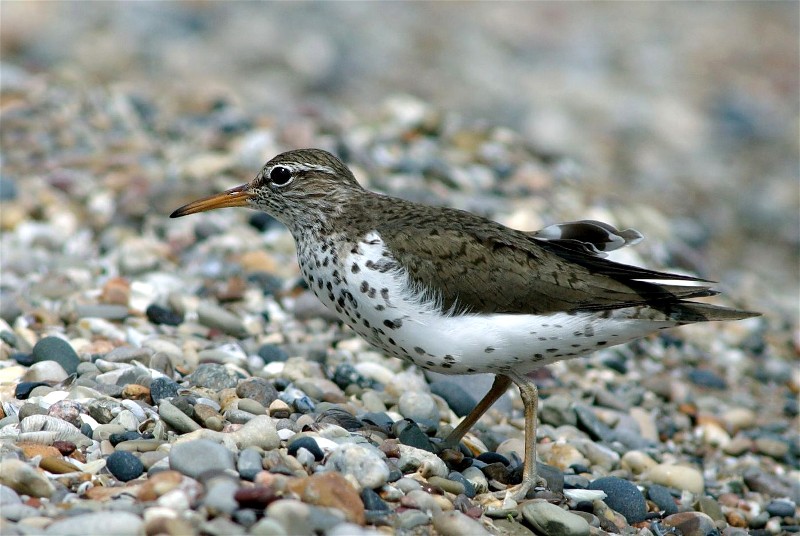
Some of my favorite birds are sort of the “plain Jane” types. The Spotted Sandpiper is among them. It’s not always about bright colors. These guys have personality. They are consistently striking a nice pose for the camera. They also display some good camouflage characteristics, as they hunt along the rocks. The SS is a smallish somewhat solitary bird. Spotted Sandpipers can be found in spring, summer and early fall in my home area around Lake Michigan and southeastern Wisconsin, which helps in my fondness for them. I created these pictures with a 500mm lens on a tripod. I was kneeling on the beach right next to the stones that you see the sandpipers walking on. I was just about at the minimum focus of that lens. 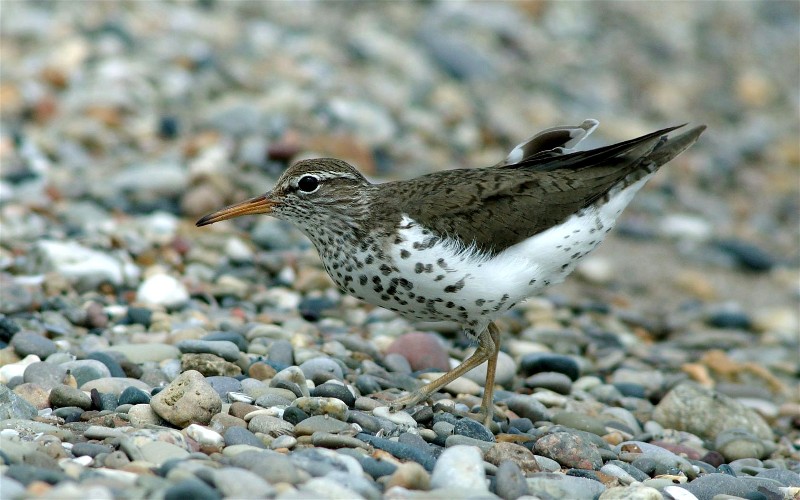
A familiar sight in North America and Europe is the Ring-necked Pheasant. They originate in China and the British introduced them to the U.S. If the Spotted Sandpiper is a plain bird, pheasants are pretty spectacular. My favorite time to photograph them was in winter. They just seem to belong in the snow on a crisp, pretty day. They are also very easy to photograph. I used a long gone 80-200mm 2.8 lens set at 195mm. I was in the car.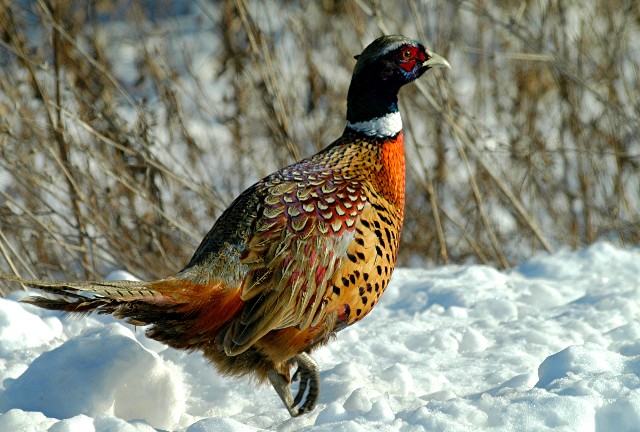
I would guess that I have created sunrises or sunsets, in every kind of habitat that North America has to offer. It is always easy to skip making images on the prairie. Just flat land right? I often find the most spectacular sunrises in the prairie. I look for one or two trees, or maybe some grasses to silhouette so I can give the viewer a shape for some interest. Usually when I make any kind of prairie image I like to show a lot of sky in order to give the proper feeling of vastness. This was made on a Wisconsin prairie. I was traveling to teach a wildlife workshop and I did not have the willpower to pass this scene by. I am actually very close to that tree and those grasses. I used an 18/70mm lens set at 18mm and a tripod.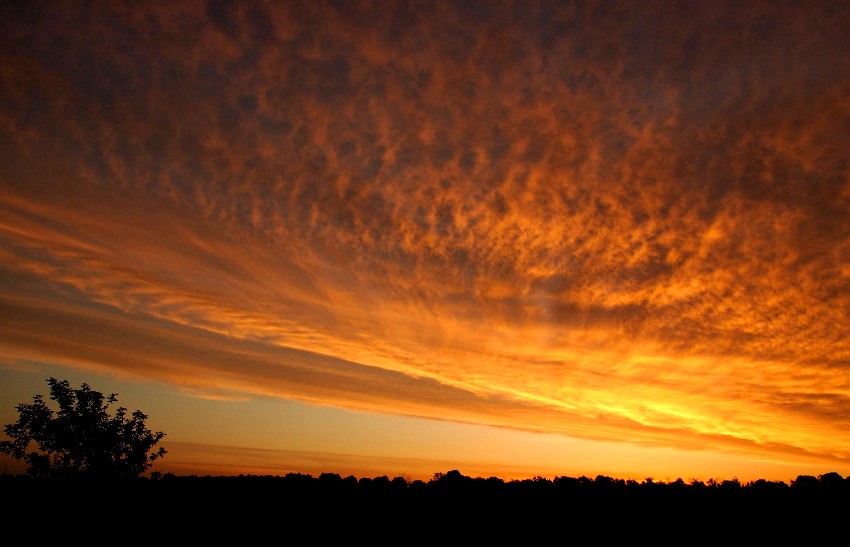
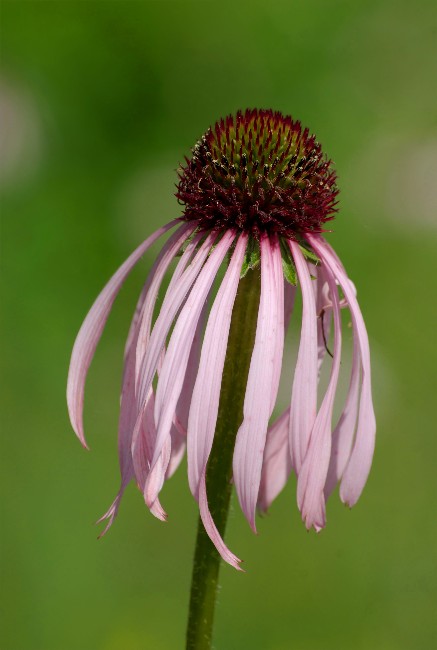
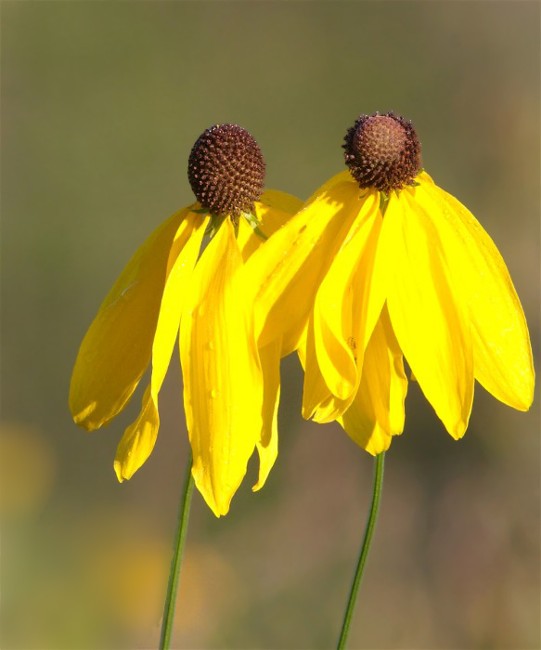
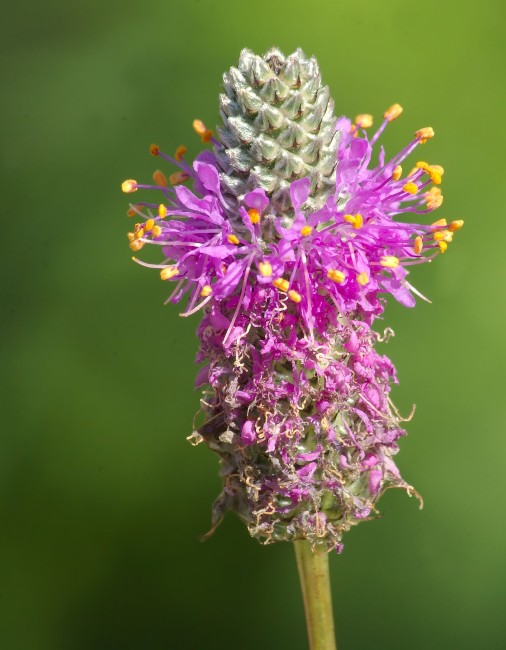
Prairies of course produce a lot of flowers. All of the flowers below are in fact, prairie flowers. The pictures are the time-honored style of single (or double) vertical flowers. Just that simple. I like to use this style to make simple but powerful images with perfectly clean backgrounds. That type of imagery works very well, but it is still good to produce some flower shots with some variation of tone and/or color in back of the flower. This the truest natural setting for prairie flowers.
Take note of the focal lengths I used for these photos. A tripod was used for each shot.
Pale Purple Coneflower…240mm, Yellow (Prairie) Coneflowers…500mm and Purple Prairie Clover…270mm in order from top to bottom. I used that 500mm f.4 telephoto many times for flower shots, as well as “compressed” landscapes.

Clown’s Creed…”a little song…a little dance…a little seltzer down my pants”
 Earth Images Blog by Wayne Nelson