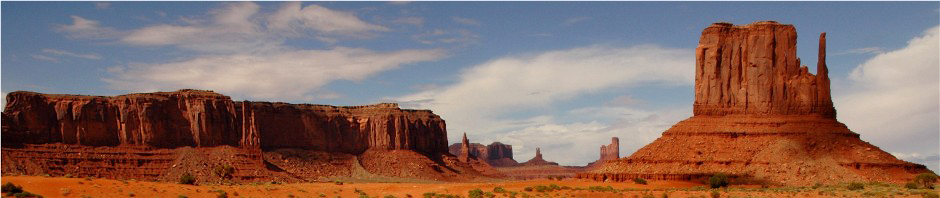
No wildlife in today’s post, and I chose the landscapes and macros below, primarily to make photographic points.
The Color of Light
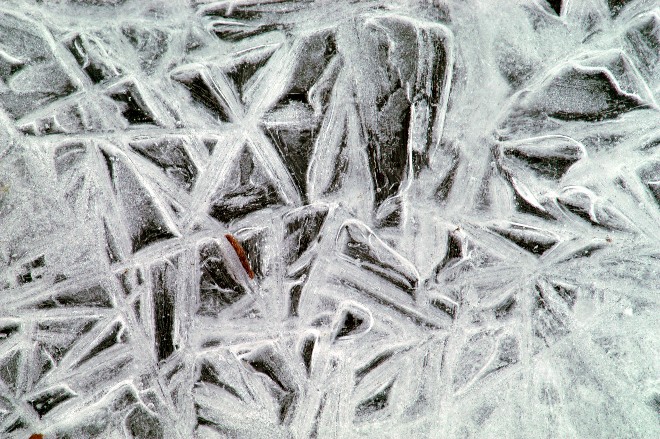
Few photographers that I have met in recent years factor in the color of light when making pictures. I think that is because with digital photography most of us shoot with our white balance set to auto. Before digital we had to think about the color of light, and then use filters if we chose to counteract the conditions the we were presented with. The pictures below are of ice detail and were made on a blue sky day in the shade of two trees. Under those circumstances, all of that blue sky will reflect back into the shadows. In a heavily wooded environment with a tiny bit of sky showing, you have minimal to no blue light. The more sky and the less shade the more blue the light will be. Setting your white balance at shade is akin to adding a substantial warming filter to the front of your lens. I believe, if my memory still works, a 80b filter would be right. When I made this picture, I intentionally changed my white balance to daylight as to remove the warming aspects from my image. I wanted a cool blue image as I was creating abstracts on this morning. The second shot is the exact same image. In the editing process I simply subtracted the blue and balanced the photo for daylight. If I had chosen to do this in the field I would have made the first image with a daylight setting like I did, and would have created a second frame on auto white balance, or set to shade. That would have removed the blue cast.
Ah Winter
Be it a heavy snow or light frost, winter is a photographers dream.
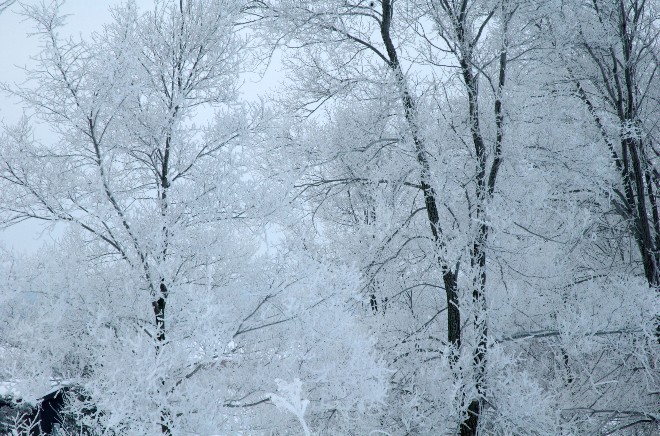
Whether it is ice close-ups or an ethereal frost, winter lends itself to abstracts.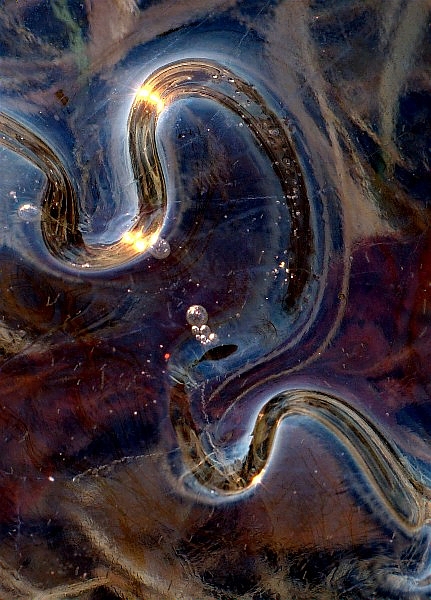

Shadows on The Land
I welcome the kind of natural conditions that create some drama in my images. The below pictures were made at Arches N.P. in Utah. Arches has more than its share of spectacular and well-known land forms, of which most are natural land arches. Still there is much more to Arches, and there is a lot of Navajo Sandstone just waiting for your camera. Less spectacular shapes can sometimes need a little help. That’s where sidelight can make an average picture pop. I spotted these two areas and made a note to return later in the afternoon, when the low angle of the sun would create some shadows. Sometimes good things come from parts of a picture with little or no detail. These were both originally film pictures. I believe that the top picture was made with my Pentax medium format camera and the second shot was a Nikon 35mm image. I was already using the 35mm camera to attempt to photograph a lizard, when I switched my attention to the land.

There are nature photos everywhere, and there is usually time to find interesting details, even when you are visiting locations known for great wildlife and landscapes. I found this tree detail while hunting for wild mammals in South Dakota’s famous Black Hills.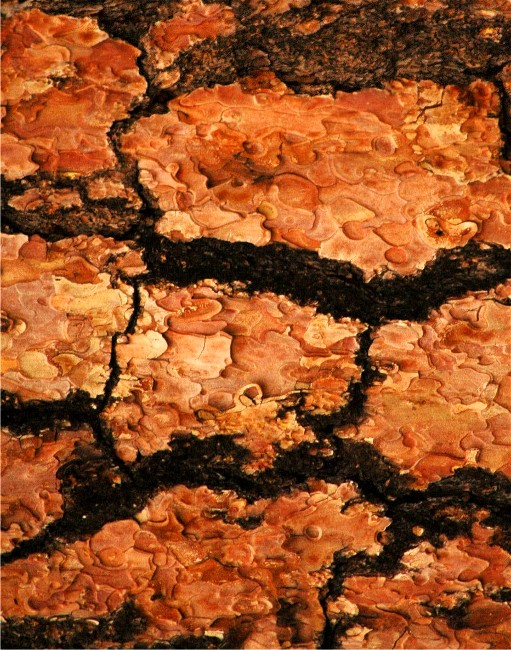
Visual Compression
I have written often about the process of using visual compression when making landscapes in hill country. Using wide-angle lenses to stretch, or open up a landscape is tradition but compressing, shapes, textures and colors is just as much an advanced form of landscape photography. Lenses ranging from 70-800mm can be effective in this technique. I used a zoom lens set at 135mm for this shot. This roadside scene was made in southwestern Colorado and sandwiches some lush green grass, old red silt, a fashionable red rock formation and some distant snow-capped granite peaks into one single frame.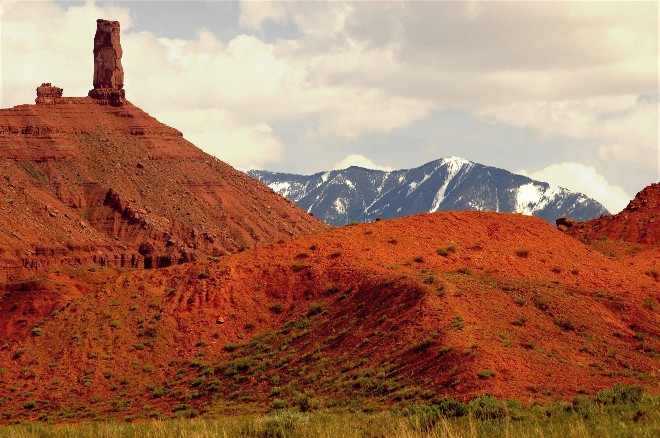
Thanks for stopping by
 Earth Images Blog by Wayne Nelson