One of the greatest attributes you can have as a nature photographer, is to think like a child. That is only my opinion and my observation. For those of you who would say, how can you expect a child to understand the technology of photography, my reply is, have you ever been around a kid after you have brought new technology into the home? They will finish way ahead of you in the battle of discovery. When I taught workshops, several were with kids from 10 to 16. They were always faster than adults (like me) to grasp both the technology and the art of nature photography. My final workshop was with a nice 16-year-old girl and her mother. She went from disinterest in the subjects and zero knowledge of the workings of her camera, to a proficient and artistic photographer in four hours. It usually takes me four years to accomplish something like that. She had an open mind and once she became enthused about the subjects, the curious child showed through. A win, win proposition. She was a young woman but she remained a lot closer to that “wide-eyed” curious child than we do.
As winter approaches the Northland, it is important to remember that this season not only provides some great landscape opportunities, but it is also opens a new book of macro opportunities, and gives a whole new feeling (and story) to our wildlife shots.
Several years ago I found these little red leaves encrusted in ice on a late fall morning. I used a small red shack as an out of focus background. I love contrasting colors but I also use same color subjects and backgrounds to impart a different mood. Chicory flowers with blues skies is an example of using this style with a complimenting subject and background. In this case the ice around the leaves gave me just enough separation to make a compelling image.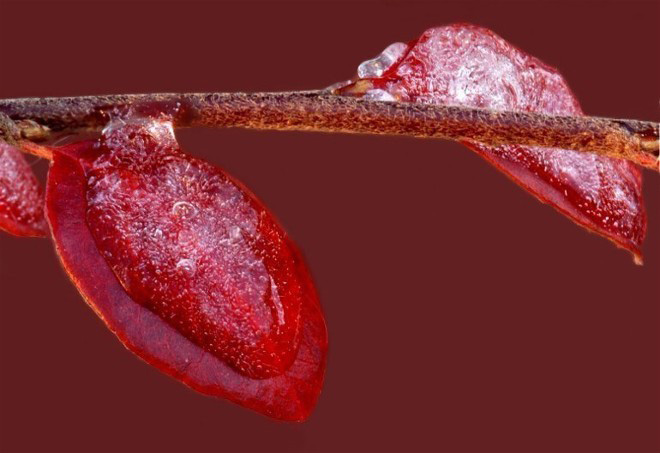
The Rough-legged Hawk is a visitor from the far north. Every winter they inhabit the “southern climate” of Wisconsin. The first photo shows the hawk watching the snow for movement. There is a Ring-necked Pheasant hiding under that snow. In the next frame the hawk has the pheasant (under the snow) in the grip of its talons. My next shot did show the bloody and still living pheasant but is too gruesome for me. There is always a story to tell and winter can help tell some of it.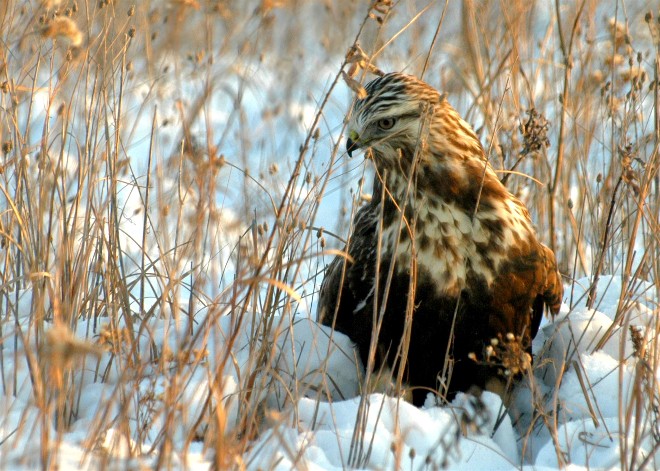

Winter not only helps tell the full story of Northland mammals like the Whitetail Deer, but it also makes for a “clean and simple” (remember?) setting for these beautiful animals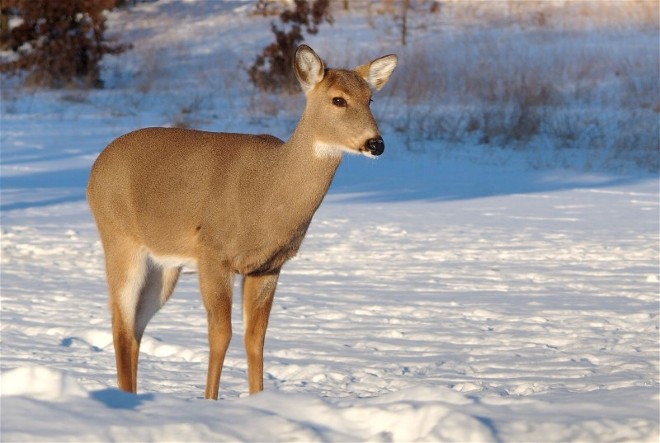
The snow doesn’t show in this image of a mother and nearly grown child, but I enjoy the closeness that Whitetail Does display with their fawns right up to next year’s mating.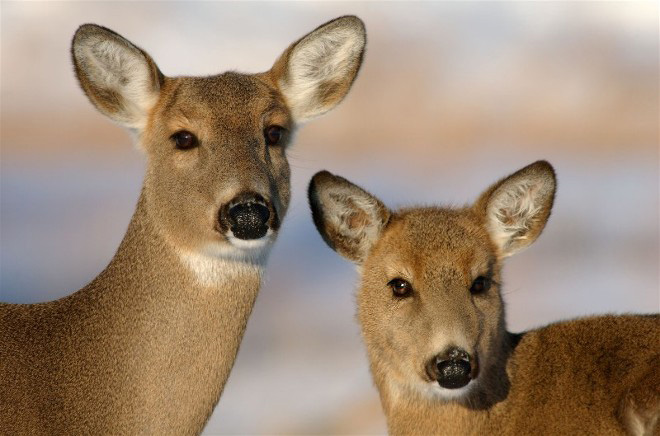
While we’re on youthful wild animals, we have this Black Bear cub that was photographed in Minnesota many years ago.
Anytime that I have traveled to an interesting landscape destination, I tried to look at my subject in as many different ways as possible. Those “eyes of the child” come in handy at places like White Sands New Mexico. From moody abstracts to bright and colorful mini scapes, a place like this offers both challenge and opportunity.

Black-crowned Night Herons are one of those rare wading birds/shorebirds, that not only wade, but they can also swim. This one needed that talent to get the fish you see below.
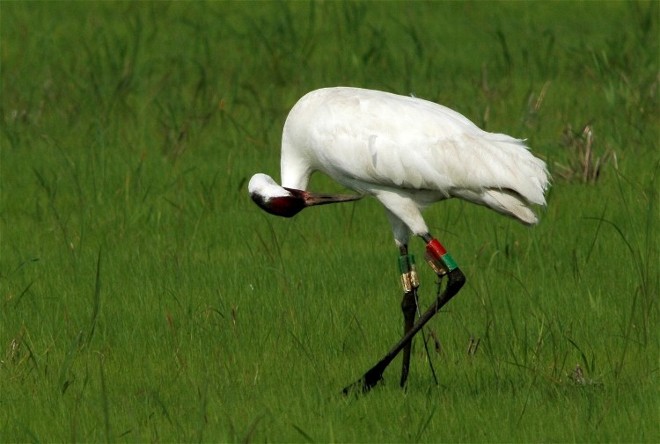
I think most nature lovers and wildlife photographers have seen and/or photographed a Sandhill Crane or two. They have become increasingly common and they are a very large bird that you do not need to get close to. Far fewer have seen/photographed the even larger Whooping Crane. This Wisconsin Whooping Crane is a descendent of re-introduced birds. You can clearly see the radio anklets on this bird and at the time I made this picture, I was happy for that fact as I was picturing story telling stock usage for the shot. These pictures were made at Horicon Marsh NWR and Sandhill State Wildlife Area in WI respectively.
I don’t know why it is but when I photograph Black-tailed Prairie Dogs I generally find animals that are pleasingly plump. Their close cousins the White-tailed Prairie Dog is generally slim and fit. Must have something to do with the diet available in the specific habitats of each type. This Black-tail was photographed in North Dakota while eating. That is to say that the Prairie Dog was eating, not me. At least I don’t think I was.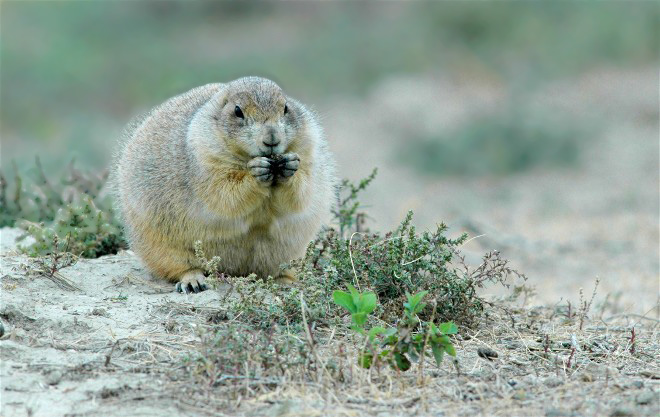
I have shared images from this Illinois Great-blue Heron rookery before. I am of the understanding that a wind storm took down all of the nests within the past year. If the trees remain, the birds will eventually return, but if they are gone, the birds will obviously find other opportunities.
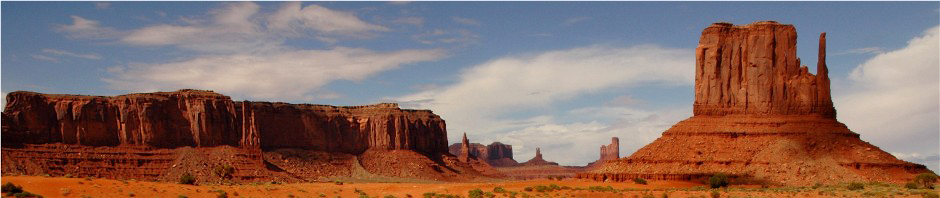
As a child traveling on car trips with my parents, I was forever fascinated by the landscape with its changing color, texture and mood. All just outside of my window. At times I asked if we could stop, so I could absorb what I saw. I never forgot those days and that child has always stayed with me, even through all of those years of nature photography. There is beauty to behold just outside of that car window and it is just waiting for a photographer to share it. This was taken along a New Mexico road.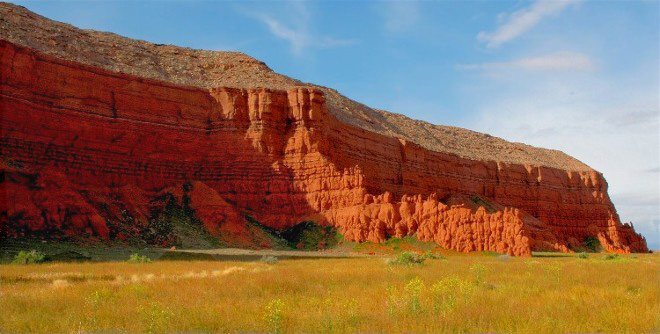
From time to time I love to comment or give my valuable (I’m kidding) advice about things like photography workshops. I am sure that some of you are growing a bit tired of it but please bear with me as we are beginning to get more blog readers and I can only assume that some of you are brand new to Earth Images.
There are three primary (many secondary) kinds of events that we call workshops.
The travel workshop. Most travel workshops are not teaching experiences. They include one or more “true guides” and a well-known photographer who is billed as the leader. They are expensive because of having multiple guides, and because of having a top photographer traveling with you. They can be very productive, whether or not it is a teaching experience. There are two reasons why the well-known photographer goes on these junkets. The first is money. The second is that he/she will be able to make their own pictures. The good news for you is, because of that top name photographer, the tour will visit the best locations in the correct season and at the right time of day. If they did not do those things, that photographer would find another tour to work with. Some big names will even teach a little bit. John Shaw and Art Wolfe are known to teach and share whenever and wherever they go.
The nature guide. The nature photo guide is not always a photographer although, the good ones fully understand things like light direction, and getting clean pictures. They usually just start as a guide and through their years leading photographers into the field, learn all of those things that are important to a nature photographer. Some are actually photographers and will at times teach a little along the way. My own feeling is that you should save your money as far as most NWRs and many National Parks are concerned. I say this because most of these places are made easy to navigate for the tourists that stop there. They print brochures and have rangers and naturalists that can answer questions. They also have maps. There are also many good books, including E-books by photographers, that are available for purchase. You can figure out Bosque del Apache and 90 % of NWRs by yourself with some of these aids. Yellowstone and Rocky Mt. N.P. are not worth the cost of a guide unless you are going to the back country. Still I would say that some more remote and complex national parks where foot, horse or jeep access is all that is available, could be well worth it. Some NWRs criss cross both local dirt and public paved roads. It can help to know where to go and when. In some true wilderness NWRs and national parks a guide can be a blessing. In genuine remote areas that are not parks or refuges a guide may well be the only way you will get the pictures that you want. Or the only way you will make it out in the same condition in which you entered. Always check for references, but guides earn their money in these locations.
The plain old photo workshop. This depends on what you are looking for. Do you just want to spend some time shooting with that photographer/workshop leader that you have always admired? Are you an experienced photographer who wants to advance to the next step? Are you new to serious photography and need instruction from the ground up? Any of those reasons are valid. I taught a lot of workshops in my life. Most were successful but some were not, and I have conducted them under all three sets of circumstances.
Now as far as the first category is concerned, sometimes people start following you and think you are famous when you are not. Under those circumstances it was my job to teach the best workshop possible, and allow them to think what ever made them happy.
I always enjoyed the second type of workshop. I loved schooling a landscape photographer on the art (or discipline) of long lens wildlife photography. Or working with a wildlife photographer who has finally realized the value of those small wildlife subjects like dragonflies or spiders. I have also helped experienced photographers to discover high-tech aspects of shooting that they had not yet realized. Like digital panoramas made via discovering the Nodal Point of each of the focal lengths of their lenses. I had to go back to school (so to speak) for a couple of hours just to teach that one. I always loved the challenge of the more difficult workshop.
The final category was my favorite type of workshop. I would rather teach someone who is very new to the entire thought process of nature photography, and build layer by layer until it is time for them to fly solo. I taught students from 10 years old to 73. Yes it is true that young people learn faster. They are less set in their ways and their minds just work a bit faster. Did I mention that I turned 60 this year?
I always believed that as a photo instructor/workshop leader that I still needed to be somewhat of a guide. I am no flower expert but I know what blooms in my area and when. I understand bird migration and I know in what seasons and what locations I can expect to find what birds. I know when the first Bull Frogs appear, and when the Snapping Turtles dig nests. When I taught workshops in Door County, WI, I knew where the flowers were and where the great lighthouses were. My partner and I would always go a day ahead of time and scout for flowers. Of course things do not always work out. We are human. Once my partner and I had a fall workshop scheduled for Wisconsin’s Chequamegon National Forest. The problem was that three days of wind, rain, and finally snow had drastically changed the scope of our workshop. It became a winter workshop in the morning, and then a waterfall workshop the rest of the day. It all worked out but we were prepared for disasters with alternative plans. I learned from past mistakes and sometimes that is the best that we/he/she can do.
Money only goes so far so choose workshops, tours and guides carefully
I have tried to mention as often as possible, the fact that the best friends imaginable can be found through nature photography.
You have read both the writings and comments of my great friend Ron. We met at Hawthorn Hollow Nature Sanctuary and we have traveled much in pursuit of nature photos. I knew we were going to be great friends because he was willing to travel with only thoughts of making pictures and having adventures. He is a combination of science and spirituality that is both interesting and admirable. A best friend that I have never deserved. Thanks pal.
You have also read the comments and seen photos by Darlene. She was a one time workshop participant and that led to a wonderful friendship. That friendship continues and her feeling for both nature and art is something that I both understand, and admire. She is born to be an artist and I continue to learn from her in both art and life. She definitely “gets it”. Thanks Darlene.
I also met my Facebook pal Pam via nature photography. She worked near one of the families of foxes that I have photographed. I would see her daily as she stopped to say hello and see how the baby foxes were doing. She then took a “group workshop”. The group for my poorly promoted workshop turned out to be Pam and only Pam. She is a loyal friend on Facebook and I am lucky to have her as such. I appreciate it very much Pam.
Then there is my very special friend Kristen. We also met through nature photography and we both experienced our first Snowy Owl together. When I first met her I thought she reminded me of someone from my past but I was wrong. She is the original article and we would all be happier and more inspired if we would learn to take her lead. Kristen always finds ways to keep our friendship alive. This despite the fact that I have given her many reasons to give up. We also share a wonderful kinship with the wild things that inhabit this area. From Snowy Owls to Red Foxes and courting Caspian Terns we share the same belief of being a part of the wild world. We have the same way of “talking” to the animals. Literally and figuratively. We have had no shortage of laughs along the way. My days are now over for experiencing Snowy Owls but that matters not as Kristen and I will continue to share those moments for eternity. She always said that we will know and guide each other forever and she has made me a believer. You are a very special person and I thank you.
God Bless
 Earth Images Blog by Wayne Nelson
Remember when we were at Aggaziz and got the fox? I have just purchased a couple of books on NWR to keep me busy through the winter days, and pictured in them is images of young foxes. Also remember we saw a rangertracking something and stopped and asked, and was told that there was a lone wolf hang around there. Now there is a resident pack there. It is great to see both have become established there. The moose are still having problems though. Still only about 60 there.
Thanks for the kind words, my friend…….Ron
I still have the two or three shots I made of that fox. I remember the female ranger because my thoughts were now that’s the woman I want to marry. Just roaming around checking for a wolf. When I listed my favorite NWRs I forgot Agaziz and Cheney in MI. I’ve been to too many of them.
No problem!