Clean & simple. Less is more. I wonder how many times I’ve made those statements in my photographic life. It is one of the hardest “rules” to teach new photographers. What it really means is that your attention is not solely on your subject, but is instead, focused on the appearance of the whole image. This is particularly pertinent with wildlife images. It is hard for us as wildlife lovers, to give attention to what’s around the animal, as well as the animal itself.
So every image should be clean and simple right? Well not exactly. For one thing we would miss some interesting shots if we expect wildlife to always pose in front of clean blue skies or soft out of focus greenery. It is also a part of our job to sometimes include habitat so we can tell the whole story of nature. If every image you make is of the clean and simple variety you will only hurt yourself in the long run. Your pictures will become predictable and eventually boring. So it is in your best interest to mix it up a little.
When you are photographing wildlife with a long lens the visible background has been narrowed down to a small area. Sometimes the smallest movement will provide an entirely different (and cleaner) background. When photographing from a car with a long lens I have already moved my car maybe six inches and improved the shot. Two or three inches has done the trick when using a tripod. This is all with a 500mm lens, but in some circumstances minor movement with anything from 200mm on up can change the visible background.
I love unique light. Early, late, sidelight, backlight. Just the same it seems that often simple light (good frontlight) works well with simple compositions.
Our first image of a Snowy Owl fits the clean and simple format very well. Strong but pretty light with a perfect blue sky for a background.
Our second shot of a different Snowy Owl is a different animal. So to speak. This bird is strongly lit from the side and has a busy foreground and background. I look for interesting and unique compositions under these circumstances. I will move them well off-center, or use another ploy. That eventually brings the viewer back to the main subject.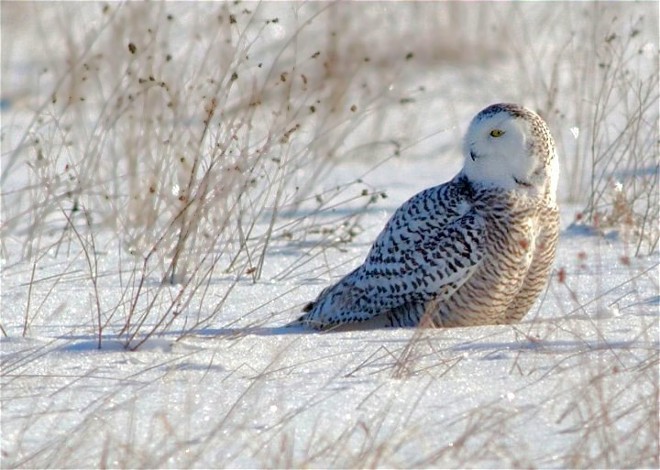
Clean and quiet water also makes for a simple setting for your subject. I was able to get a reflection for this male Blue-winged Teal, and that can either continue the clean and simple concept, or muddy up an image. It just needs to be taken on a case by case basis.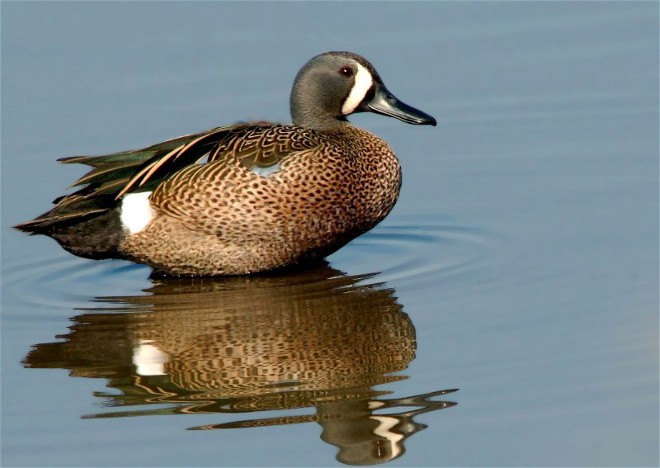
How about extreme sidelighting with a very busy background? Pictures like this one also need to be made. In addition to a different but interesting mood, this does say something about the world of the Greater Roadrunner.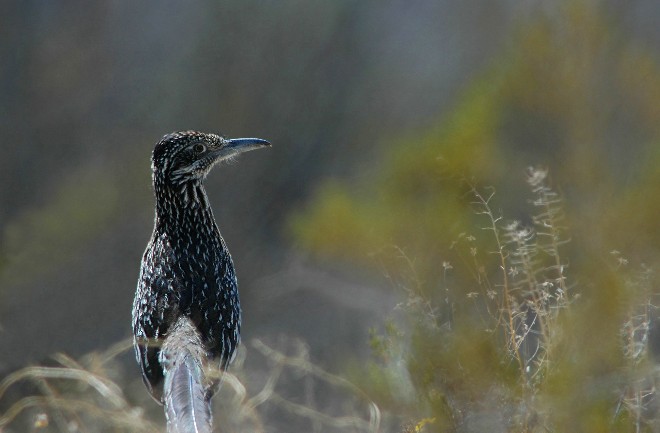
There are times when I much prefer the busy background shots. This image not only says a lot about the world of the Ruby-throated Hummingbird, it tells you just how tiny it is. I also like the way the ever softening Yellow Coneflowers fade into the distance. It is many ways more artistic than the clean and simple photos. Once again an interesting and strong composition helps a lot.
A Bald Eagle, a perch and some blue sky. Not much to this image. There is no way to escape the beauty of this bird and the fact that it is fluffing up its feathers.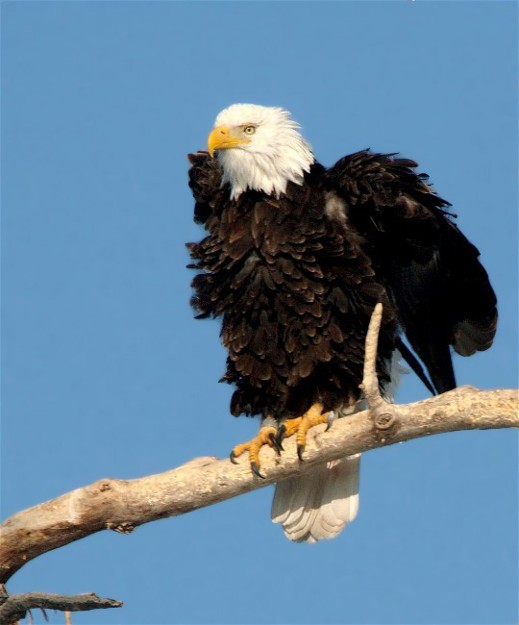
Birds are not the only type of animal that the clean and simple rule applies to. Mammals too will benefit from this approach. They are a more difficult group of animals to get a clean picture. Out of focus trees and grass are the most likely suspects but sometimes you get lucky. Graphic rocks and lake water make up the background for this Red Fox photo.
My philosophy with wildlife photography is that if you can’t get the shot you want, you should still make the picture. This picture tells the story of an Opossum in winter and the food source it has found. I was able to get a little cleaner shot later but would have settled for this one if necessary.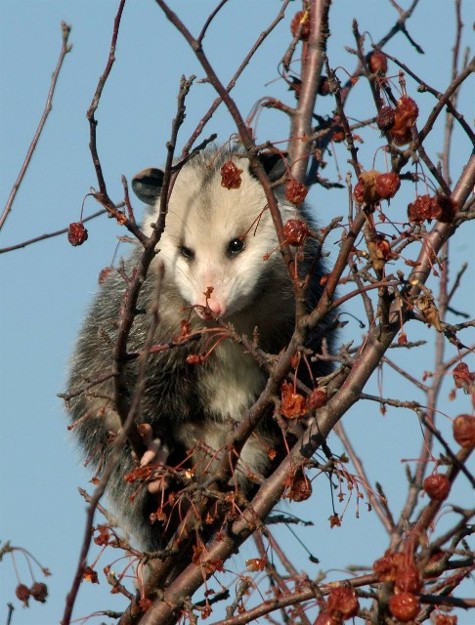
Like a previous image of a Hummingbird, this Whitetail Deer shot is busy but has its charm. In this case both deer are mostly covered up with foliage. There is a bit of mystery and a little charm that would be missing in a clean and simple shot.
Insects are wildlife too. I managed a nice clean and sharp photo of this beetle, but I can not say the same for the background. I believe this shot is still acceptable but I do have less bothersome pictures of the same species.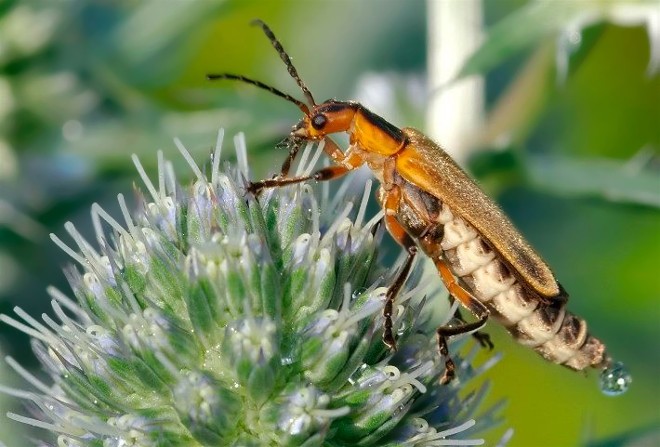
Insects certainly can benefit from the clean and simple rule. This photo of a dragonfly shows that the same techniques that are used for perched birds, work well with flying insects. Dragonflies are territorial and some will also hunt from a perch. All of this means that they will often return to the same spot over and over. This allows you to pre-focus on that perch. You may have to work a little to get into a low enough position to garner a sky for a background.
You often cannot get the sky as a background, even with flying insects. That’s when out of focus greenery becomes the key to your clean and simple image. You must be very choosy when you pick your f stop. Remember aperture first? You are looking for an f stop that will allow your focus to cover most of the insect, while rendering the background soft and with very little detail.
There is no simpler way to assure a clean wildlife image than to photograph flying birds on a blue sky day. Nothing but bird and blue. This gull picture was made one day as I practiced flight shots.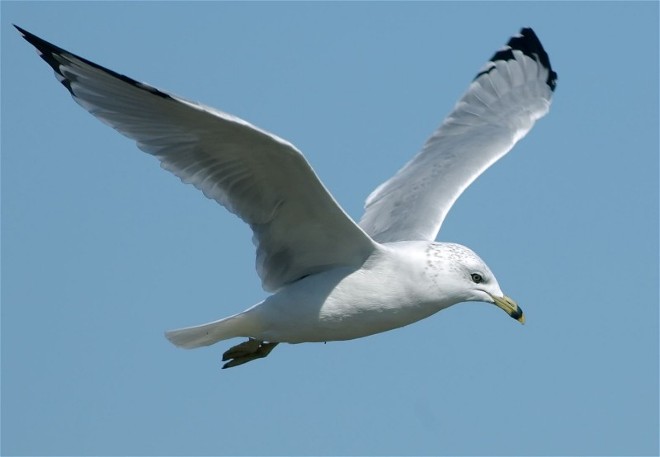
Composition 101 https://nelsonearthimages.wordpress.com/2011/06/12/composition-101-all-about-rules/
Composition 102? https://nelsonearthimages.wordpress.com/2011/10/03/composition-102/
“The darkest moments, are followed by the brightest lights”~~~Wayne Nelson
 Earth Images Blog by Wayne Nelson