I thought I would do one more Pix & Info as it gives me an opportunity to explain how I went about the act of photography.
For many years all of my exposures were made in the manual mode. After a year or so of digital photography I began to make my wildlife pictures, including active insects, using aperture priority. I never, ever use fully programmed. That is for snapshot takers who will settle for the picture that the camera gives you. Photographers want (need) to play a part in the creation of the image. Why aperture priority instead of shutter priority? Your aperture or F stop does not just mate with shutter speed to create an exposure. It also controls depth of field. Depth of field is the amount of perceived sharpness from front to back in any image. That is a major portion of your composition. It stands to reason if how the subjects in the picture frame are arranged, is the composition, then so is which subjects are crisp or slighty soft or completely out of focus. I of course watch my shutter speed and make sure it is appropriate to accomplish what I want it to. You can use shutter priority and watch your F stop but I always suggest that having your F stop in your mind front and center, will virtually always mean you will think more about the total image, rather than just how quick your shutter speed is. Over the years I also began to use aperture priority for stationary subjects like landscapes or flowers. When I did use manual for an image I used spot metering to read a single small part of the image. I would use a mid-toned part of the image. If you use this feature make sure that the area that you are reading is in the same light as your primary subject. I also used a separate hand-held incident meter for landscapes. This reads the light falling on your subject rather that the light reflected from your subject. I never used incident readings for true macro images. A macro lens extends at close focus and light is lost.
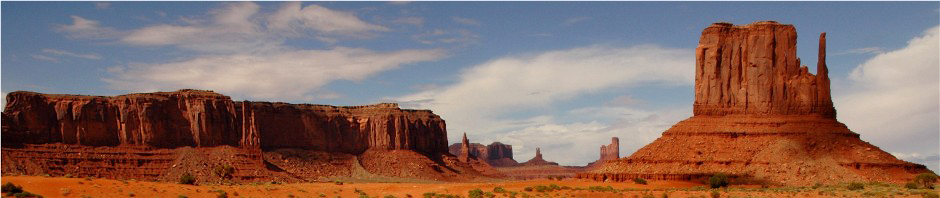
Today’s first image presented me with contrast issues. This mid-day light cast deep shadows over much of the dark shack. I took a manual spot reading from a mid-toned area of the scene, and then opened up +.7 of one stop. This gave me a little detail in the shack. After arriving home I used the Photoshop magic wand tool and clicked on the front of the building to highlight that area. I then added light to that area only of the scene. ISO 200. I used 200 instead of ISO 100 or 50 only because that is the slowest speed that the camera had. F16, 1/400 sec., 18-70mm lens set at 60mm with a tripod. Big Bend N.P., Texas.
Our next shot is an abstract of a geothermal area in Yellowstone N.P.. This also presented a contrast issue. Not because of sun angle, but because of the mix of black lava and white steam. I did not want to totally conquer this issue because I envisioned the finished work being an abstract form. Still I needed a compromise exposure so I used multi segmented ( matrix with Nikon) metering in manual mode. I always use matrix in aperture priority mode . ISO 200 (again it is as low as this camera would go), F 18, 1/100 sec., 80-200mm lens set at 170mm and a tripod.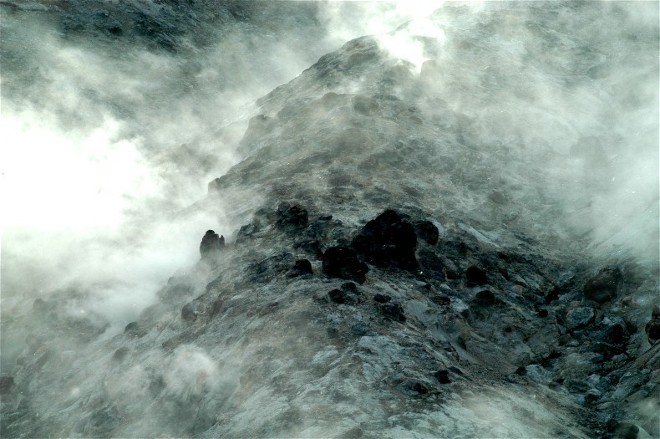
Female Northern Bobwhite Quail. ISO 200, F 8, 1/250 sec., 500mm lens resting on a pillow, taken from my car. This was made at Bong State Rec. Area, Wisconsin.
Tiger Swallowtail. ISO 100, F 18, 1/60 sec., 75-300mm lens set at 195mm, dedicated flash and tripod. Hawthorn Hollow Nature Sanctuary, Wisconsin
This happy pair of Redhead Ducks were actually swimming along at a pretty quick rate of speed. I needed a fast shutter speed to stop the action as they were moving across the picture frame swiftly. Any F stop would work because they were swimming parallel with my camera back. Very little depth to the ducks with a clean background meant that I needed very little depth for the image. That meant I selected shallow depth of field allowing the camera to choose a fast shutter speed. ISO 200, F 5.6, 1/1250 sec., 500mm lens and made from the car with that famous Walmart pillow as support. Horicon Marsh NWR, WI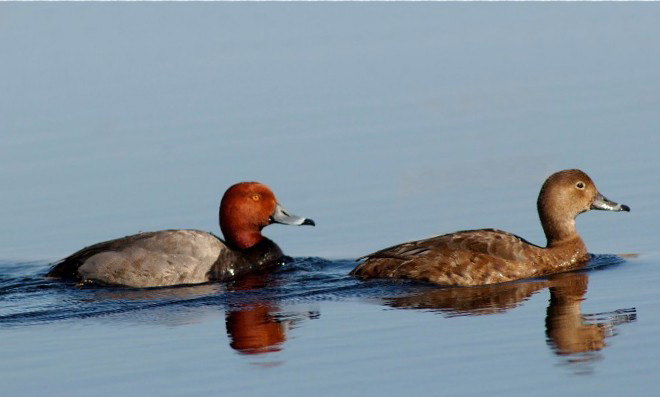
Super close-up of a Tachinid Fly. Shooting this close to a fly that was not parallel to the camera back meant I needed plenty of depth of field. The resulting long shutter speed meant that I not only needed a tripod, but I used my camera self timer to trip the shutter. That way my hands were off of the camera button when the shutter opened. I use this feature a lot. ISO 100, F 29, 1.3 sec,. 105 micro lens and a tripod.
Through these years of my website, newsletter and blog, I have been so fortunate to have had such a kind and gracious audience. I thank you from the bottom of my heart.
 Earth Images Blog by Wayne Nelson