By Ron Toel
Many different kinds of birds are associated with water. On one end of the scale we have the non fliers, the penguins, that are great swimmers, and on the end of the scale are the eagles and osprey, great fliers but are non-swimmers. And in between these two extremes are many birds of varying capabilities.
There are more flightless birds than just the penguins. There is the flightless cormorant of the Galapagos, who has replaced flying with swimming. Also included in this group is the steamer duck of the Falklands Islands, and a grebe in Lake Titicaca.
If the loss of flight is so readily developed, one wonders why it has not occurred more often. Birds such as the loons, cormorants, and anhinga are all very adapted at swimming, but still fly as well. Perhaps there is no advantage to flight, but there is still a need to easily get from body of water to another. Without flight there would be no migrations and the behavior of very readily be upset and changed. Would this be a blessing for the birds or would it just bring about quick extinction? The birds of the frozen tundras have to migrate when winter freezes their food source and seals off their food supply.
Some birds , like the herons, storks, cranes, and flamingos are known as wading birds because they have developed long legs to wade in deep water so as to catch their food. Along with the long legs, they are joined with a long neck so as to be able to reach down to their feet for food. Also for this adaptation is a long spear like bill. Neck length is also a part of the anhinga, which really is a swimmer and not a wader. The long necks and sharp pointed beaks of these birds are used as a lightening quick spearing of fish. However, most of these fishing birds do not really spear their fish, but instead just grab them, as in like a forceps, and then toss the fish in the air and swallow it. Spoon bills have a flattened bill to stir up the mud and catch the abundant life there in. Flamingos had a filtering structure in their beak and filter plankton from the water. Their coloration is dependent upon the food they eat. The wood storks had a long neck and a heavy long bill, but it is one of the most sensitive structures in the animal kingdom. They fish by touch. Their feet stir up the bottom and their bill is open and in the water. When something swims and touches that beak, it is trapped, because the stork has a reaction time of less than one hundredth of a second. Is that not amazing?
Wading over soft mud presents another set of problems. The flamingos have over come this by growing webbing between their toes. The herons have greatly exaggerated toes and the coots also fall into this category. They can walk on lily pads without making the pads sink. The long toes spread the birds weight over a greater area and make it seem lighter.
Long bills and short legs that run back and forth in the surf or the mud flats are the signature of the “peeps”. Peeps are the sand pipers and all the similar birds that are known as shore birds. The long bills are for poking down into the sand or mud and grabbing the different kinds of worms that live there. These are some of the most active birds in the realm.
Long necks, flying wings, but birds that have the ability to swim. These are the duck like birds. The ability to swim is from an alteration of the feet and not the wings. Webbing between the toes 2-3-4 are found in the ducks, geese, swans, gulls, and loons. Anhingas, pelicans, cormorants, gannets and boobies have webbing between all the toes. Lobes on the toes as an aid in swimming appears in the rails, phalaropes, and grebes. The long necks are added so when the duck families submerge their head and tip upside down, these birds are then capable of reach into the water to uproot the grasses that grow on the bottom which they use for food. Gulls and terns are really good swimmers but do not have long necks. They fish by diving from the air into the water and catch fish that are close to the surface. Pelicans do so too, but their long neck and large bill enable them to catch from a larger area than just the one fish of the gulls and terns.
The king fisher is another one of the birds that are, as their name implies, fishers. They perch on a branch above the water and watch for a slow moving fish which is swimming near the top of the water. When they spot one the dive bomb the fish and catch it in their sharp beak. Eagles and Osprey do the same thing, except they do not use their beak to trap their fish, but instead use their long sharp talons to snatch the fish from the water. The talons also hold the fish while the sharp curved beak tears it apart as it is consumed.
There are several other birds which also do not actually live in or on the water but are dependent upon water for their lively hood. Birds as the swallows which make mud nest…..collect a clod and as they fly dip this clod into the water to get it wet so that it will be able to adhere to the structure where they are building their nest. Many other birds are dependent upon the aquatic insect hatch for their food. It is not just the aquatic bird that are dependent on the lakes and streams, but instead every form of life is water dependent.
Photos by Wayne Nelson
Semipalmated Plover
Black-necked Stilt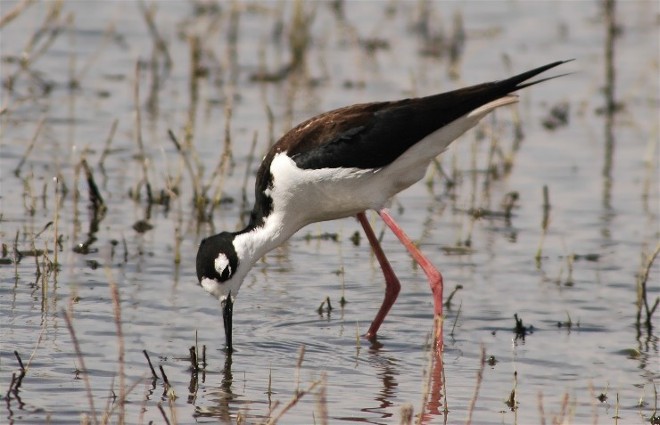
Dunlin catching food
Immature Virginia Rail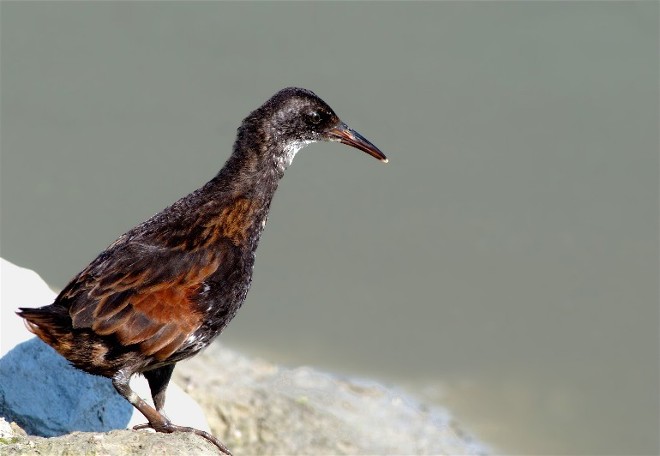
Great-blue Heron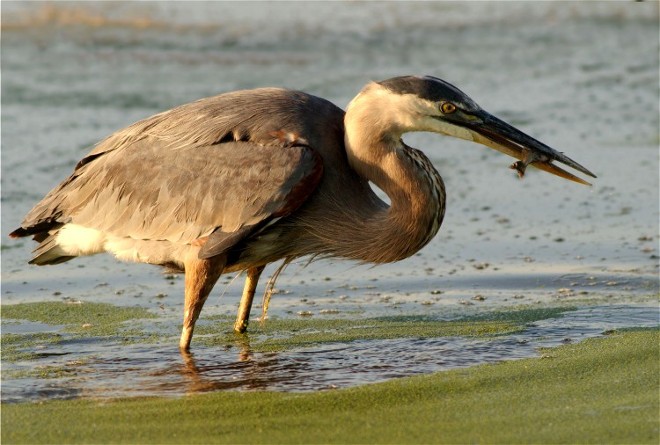
Snowy Egrets
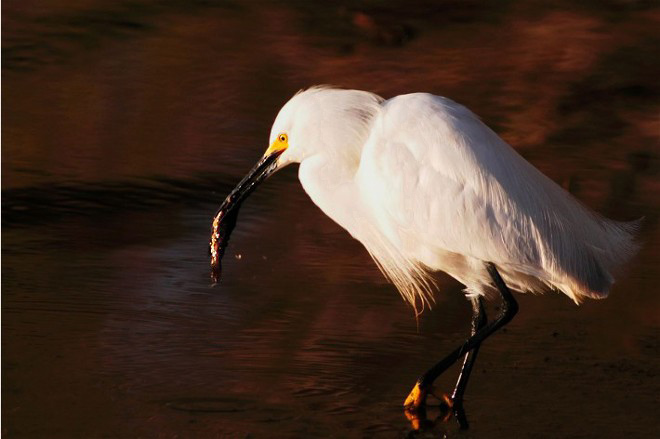
Western Grebe/Winter Plumage
Horned Grebe/Summer Plumage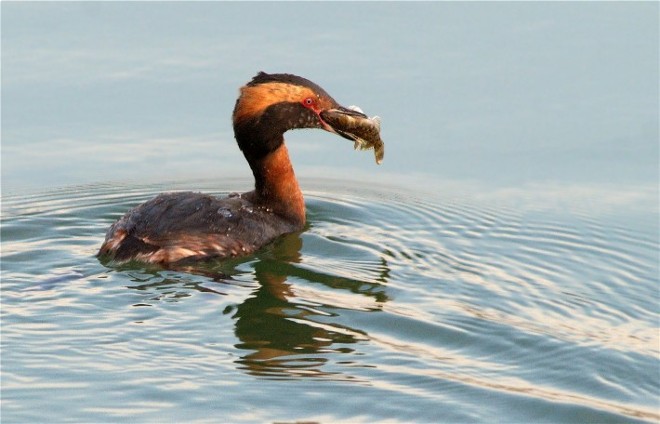
Immature Pied-billed Grebe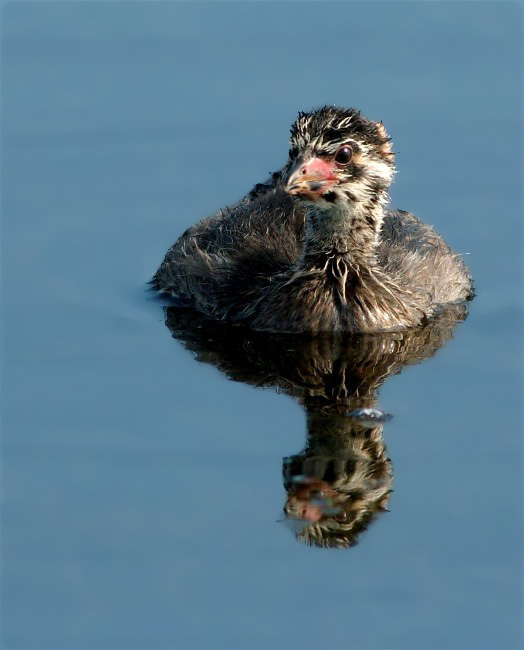
Female Red-breasted Merganser
Male Northern Shoveler
White-winged Scoter/Winter Plumage
Ring-billed Gull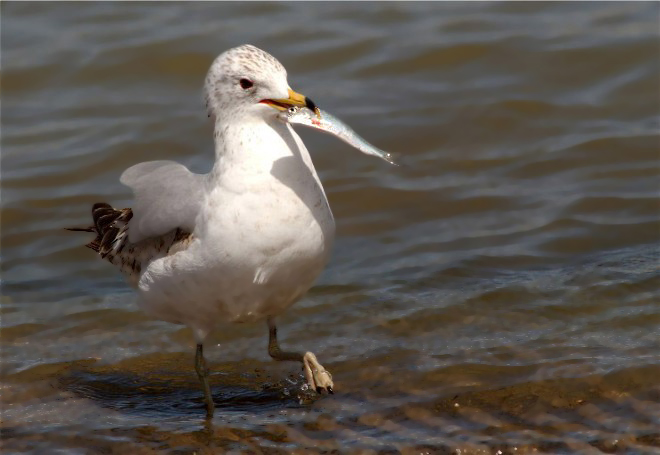
American White Pelican
Double-crested Cormorants
 Earth Images Blog by Wayne Nelson