Spiderwort. I used the tried and true method of isolating a flower against a clean and simple background to make sure the viewer was focused on my subject. I used a 300mm lens instead of my trusty 105 macro in order to narrow down my background to a clean space.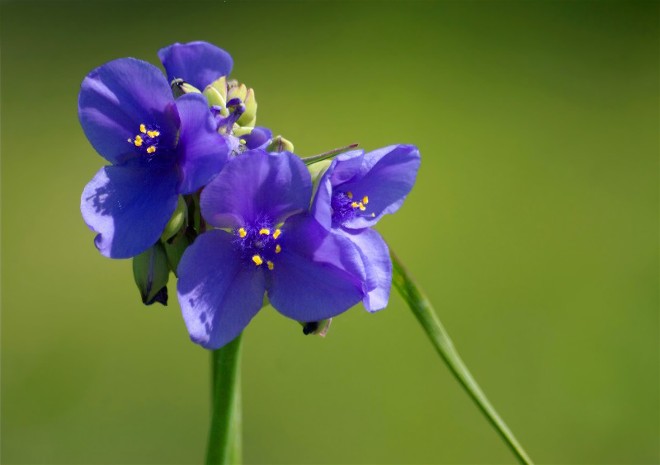
Virginia Bluebells & Oak Tree. This is a flower image as well, but I used a very different method. The flowers, the grasses and the tree trunk are equally important in this image. I used a 18-70mm zoom set at 70mm with an aperture of f25 for this shot. That gave me exactly the coverage side to side and up and down that I wanted with enough depth of field to render all of those equally important subjects in focus. 
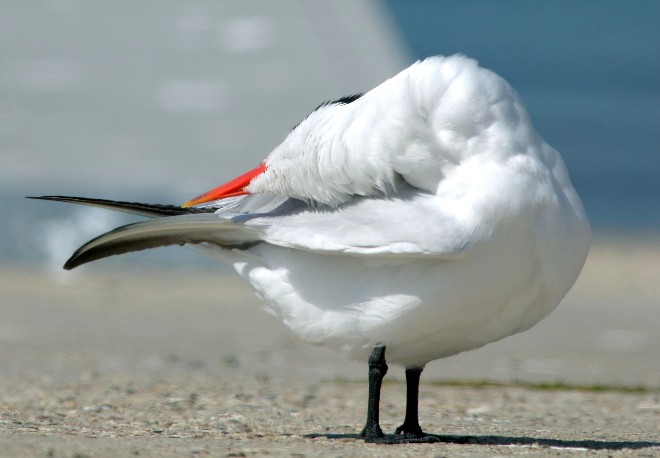
Caspian Terns. This is a straight forward wildlife photograph except that I did shoot at f10. That was enough depth of field to keep the entire tern in focus while still keeping the distant background soft and free of distracting details. 
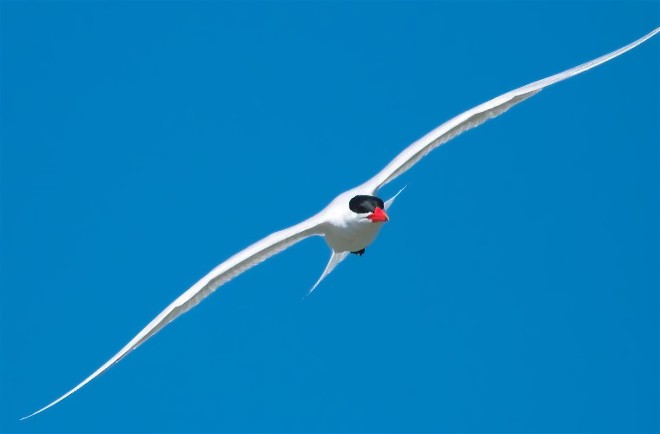
A bright sun allowed me to shoot this action shot at f8. Just enough depth of field to cover any focus mistakes that I or my camera might make.
Discussion? Female & male Purple Martins. Wildlife photography is easy when you know that your subjects are going to return to the same spot every few seconds. This perch is located on a Purple Martin hotel.
Male Eastern Meadowlark. This is what you would call a classic photo. A male Meadowlark singing his beautiful song. Most of my wildlife images are made using aperture priority with minus 1/3rd or 2/3rds of a stop of light. The sky in the background was causing those settings to create a bit of under exposure so I shot with no exposure compensation of any kind.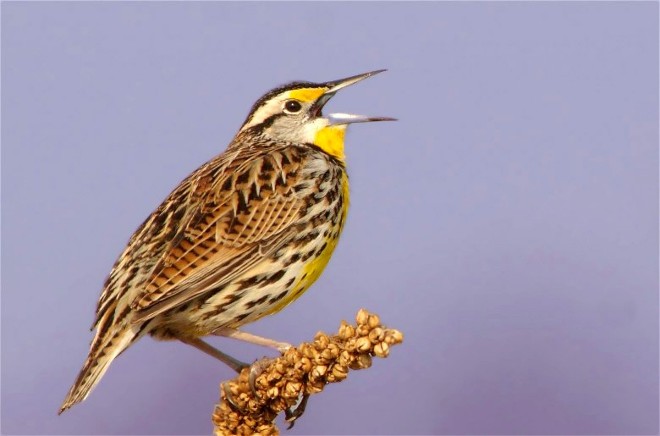
Double-crested Cormorant. Dark birds can be a problem when it comes to exposure. I moved my exposure up to zero compensation which under these lighting conditions gave me a good detailed exposure for my bird. It did however over expose my sky, bringing it to blank white. When I got home I used the Photoshop Magic Wand tool and clicked on the sky. This highlighted all of the open areas of sky. I then went into image…adjustments… and un-brightened the sky by about 30 clicks. I then did the same in smaller sky areas around the bird. This brought the sky down to about what it looked like to the naked eye, while on the scene. 
Meet (Red Fox) mom. This family of foxes gave me more opportunities for interesting fox photos than at any other time in my career. The hardest part was keeping up with what was happening. 
And the kids (kits)
American White Pelicans. The mystique needs to be removed from bird flight photography. Most of my bird action shots are made with my very high quality Nikon 500mm f4P lens. That lens is however, void of auto focus and vibration reduction/image stabilization. I have eye issues and other health problems have reduced my reflexes to nill. Look for places (like nests) where birds will be returning to the same spot over and over again. Pre-focus on that spot where they return. In the image below large numbers of pelicans were taking off, one group after another. The light was strong and pretty. I would focus on a group and then re-focus about fifty feet in the direction the were swimming. I would then start firing as they took off, and yes they were out of focus at this point, and follow, pan and shoot until they flew through the area I was focused. I did this using a pillow on my car door (window open) as a tripod. If I had auto focus I would have started shooting while they were in the water, and followed them with the camera. There is a challenge to everything and auto focus can wander. You need a simple or distant background and to stay visually locked on your birds while you pan with them. 
Red-tailed Hawk. When you have a wild animal that is quietly letting you make portraits, stay with it as long as you can. Eventually they will change their pose and you will be presented with a better photo. Patience means a lot in nature photography.
Our next photo is not nature. This is the historic (1700s) San Xavier Mission just outside Tucson, Arizona. This was originally made in medium format film and that was copied with a digital camera. Even beautiful buildings can be boring unless you do something special with the composition. Framing is an old idea that works pretty well. It generally is a matter of framing one subject with another. Maybe a mountain that is framed with a tree. In this case I was able to use one part of the mission to frame another part of the same mission. The vertical doorway made it obvious that I needed my composition to also be vertical.
Lonely Lake Michigan morning. The final picture is about one thing. Mood. I had been making pictures of the surf crashing onto the beach at sunrise. As the sun rose I decided to switch my subject. I stopped taking my meter reading from a direct view of the brightening sky to the sand. This prevented me from making a silhouette and provided me with detail. I then stopped down (metered manually) my lens one full stop so I could record the full richness of the morning colors. I did not want an empty beach. I did not want two gulls or twenty. I wanted one gull. When the opportunity arose I started clicking. The lone gull helped show a mood of solitary thoughtfulness with a touch of loneliness. In photography even mood shots need a healthy dose of technical expertise to accomplish.
Creating professional quality images takes time and experience. The images by the best photographers have emotion. They often smell of style. Still you cannot separate the art of photography from technical quality. The need for newer and better camera bodies may exceed your pocket-book, and yes you can spend your way to good images today. You can however make the highest quality images that are possible with the equipment you do have. Careful attention to the details of exposure, ISO (noise), keeping your cropping as minimal as possible and maintaining a quiet camera, will give you the best technical images possible. That will free you to use your imagination while you create pictures. Emotion and personal point of view will be finishing touch to your pictures. All of the technical quality in the world without a piece of the photographer’s personal vision will result in boring photos.
Enjoy yourself and good luck
 Earth Images Blog by Wayne Nelson